
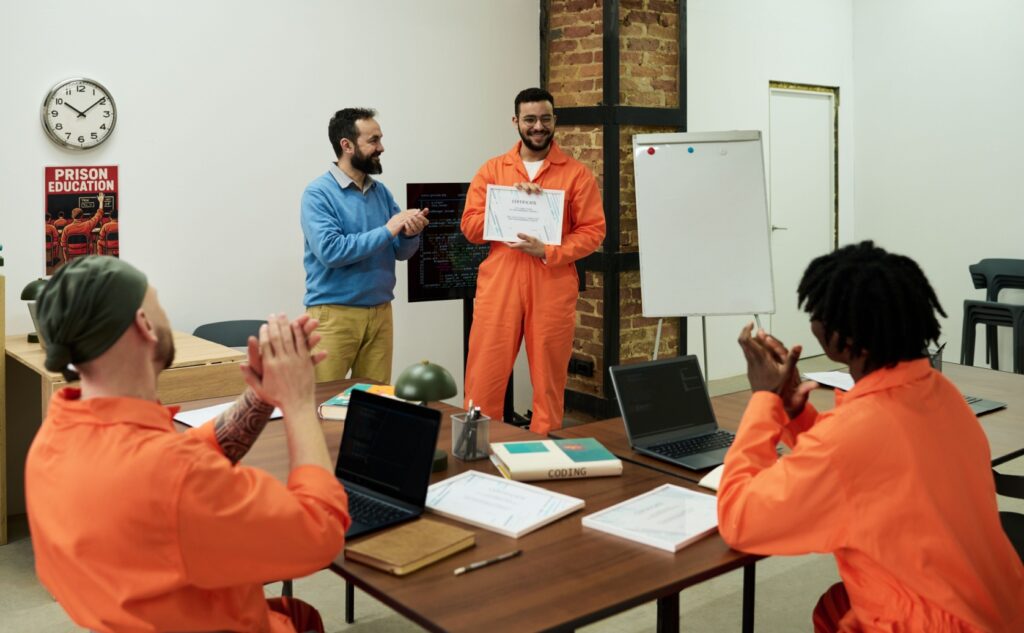
Yes, prisoners in South Africa may study while serving their sentences. Education is recognised as a central pillar of rehabilitation under the Correctional Services Act 111 of 1998, and the Department of Correctional Services (DCS) is required to provide inmates with access to learning programmes that range from adult basic education through to university qualifications studied by distance.
For a sentenced inmate, the right to study is not a privilege granted at the whim of a particular correctional centre. It forms part of a structured rehabilitation path, and successful participation can count toward a prisoner’s correctional programme and ultimately toward sentence remission. Understanding how the system works, who approves applications, and who carries the cost helps families support an incarcerated loved one.
This article explains the legal basis for studying in a South African correctional centre, the types of education available, the approval process, and how study ties into early release and reintegration.
The Legal Right to Education in a South African Prison
The Correctional Services Act 111 of 1998 places rehabilitation at the heart of the correctional system. Section 41 expressly requires the Department to provide social and psychological services, education and training, and work programmes aimed at developing every prisoner. Education is therefore treated as a tool that reduces reoffending and prepares an inmate for release, not as an optional extra.
The White Paper on Corrections in South Africa builds on this foundation. It frames educational and restorative programs as the core pathway through which an inmate is returned to society as a productive, law-abiding citizen. The combined effect is that inmates retain their constitutional right to further their learning, subject to the security and discipline requirements of the correctional centre.
Types of Education Programmes Available to Inmates
The Department of Correctional Services, often in partnership with the Department of Higher Education and Training, offers a structured ladder of learning opportunities inside correctional centres. The level an inmate can access depends on their existing qualifications, the length of their sentence, and the resources of the particular centre.
- Adult Basic Education and Training (ABET): Foundational literacy, numeracy and life skills classes that allow inmates who missed schooling to build a base for further learning and employment.
- Further Education and Training (FET): Grade 10 to 12 schooling, including the National Senior Certificate (matric), so that an inmate can complete a school-leaving qualification while incarcerated.
- Vocational and skills programmes: Accredited technical short courses such as carpentry, welding, plumbing, computer literacy, hairdressing, agriculture and bricklaying, delivered through DCS workshops and training centres.
- Tertiary and distance learning: Diploma and degree studies through distance providers such as UNISA, allowing sentenced inmates to read for a recognised higher qualification from inside a correctional centre.
- Life skills and personal development: Programmes covering anger management, substance abuse awareness, financial literacy and parenting, often run with non-governmental partner organisations.
Not every centre offers the full range. A large facility such as a management area will typically have a school, workshops and study rooms, while smaller centres may focus mainly on ABET and skills short courses. Inmates can request a transfer of study material or participation in distance learning where a programme is not offered on site.
How an Inmate Applies to Study
Before an inmate can register for any formal course, the application must be approved internally. The process is designed to balance the inmate’s right to education against the security classification and the sentence plan drawn up for that prisoner.
- The inmate lodges a written request with the Head of the Correctional Centre, setting out the course, provider and intended qualification.
- The request is reviewed against the inmate’s security classification, sentence length and the centre’s rehabilitation programme.
- Once recommended by the case management committee, the inmate may register with the education provider, receive approved study material, and write examinations under supervised conditions.
- Internet access remains tightly controlled. Most distance study is paper-based or delivered through offline digital media, with assignments submitted and collected through the centre’s education unit.
Who Pays for Prison Education?
Funding depends on the type of programme. ABET, FET schooling and DCS-run vocational courses are generally provided free of charge to inmates, because they form part of the Department’s own rehabilitation offering. Study materials and examination fees for these programmes are covered by the State.
Tertiary and distance learning is different. The Department of Correctional Services does not pay university fees, so the cost of registration, tuition, study guides and examination fees falls on the inmate and the inmate’s family. In practice, families register the inmate with UNISA or another provider, settle fees directly with the institution, and arrange for study material to be delivered to the correctional centre. A number of bursaries and donor-funded study schemes do exist for incarcerated students, and the centre’s education officer can point families toward these.
How Study Counts Toward Remission and Rehabilitation
Under section 136 of the Correctional Services Act, sentenced offenders are eligible for a system of credits and possible placement under correctional supervision once they have served a prescribed portion of their sentence. Education is one of the recognised activities through which an inmate demonstrates active participation in a rehabilitation programme.
- Completing ABET, a matric, or an accredited skills qualification is recorded in the inmate’s correctional programme file.
- Consistent participation in study and work programmes supports the inmate’s case for credits and for favourable consideration by the Case Management Committee.
- Educational achievements strengthen an application for parole or correctional supervision by showing concrete steps toward reintegration and employment after release.
- Study does not, on its own, guarantee early release. It is one factor weighed alongside behaviour, the nature of the offence, and the risk assessment.
In short, education shortens the distance between an inmate and a productive life postrelease, both by building qualifications and by reinforcing the documented rehabilitation record that the Parole Board considers.
Challenges Faced by Prison Education Programmes
The right to study is recognised in principle, but in practice inmates and their families often run into obstacles. Knowing the common challenges helps you anticipate and address them.
- Overcrowding and limited classroom space, which can delay entry into formal programmes.
- Shortages of qualified educators and reliance on rotational DCS teachers at smaller centres.
- Security restrictions on digital devices and internet access, which affects how distance assignments are completed.
- Delays in receiving study material that has been posted to the centre, particularly where items must first be screened for security purposes.
How Otrebski Attorneys Assists Incarcerated Clients
Otrebski Attorneys is a 100% women-led law firm with a single office in Sandton and a dedicated Criminal Law department under Director Nastasja Otrebski. The firm holds a 5-star Google rating across 12 reviews and Level 4 B-BBEE status. Within the criminal law practice, the team advises sentenced inmates and their families on the rights contained in the Correctional Services Act, including the right to education, and assists where an inmate’s access to study has been unreasonably blocked.
- Reviewing the inmate’s correctional programme and confirming which study rights apply.
- Liaising with the Head of Correctional Centre and the Case Management Committee on behalf of the family.
- Assisting with written representations where a study application has been refused or delayed without proper grounds.
- Advising on parole, sentence remission and the documentation needed to support a rehabilitation record.
Frequently Asked Questions
Can prisoners study in prison in South Africa?
Yes. Under the Correctional Services Act 111 of 1998, sentenced inmates may study while incarcerated. The Department of Correctional Services provides ABET, further education, vocational skills and life skills programmes, and inmates may also register for tertiary distance learning through providers such as UNISA.
What can prisoners study in a South African correctional centre?
Inmates can study Adult Basic Education and Training (ABET), Grade 10 to 12 and matric through Further Education and Training, accredited vocational skills courses such as carpentry, welding and computer literacy, and tertiary diplomas or degrees by distance learning through institutions like UNISA.
Who pays for a prisoner to study at university in prison?
ABET, FET schooling and DCS-run skills courses are generally free to inmates. Tertiary and distance learning fees, including UNISA registration, tuition and examination costs, are paid by the inmate or the inmate’s family. The Department of Correctional Services facilitates the programme but does not fund university fees.
Does studying in prison count toward early release?
Study and successful completion of education programmes form part of an inmate’s documented rehabilitation under the Correctional Services Act. While education alone does not guarantee remission or parole, it supports the inmate’s correctional programme file and is considered by the Case Management Committee and Parole Board when assessing placement.
Can an inmate study through UNISA while in prison?
Yes. Sentenced inmates may register with UNISA and other accredited distance providers with the approval of the Head of the Correctional Centre. The family handles registration and fees, study material is delivered to the centre, and examinations are written under supervised conditions.
Get help with a criminal law matter.
Disclaimer. This article is provided for general information only and does not constitute legal advice. Education options, approval processes and remission rules under the Correctional Services Act 111 of 1998 differ from one correctional centre and one inmate to the next. Please consult a qualified criminal law attorney for advice tailored to your specific circumstances.