
Bail Application Attorneys in Johannesburg
Urgent, 24-Hour Criminal Defence for Bail Applications Across Johannesburg
An arrest does not end at the cell door. What happens in the first hours – the statement given, the bail preparation started – often decides whether your loved one sleeps at home while the case runs.
Our criminal law team prepares police, prosecutor and court bail applications day and night, from the station to opposed hearings under the Criminal Procedure Act.




Book a Consultation
A member of the Otrebski team will respond soon
Why Johannesburg Bail Applications Need Urgent Handling
Bail is won or lost on speed and preparation. Here is what the process actually involves – the forms of bail, the 48-hour rule, the interests-of-justice test, and what a bail attorney does at each stage.
Johannesburg arrests do not keep office hours. They happen in Hillbrow on a Friday night, on the N1 on a Sunday, at a roadblock in Sandton. Each one starts a clock:
- 48-hour first appearance
- weekend and night arrests
- Schedule 1 to 6 offences
- flight-risk assessment
- witness-interference test
The Criminal Procedure Act requires an arrested person to be brought to court within 48 hours – sooner if a court day falls earlier. Police bail and prosecutor bail can release an accused before that first appearance, but only for the right offence categories, and only if the paperwork is done properly.
For serious offences the State opposes bail as a matter of course. Winning release then depends on the interests-of-justice test in section 60: the accused’s ties to the community, employment, prior convictions, the strength of the State’s case and the risk of interference with witnesses – all of it placed before court through affidavits and argument prepared before the hearing.
What a Bail Attorney Does
A bail attorney acts from the moment of arrest: attending the client, advising before any statement is made, motivating for police or prosecutor bail where the offence allows it, and preparing the formal application when the State opposes.
Preparation is the work – affidavits from the accused and supporting deponents, proof of employment and residence, a proposed fixed address, and realistic conditions the court can accept. After release, the attorney manages compliance so that bail is never forfeited.
In bail, the file that wins is the one prepared before the hearing, not the argument made at it.
Police and Prosecutor Bail vs Court Bail
Police and prosecutor bail
For less serious (Schedule 1 and some Schedule 2) offences, bail can be fixed at the police station by the investigating officer or, for certain offences, by a prosecutor before the first appearance.
It is the fastest route – often the same day or the same night. The risk is fixing bail in the accused’s absence or on the wrong schedule; an attorney at the station keeps both from happening.
Court bail (formal application)
For serious offences, or whenever the police and the prosecutor refuse or cannot grant bail, the application is made in the magistrate’s court under section 60 of the Criminal Procedure Act.
The State may oppose. The court then weighs the interests of justice against the accused’s right to freedom – a contested hearing that is won on preparation: affidavits, corroborating documents and a properly motivated address and conditions.
| Issue | Police / prosecutor bail | Court bail |
|---|---|---|
| Where it is decided | At the police station or with the prosecutor | Before a magistrate in court |
| Offence categories | Schedule 1 and limited Schedule 2 offences | Any offence, including opposed Schedule 5 and 6 matters |
| Speed | Same day or night in suitable cases | Usually at, or shortly after, the first appearance |
| If opposed | Cannot be opposed – it is granted or refused on the spot | Contested hearing on the interests-of-justice test |
| Attorney’s role | At the station: advising, motivating, fixing the correct amount | Preparing affidavits, evidence and argument for the hearing |
The Bail Process, Step by Step
From arrest to release, the criminal procedure runs on strict time limits. The Department of Justice sets out the pathway as follows.
Arrest and first contact
The attorney is contacted and attends the client, advising on the right to silence and on what may safely be said before any statement is taken.
Police or prosecutor bail
Where the offence allows it, bail is motivated at the station or with the prosecutor so that release can happen before court.
First appearance within 48 hours
The accused must be brought to court within 48 hours of arrest, or the next court day if it falls sooner. The charge is put and the bail enquiry begins.
Preparing the formal application
Affidavits, proof of employment and residence, supporting deponents and proposed conditions are assembled for opposed matters.
The bail hearing
The court applies the interests-of-justice test in section 60: community ties, flight risk, prior convictions, the offence’s gravity and witness interference.
Release and conditions
Bail is granted on conditions – reporting, address, travel, contact – which the attorney explains and helps the client keep throughout the trial.
Which Courts Hear Bail in Johannesburg
Bail is decided where the case will be tried. For Johannesburg arrests that usually means:
- Johannesburg Magistrates’ Court – the main seat for CBD and inner-city arrests, sitting day and night courts for first appearances.
- Specialised courts – the Sexual Offences, Commercial Crimes and Equality courts hear bail in their respective case types.
- High Court, Gauteng Division – bail appeals and applications where a lower court has refused bail, and direct applications in the most serious matters.
Your attorney appears in the court where the matter is enrolled, and knows its rolls and prosecutors.
How to Choose a Bail Attorney in Johannesburg
At 2am the choice is made fast. Even then, these tests are worth applying.
- Answers after hours.A bail line that is actually answered – nights, weekends and public holidays – is the first test of a bail practice.
- Criminal focus.Ask how much of the practice is criminal defence, not just whether the firm lists it among many services.
- Prepares before the hearing.A proper application arrives with affidavits and documents, not just an attorney asking the court to be reasonable.
- Explains conditions.The attorney should propose workable conditions and explain the consequences of breaching them before release.
- Verifiable standing.Confirm the attorney is practising and in good standing through the Legal Practice Council.
What a Bail Application Should Cost
As a market guide, Johannesburg attorneys commonly quote R5,000–R15,000 for an unopposed bail application and from R20,000 where the State opposes; after-hours attendance may carry a surcharge. Cash bail itself is separate – it is the court’s security, refundable on compliance, not the attorney’s fee.
Otrebski Attorneys quotes in writing before work begins – what the fee covers and what could move it – under the firm’s founding principle that clients come before billable hours. No hidden costs.
Common Mistakes to Avoid
In bail matters the expensive mistakes happen in the first hours.
The Clock Between Arrest and Release
Bail Timings Under the Criminal Procedure Act
| When | What happens |
|---|---|
| At the station | The attorney attends and advises on silence before any statement; police or prosecutor bail is motivated for Schedule 1 and limited Schedule 2 offences, often the same day or night. |
| Within 48 hours | First appearance, or the next court day if it falls sooner; the charge is put and the bail enquiry begins. |
| At or after the first appearance | Opposed applications decided on the section 60 interests-of-justice test: community ties, flight risk, prior convictions, gravity and witness interference. |
| If bail is refused | Re-application on new facts, or appeal and review to a higher court, including the High Court. |
| After release | Conditions on reporting, address, travel and contact; compliance keeps cash bail refundable at the end of the case. |
Frequently Asked Questions
How quickly can bail be arranged in Johannesburg?
For Schedule 1 offences, bail can often be fixed at the police station within hours of the arrest – the same day or the same night. Opposed matters are usually decided at or shortly after the first appearance, which must happen within 48 hours.
Can bail be applied for over a weekend?
Yes. Prosecutors and night courts handle weekend arrests, and Otrebski Attorneys runs an after-hours bail line on 072 779 0866 precisely for Friday-night and weekend arrests.
What if bail is refused?
A refusal is not the end. Bail can be re-applied for on new facts, or the refusal can be taken on appeal or review to a higher court – including the High Court – where the magistrate erred in applying section 60.
Does the bail amount go to the attorney?
No. Cash bail is paid to the court as security and is refunded at the end of the case if conditions were kept. The attorney’s fee is separate and quoted in writing.
Will bail conditions allow me to keep working?
Courts try to set conditions that are proportionate – reporting at a convenient station, non-contact with specific witnesses, address notification. An attorney proposes conditions the court can accept so employment and travel survive.
What is a Schedule 6 offence?
The most serious category – such as premeditated murder. The accused must satisfy the court that exceptional circumstances exist permitting release. These applications demand full preparation and often counsel.
Do you assist clients in Soweto, Randburg and the Johannesburg CBD?
Yes. Otrebski Attorneys attends arrests and bail hearings across greater Johannesburg from its Sandton office – the CBD, Soweto, Randburg, Alexandra, Roodepoort and the East Rand.

Arrested in Johannesburg? The first call decides the next 48 hours.
Otrebski Attorneys practises from Office 9th Floor, The Spaces, 5th Street, Sandhurst, Sandton – with transparent billing and no hidden costs.
Call 060 500 3098 · after hours 072 779 0866 (bail applications)
Office hours: Monday to Friday, 08h00 – 17h00 · send a message
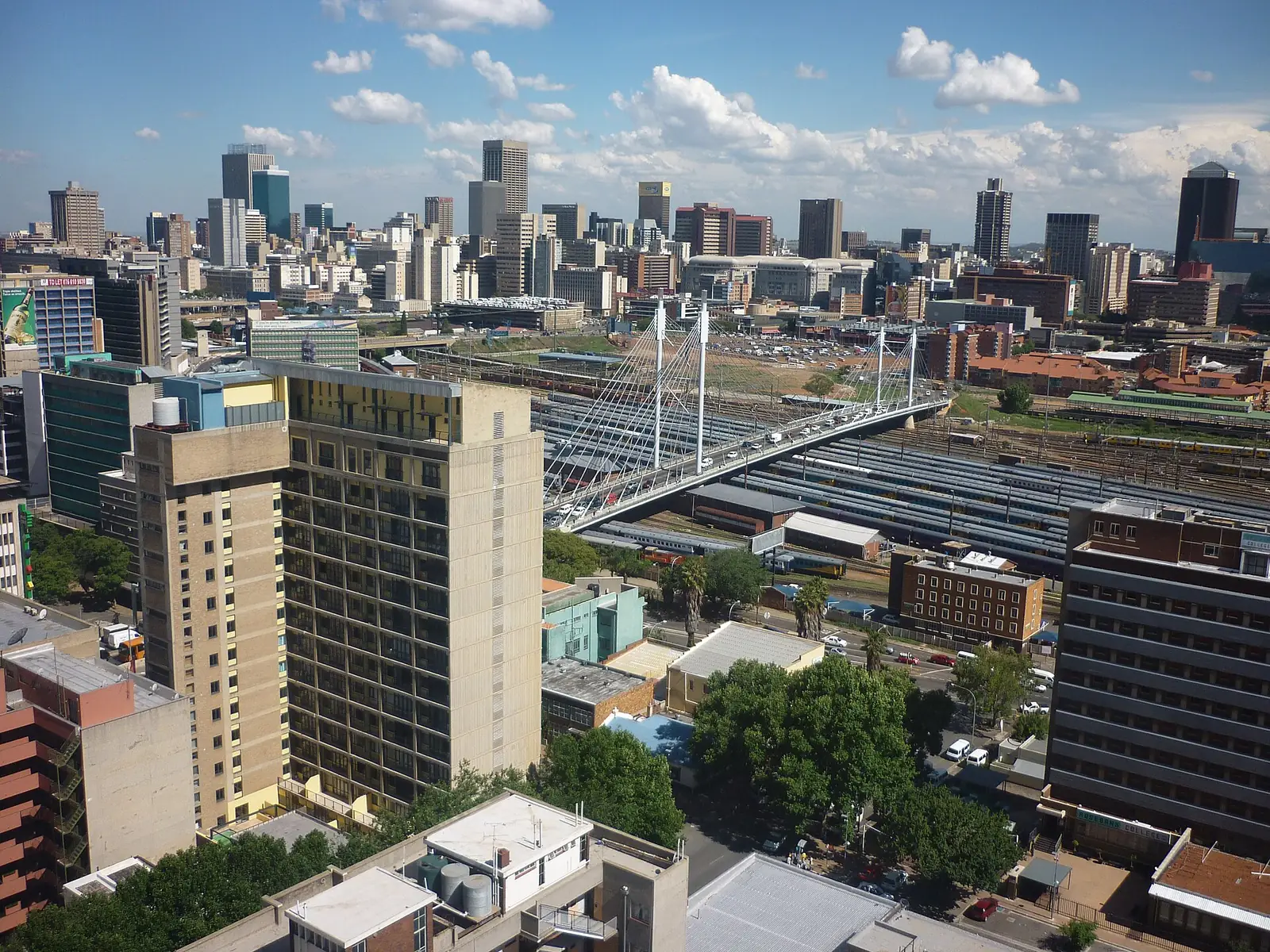
Image credits: Nelson Mandela Bridge – S’busiso siso via Wikimedia Commons, CC BY-SA 4.0; Johannesburg CBD cityscape – Evan Bench via Wikimedia Commons, CC BY 2.0; Eternal Flame, Constitution Hill – Mihi tr via Wikimedia Commons, CC BY 4.0.