
Drunk Driving Attorneys in Johannesburg
DUI Defence Under the National Road Traffic Act – 24/7
A DUI charge is two cases in one: the criminal prosecution, and the licence. What is said at the roadblock, and how the blood or breath evidence was taken, decides both – and the window to shape it closes fast.
Our criminal team defends drunk driving charges under the National Road Traffic Act 93 of 1996 – from arrest and bail through trial on the forensic evidence.



Book a Consultation
A member of the Otrebski team will respond soon

How DUI Prosecutions Are Actually Fought
The State needs proof beyond reasonable doubt that you drove, or were in control, above the limit. Every link in that proof is a defence opportunity.
The prosecution must establish:
- driving or control of the vehicle
- lawful arrest and detention
- compliant blood or breath sampling
- chain of custody of specimens
- calibrated, operated equipment
The statutory limits are strict: any concentration of alcohol in blood or breath for ordinary drivers, with higher zero-tolerance rules for professional drivers. But a charge is not a conviction – the forensic route from roadside to laboratory has more formalities than any other routine prosecution, and each one is testable.
Johannesburg DUI arrests cluster around roadblocks and accidents. Accident cases add another layer: hospital sampling, later charging, and witness accounts of who actually drove. The defence file is built from these details in the first week, or not at all.
What a DUI Attorney Does
A DUI attorney secures bail where needed, obtains the docket and forensic reports early, and tests the State’s route: the arrest’s lawfulness, the sampling officer’s compliance, the chain of custody, the analyst’s method.
Where the evidence holds, the same attorney mitigates properly – context, first offence, treatment engagement – because sentencing outcomes in DUI cases move more on preparation than on argument.
A breathalyzer number is an allegation. The road from the roadside to the laboratory is where it is proven – or not.
Breath vs Blood Evidence
Breath evidence
Roadside screening and evidentiary breath testing by approved apparatus. Quicker, and immediately actionable for the State.
The defence tests the operator’s training, the device’s calibration certificates, and the procedural sequence at the station – any gap undermines the reading.
Blood evidence
Blood specimens taken by a registered practitioner within the statutory time frames, analysed by the forensic chemistry laboratory.
The route is longer but the formalities are stricter: consent or lawful taking, preservative, labelling, storage and chain of custody – every step documented, every step cross-examinable.
| Issue | Breath | Blood |
|---|---|---|
| Taken by | Trained operator, approved apparatus | Registered medical practitioner |
| Defence focus | Calibration, operator, procedure | Chain of custody, lab method, timing |
| Turnaround | Fast – reading available at arrest | Slow – laboratory analysis weeks later |
| Common failures | Uncalibrated or misused device | Gaps in custody or preservation |
| Statutory limits | Zero-tolerance thresholds apply | Corresponding blood thresholds apply |
The DUI Case, Step by Step
From roadblock to verdict.
Stop, arrest and testing
Screening at the roadside; on a positive indication, arrest and evidentiary breath or blood sampling within the time frames.
Bail and release
Police bail or a formal application – the after-hours window where early advice matters most.
First appearance and docket
The charge is put; the defence requests disclosure of the forensic reports and the arrest records.
Forensic analysis
The defence tests calibration certificates, sampling compliance, custody records and the analyst’s method.
Trial
The State calls its witnesses; the defence cross-examines on the gaps and presents contrary evidence where it exists.
Sentence
On conviction – or by agreement – fines, programmes, licence suspension and, in serious cases, imprisonment are argued on preparation.
Where DUI Matters Are Heard
DUI is prosecuted in the district courts:
- District Magistrates’ Courts – Johannesburg, Randburg, Soweto – the traffic and district rolls hear DUI trials.
- Accident-related charges – may be enrolled with the underlying offence – culpable homicide where a death occurred, in the Regional or High Court.
- Administrative licence consequences – run in parallel with the criminal case – separate timelines, easily missed.
The criminal court and the licensing authority move on separate clocks; the defence must run both.
How to Choose a DUI Attorney
DUI defence is forensic defence.
- Docket speed..Ask when they apply for disclosure – the first week is where DUI defences are found.
- Forensic fluency..Calibration certificates, chain-of-custody registers and lab methods should be familiar territory.
- Trial record in traffic matters..District-court trial experience specifically – not general criminal reputation alone.
- Licence awareness..Suspension and card consequences are administrative; the attorney must run them in parallel.
- Verifiable standing..Confirm good standing through the Legal Practice Council.
What DUI Defence Costs
As a market guide, bail attendance commonly runs R3,000–R8,000; a defended DUI trial from R15,000–R40,000 depending on forensic challenges and appearances, on hourly rates of R1,500–R4,400.
Otrebski Attorneys scopes each phase in writing. Clients come before billable hours. No hidden costs.
Common Mistakes to Avoid
DUI mistakes happen at the roadside.
Two Clocks: the Court and the Licence
The case behind the case
The criminal prosecution and the licensing authority move on separate clocks and separate forms. The administrative consequences around the card run in parallel with the trial and are easily missed while the court diary fills; both need managing at once.
The defence’s own windows close earliest of all. The file is built from roadblock, sampling and witness detail in the first week, and requests for independent analysis or records are time-bound, because evidence expires with the case’s early weeks.
Frequently Asked Questions
What is the legal alcohol limit in South Africa?
For ordinary drivers, the National Road Traffic Act sets near-zero limits – any measurable alcohol in blood or breath can found a charge. Professional drivers face absolute zero tolerance. The practical rule is simple: measurable means prosecutable.
Will I lose my licence for a DUI conviction?
The court must suspend or cancel the licence on conviction for certain offences, subject to argument on circumstances. The administrative process runs separately from the criminal case – both need managing.
Can a breathalyzer reading be challenged?
Yes. Evidentiary breath results depend on the apparatus being approved, calibrated and operated by a trained officer in the prescribed sequence. Deficiencies in any of these undermine the reading.
How long does a DUI case take?
DUI trials on the district roll commonly finalise within months. The delays usually help the defence – witnesses move, calibration records lapse, custody chains blur.
Should I have taken the blood test?
There is no universal answer. Refusal carries its own consequences; a compliant specimen gives the defence a baseline to test. The specifics of your arrest decide – which is why the first consultation matters.
Is a first-offence DUI serious?
Yes. Even first convictions carry criminal records, fines and licence consequences that affect employment and travel. First-offence status is. Central to mitigation.
Do you attend arrests after hours?
Yes. Otrebski Attorneys runs an after-hours line on 072 779 0866 for DUI and other arrests across Johannesburg.
The reading is the State’s case. Test the road it travelled.
Otrebski Attorneys practises from Office 9th Floor, The Spaces, 5th Street, Sandhurst, Sandton – with transparent billing and no hidden costs.
Call 060 500 3098 · after hours 072 779 0866 (bail applications)
Office hours: Monday to Friday, 08h00 – 17h00 · send a message
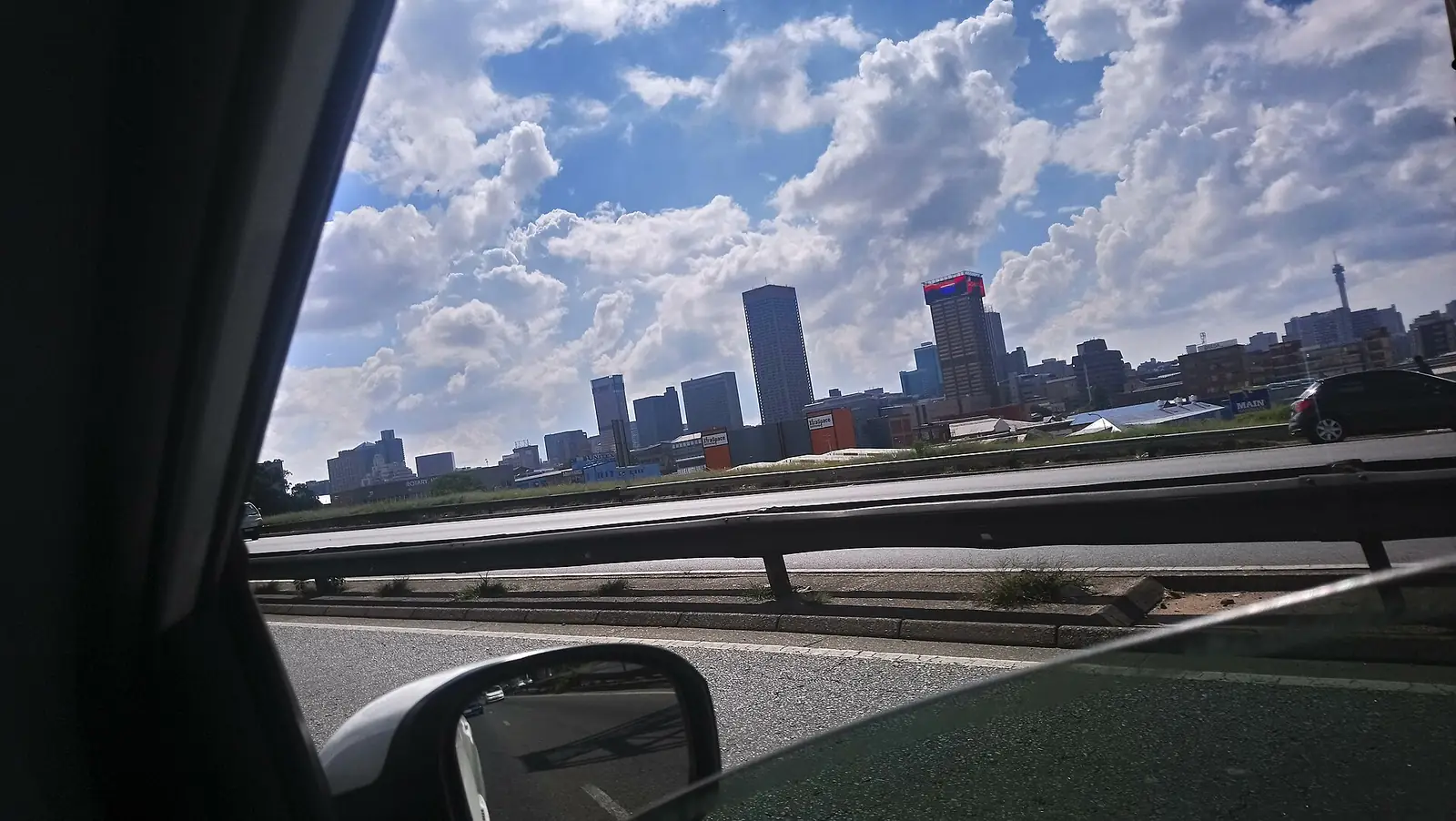
Image credits: Mandela Bridge, Braamfontein – South African Tourism via Wikimedia Commons, CC BY 2.0; Eternal Flame, Constitution Hill – Mihi tr via Wikimedia Commons, CC BY 4.0; Johannesburg skyline – Khaanya96 via Wikimedia Commons, CC BY-SA 4.0.