
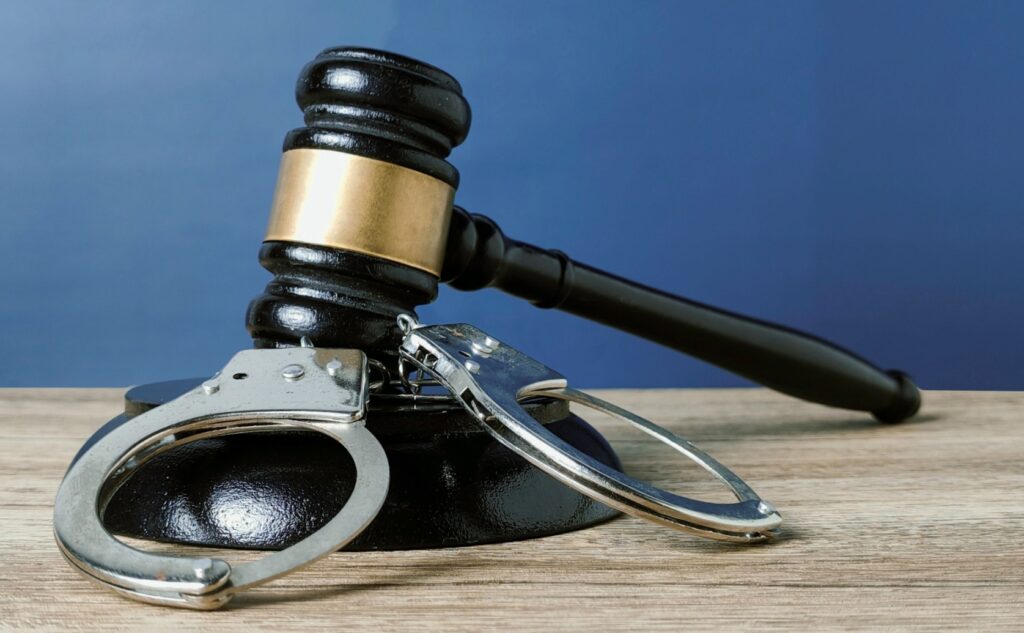
Criminal justice is the framework of laws, institutions and practices that a society uses to maintain order, respond to crime, and protect the rights of everyone involved. In South Africa, that framework draws directly from the Constitution and brings together several distinct agencies, each with its own role and its own accountability.
For anyone facing a charge, supporting a loved one in custody, or simply trying to understand a news report, the system can feel opaque. This guide explains, in plain language, how the South African criminal justice system works from the moment a crime is reported through to sentencing and corrections, and where the rights of an accused person are protected along the way.
What Criminal Justice Means in South Africa
Criminal justice refers to the system of practices and institutions established to maintain social order, enforce the law, and administer justice. In a constitutional democracy such as ours, that system must do more than punish. It must also uphold human dignity, protect the rights of victims and accused persons alike, and operate within the rule of law.
- Protect society by investigating, prosecuting and deterring criminal conduct.
- Provide a fair and structured process for investigation, trial and sentencing.
- Safeguard the rights of both victims and the accused, as guaranteed by the Bill of Rights.
- Rehabilitate offenders and support their reintegration to reduce repeat offending.
The system is therefore not a single institution but a chain of separate, independent actors. The next sections set out each link in that chain.
The Constitutional Framework and Section 35 Rights
Every part of the criminal justice system in South Africa draws its authority from the Constitution of the Republic of South Africa, 1996. The Bill of Rights, in particular, sets the boundaries within which Parliament makes law, the police investigate, prosecutors decide, and courts rule.
Section 35 of the Constitution contains the fair-trial rights that protect anyone arrested, detained or accused of a crime. These rights are not optional courtesies; they are enforceable guarantees that bind every official in the system.
- The right to remain silent and to be informed of that right.
- The right not to be compelled to make a confession or admission that could be used against you.
- The right to be brought before a court within 48 hours of arrest, or as soon as is reasonably possible.
- The right to be charged in a language you understand, and to have the charge interpreted.
- The right to a public trial by an ordinary court, with adequate time and facilities to prepare a defence.
- The right to legal representation of your own choosing, or to a legal practitioner provided by the state at state expense if substantial injustice would otherwise result.
- The right to be presumed innocent and to remain silent during the trial, and to testify without taking the witness stand.
- The right to adduce and challenge evidence, and not to be a compellable witness against yourself.
These protections explain why police procedure, the timing of a trial, and the conduct of the prosecution matter so much. A breach of a section 35 right can render evidence inadmissible or even lead to a charge being struck from the roll.
The South African Police Service (SAPS): Investigation
The South African Police Service (SAPS) is the primary law enforcement agency and the first link in the criminal justice chain. SAPS is responsible for preventing, investigating and combating crime, for arresting suspects, and for gathering the evidence that the prosecution will later rely on in court.
Investigation is where a case is built or lost. Detectives take statements, secure the scene, collect forensic evidence, and compile a docket that is then handed to the prosecuting authority. Importantly, the police do not decide whether a person is guilty; their role is to investigate lawfully, objectively and within the bounds of the Constitution.
- Receiving and recording the complaint, and opening a case docket.
- Arresting a suspect, where lawful grounds exist, or summoning them to appear.
- Gathering statements, documentary evidence and forensic material such as fingerprints or DNA.
- Cautioning and, where appropriate, charging the suspect, and ensuring their rights are explained.
If you are arrested or asked to make a statement, you have the right to remain silent and the right to consult a lawyer before saying anything that could be used against you. Exercising these rights is not a sign of guilt; it is a constitutional protection.
The National Prosecuting Authority (NPA): Prosecution
Once the police docket is ready, the matter passes to the National Prosecuting Authority (NPA), established by section 179 of the Constitution. The NPA, headed by the National Director of Public Prosecutions, has the authority to institute and conduct criminal proceedings on behalf of the State.
This is the second link in the chain, and it is structurally separate from the police. A prosecutor must independently assess the docket and decide whether to enrol the case. That decision is governed by two well-established tests.
- A reasonable prospect of conviction: Is there credible, admissible evidence on which a reasonable court could convict?
- The public interest: Is it in the interests of justice to prosecute, weighing the seriousness of the alleged offence and any compelling factors?
If either test is not met, the prosecutor may decline to prosecute, divert the matter, or withdraw the charges. This independent review is one of the most important safeguards against baseless or poorly prepared cases reaching trial.
The Courts: Trial and Adjudication
The trial takes place in court, where the guilt or innocence of the accused is decided according to law. South Africa’s courts are independent and their authority is set out in legislation such as the Criminal Procedure Act 51 of 1977 and the Superior Courts Act 10 of 2013.
Criminal matters are heard at different levels depending on the seriousness of the offence and the court’s jurisdiction.
- District Magistrates’ Courts: Deal with less serious offences and impose sentences up to set statutory limits (generally up to three years’ imprisonment for some offences).
- Regional Magistrates’ Courts: Hear more serious matters, including sexual offences and serious assaults, and can impose heavier sentences.
- High Courts: Hear the most serious cases, such as murder, treason and complex commercial crime, and have the widest sentencing powers.
At trial, the prosecution bears the onus of proving the accused’s guilt beyond reasonable doubt. The accused is presumed innocent throughout, may cross-examine state witnesses, may call their own witnesses, and may testify in their own defence or remain silent. Decisions of the magistrates’ courts and High Court may, in appropriate cases, be taken on appeal or review to a higher court.
Correctional Services: Sentencing and Rehabilitation
Once an accused is convicted and sentenced, the matter moves to the Department of Correctional Services, established under the Correctional Services Act 111 of 1998. This is the final link in the chain. Correctional Services is responsible for the administration of prisons, the management of sentenced offenders, and the supervision of those serving non-custodial sentences.
South African sentencing is guided by the purposes of punishment set out in the Criminal Law Amendment Act 105 of 1997 and developed through case law of the Constitutional Court and Supreme Court of Appeal. Courts balance several aims when imposing sentence.
- Retribution, ensuring the sentence is proportionate to the offence.
- Deterrence, both individual and general, to discourage further offending.
- Prevention or incapacitation, protecting society from dangerous offenders.
- Rehabilitation, preparing the offender for a law-abiding life after release.
Sentences can range from a caution and discharge, a fine, a wholly or partly suspended sentence, correctional supervision, or direct imprisonment. In limited and very serious matters, minimum sentences apply unless substantial and compelling circumstances justify a lesser sentence. Parole and the Pathways to Corrections framework then govern how, and when, an offender is reintegrated into the community.
How a Criminal Law Attorney Fits into the System
A defence attorney’s role spans every stage of the process. The constitutional right to legal representation means that an accused does not face the combined weight of SAPS, the NPA and the courts alone. Practical legal support includes advising during police questioning, opposing bail at the first court appearance, scrutinising the state’s evidence for admissibility, cross-examining witnesses, presenting a defence, arguing in mitigation of sentence, and pursuing an appeal where grounds exist.
Otrebski Attorneys, a 100% women-led firm with a single office in Sandton, runs a dedicated Criminal Law department under Director Nastasja Otrebski. The firm holds a 5-star Google rating across 12 reviews and Level 4 B-BBEE status, and routinely assists clients facing a broad spectrum of charges, including theft and fraud, assault and domestic violence, drug-related offences, driving under the influence, cybercrime and white-collar crime. Early involvement of a lawyer often makes a material difference to bail, to the admissibility of evidence, and to the eventual outcome.
The Stages of a Criminal Case, from Report to Sentence
- Report and investigation: A complaint is laid, SAPS opens a docket and gathers evidence.
- Arrest or summons: A suspect is arrested and brought before court within 48 hours, or summoned to appear on a future date.
- Bail: The court considers whether the accused should be released pending trial, with or without conditions.
- Prosecutorial decision: The NPA decides whether to enrol the matter based on evidence and the public interest.
- Trial: The state leads its evidence, the defence cross-examines and may call evidence, and the court delivers judgment.
- Sentencing: If convicted, the court imposes a sentence guided by legislation and case law.
- Appeal or review: Either party may, on defined grounds, approach a higher court to challenge the outcome.
- Corrections and parole: Correctional Services manages the sentence, including any parole process.
Frequently Asked Questions
What is criminal justice in South Africa?
Criminal justice in South Africa is the system of laws, institutions and practices that maintains social order, investigates and prosecutes crime, and protects the rights of victims and accused persons. It is grounded in the Constitution and includes the South African Police Service, the National Prosecuting Authority, the courts and the Department of Correctional Services.
What are the main components of the criminal justice system?
The main components are law enforcement (the South African Police Service, which investigates), prosecution (the National Prosecuting Authority, which decides whether to charge), the courts (which conduct the trial), and correctional services (which manages sentencing, imprisonment and rehabilitation).
What rights does an arrested person have under section 35 of the Constitution?
Section 35 of the Constitution gives an arrested person the right to remain silent, to be informed of that right, not to be compelled to make a confession, to be brought before a court within 48 hours, to be charged in a language they understand, to legal representation, and to be presumed innocent until proven guilty beyond reasonable doubt.
What is the role of the National Prosecuting Authority?
The National Prosecuting Authority, established by section 179 of the Constitution, has the power to institute and conduct criminal proceedings on behalf of the State. A prosecutor independently reviews the police docket and decides whether to enrol a case based on a reasonable prospect of conviction and whether prosecution is in the public interest.
What are the stages of a criminal case in South Africa?
The stages are investigation by SAPS, arrest or summons, the bail hearing, the prosecutorial decision, the trial, sentencing, and any appeal or review. The matter then passes to Correctional Services, which administers the sentence and any parole process.
Get help with a criminal law matter.
Disclaimer. This article is provided for general information only and does not constitute legal advice. Every criminal matter turns on its own facts, and outcomes depend on the specifics of each case, including the evidence, the charge, and the court. Please consult a qualified criminal law attorney for advice tailored to your specific circumstances.