
Criminality, in plain legal terms, refers to conduct that the State of South Africa prohibits and punishes under its criminal law. When a person commits a crime, the State, acting through the National Prosecuting Authority, brings a case against that person in the name of the public. The result, on a finding of guilt beyond reasonable doubt, is a sentence imposed by a court and a criminal record that can follow the person for life.
This page explains what criminality is under South African law, how a crime differs from a civil wrong, the elements the State must prove, the types of offences recognised in our courts, and the legal implications of a conviction. Otrebski Attorneys’ Criminal Law department in Sandton advises and represents clients facing criminal charges.
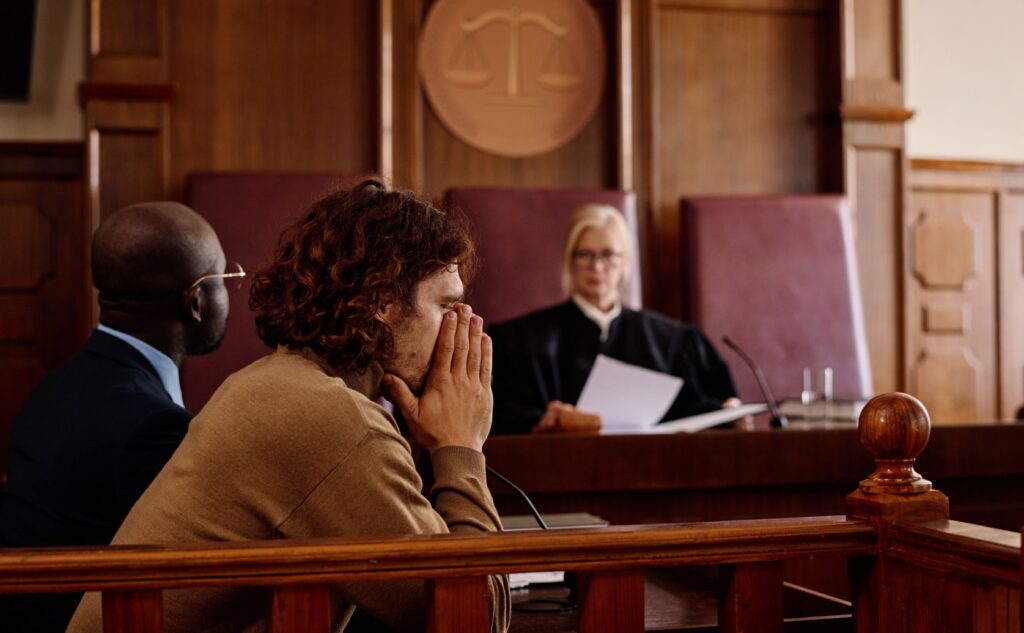
What criminality means under South African law
In South African law, a crime is conduct declared punishable by the State. The authority to define and punish crime comes from the Constitution and from statute, and the framework for the prosecution of crime is set by the Criminal Procedure Act 51 of 1977. Criminal liability is a matter between the accused person and the State, which is why criminal cases are cited as S v (the State versus) the accused.
South African criminal law draws its offences from two sources. The first is common law, developed by the courts over centuries, which includes crimes such as murder, rape, robbery, assault, theft, fraud, arson, culpable homicide, kidnapping, extortion, perjury, and defeating the ends of justice. The second is statute, where Parliament creates an offence in an Act, such as drunk driving under the National Road Traffic Act 93 of 1996, drug-related offences under the Drugs and Drug Trafficking Act 140 of 1992, corruption under the Prevention and Combating of Corrupt Activities Act 12 of 2004, and cybercrime under the Cybercrimes Act 19 of 2020.
The difference between a crime and a civil wrong
The clearest way to understand criminality is to contrast it with a civil wrong. A crime is an offence against the public, prosecuted by the State, and punished through a sentence such as imprisonment or a fine paid to the State. A civil wrong, such as a breach of contract or delictual liability, is a dispute between private parties, and the remedy is usually compensation paid to the injured party.
- Who brings the case. A crime is prosecuted by the State through the National Prosecuting Authority; a civil wrong is pursued by the wronged private party.
- The standard of proof. A crime must be proved beyond reasonable doubt; a civil wrong is proved on a balance of probabilities.
- The outcome. A crime is punished by sentence and criminal record; a civil wrong is remedied by an award of damages or specific performance.
- The purpose. Criminal law punishes and deters; civil law restores the position of the wronged party.
The same conduct can be both a crime and a civil wrong. A person who assaults another may face a criminal prosecution for assault and, separately, a civil claim for delictual damages brought by the victim.
The elements the State must prove
For conduct to amount to criminality, the State must prove every element of the offence beyond reasonable doubt. South African criminal law, drawing on Roman-Dutch foundations, generally requires two elements: the conduct itself and a fault element. These are commonly described by their Latin terms.
- Actus reus (the conduct). The accused must have committed the prohibited act, or, in the case of an omission, failed to act where there was a legal duty to do so. The conduct must be voluntary.
- Mens rea (the fault). The accused must have acted with intention or, where the law requires it, negligence. Intention includes purpose, knowledge, and dolus eventualis, where the accused foresees the possibility of the result and reconciles themself with it.
- Unlawfulness. The conduct must be unlawful. A person who uses force in private defence, within the limits set by law, has not committed a crime.
- Capacity. The accused must have the capacity to be held criminally liable. Children below the minimum age of criminal capacity and persons who are mentally incapacitated at the time of the conduct may not be criminally liable.
Statutory offences sometimes impose strict liability, where the State does not have to prove mens rea for every element. The particular Act will determine what must be proved.
Main categories of crime in South Africa
Criminal offences in South Africa are often grouped by the interest they protect. The categories below are a practical guide, not a closed list, and many offences cross categories.
- Crimes against the person. Murder, culpable homicide, rape and other sexual offences, assault (common and assault with intent to inflict grievous bodily harm), kidnapping, and domestic violence-related offences prosecuted under the criminal law.
- Crimes against property. Theft, robbery (including aggravated robbery), housebreaking with intent to commit a crime, malicious damage to property, arson, fraud, forgery and uttering, and receiving stolen property.
- White-collar and economic crimes. Fraud, corruption, bribery, money laundering, embezzlement, insider trading, and tax evasion, often investigated by specialised units such as the Hawks.
- Drug-related offences. Possession, dealing, manufacture, and trafficking in dependence-producing substances under the Drugs and Drug Trafficking Act 140 of 1992.
- Road traffic offences. Driving under the influence of alcohol or drugs, reckless or negligent driving, and driving without a valid licence under the National Road Traffic Act 93 of 1996.
- Crimes against the administration of justice. Perjury, defeating or obstructing the course of justice, contempt of court, and bribery of a public official.
The legal implications of criminality
Once the State is satisfied that there is a prima facie case, the criminal justice process begins to bite. The implications run from the moment of arrest through to the long-term consequences of a conviction.
- Arrest and detention. A suspect may be arrested with or without a warrant. The arrested person must be brought before a court within 48 hours of arrest, or as soon as reasonably possible, and has the right to apply for bail.
- Prosecution. The National Prosecuting Authority, acting through a public prosecutor, decides whether to prosecute based on whether there is a reasonable prospect of a conviction.
- Trial and conviction. The matter is tried in the District or Regional Magistrate’s Court or the High Court, depending on the seriousness of the offence and the jurisdiction of the court.
- Sentence. On a guilty plea or a finding of guilt, the court imposes sentence. Sentences include imprisonment, a fine, correctional supervision, a suspended sentence, periodical imprisonment, or a community-based sentence.
- Criminal record. A conviction is recorded on the criminal record maintained by the South African Police Service. A criminal record can affect employment, travel, professional registration, and licensing, and may only be expunged in limited circumstances, typically after a period of 10 years for certain offences.
Conviction can also carry collateral consequences, such as being declared unfit to possess a firearm, disqualification from acting as a director of a company, and forfeiture of assets linked to the offence under the Prevention of Organised Crime Act 121 of 1998.
Rights of an accused person
The Constitution of the Republic of South Africa, 1996, gives every accused person a set of arrested-person and fair-trial rights. These rights shape how the State must conduct a prosecution and they are central to the work of a criminal defence attorney.
- The right to remain silent and to be informed of that right.
- The right not to be compelled to make a confession or admission that could be used against the accused.
- The right to be brought before a court within 48 hours of arrest.
- The right to be charged within a reasonable time or to be released.
- The right to a public trial by an impartial court within a reasonable time.
- The right to be represented by a legal practitioner of the accused’s choice, or to be assigned a legal practitioner by the State where substantial injustice would otherwise result.
- The right to be presumed innocent and to remain silent during the trial and not to testify.
Procedural protection of these rights is set out in the Criminal Procedure Act 51 of 1977 and is enforced daily in our courts. The Department of Justice and Constitutional Development publishes further guidance on its website.
Frequently Asked Questions
What is criminality in South African law?
Criminality refers to conduct that the State prohibits and punishes under South African criminal law. A crime is an offence against the public, prosecuted by the National Prosecuting Authority, and a conviction results in a sentence and a criminal record.
What is the difference between a crime and a civil wrong?
A crime is prosecuted by the State and punished by a sentence such as imprisonment or a fine, and must be proved beyond reasonable doubt. A civil wrong is a dispute between private parties, is proved on a balance of probabilities, and is remedied by compensation or specific performance.
What are the elements the State must prove for criminal liability?
The State generally must prove the conduct (actus reus), a fault element such as intention or negligence (mens rea), unlawfulness, and that the accused had the capacity to be held criminally liable. Every element must be proved beyond reasonable doubt.
What are the main sources of criminal offences in South Africa?
South African criminal offences come from two sources: common law, developed by the courts, and statute, where Parliament creates an offence in an Act such as the Criminal Procedure Act 51 of 1977, the Drugs and Drug Trafficking Act 140 of 1992, or the Cybercrimes Act 19 of 2020.
What are the legal implications of a criminal conviction?
A conviction can result in a sentence of imprisonment, a fine, correctional supervision, or a suspended sentence, and it is recorded on the criminal record maintained by the South African Police Service. A criminal record can affect employment, travel, professional registration, and the possession of a firearm.
How long does a criminal record stay on your name in South Africa?
A criminal record generally remains on the SAPS database until it is expunged. Expungement is available in limited circumstances, typically after 10 years have passed for certain offences, where the sentence was non-custodial, and where the person has not reoffended.
Do I need a lawyer if I am facing criminal charges?
Legal representation is strongly recommended. An accused person has the constitutional right to be represented by a legal practitioner of their choice, and a criminal defence attorney can protect that person’s rights, assess the strength of the State’s case, and present defences at trial.
Get help with a criminal law matter. If you are facing an investigation or a criminal charge, early advice can change the outcome. Otrebski Attorneys’ Criminal Law department, led by Director Nastasja Otrebski, advises and represents clients from our single Sandton office. As a 100% women-led, Level 4 B-BBEE firm with a 5-star Google rating (12 reviews), we focus on clear, practical defence work.
Disclaimer. This article explains criminality in general terms under South African law. It is not legal advice and does not create an attorney-client relationship. Offences and procedures are governed by statutes including the Criminal Procedure Act 51 of 1977, the Drugs and Drug Trafficking Act 140 of 1992, and the Cybercrimes Act 19 of 2020, all of which may be amended. Confirm the current position with the Department of Justice and Constitutional Development or speak to a criminal defence attorney before relying on anything in this article.