
Driving with too much alcohol in your blood is a criminal offence in South Africa, but the exact limit depends on the kind of licence you hold. The limits are set by section 65 of the National Road Traffic Act 93 of 1996, and they are expressed as a blood alcohol concentration (BAC) measured in grams of alcohol per 100 millilitres of blood.
The short answer is that an ordinary driver may not exceed 0.05 grams of alcohol per 100 millilitres of blood, while a professional or commercial driver is held to a stricter 0.02 grams per 100 millilitres. Equivalent breath-alcohol limits apply, and exceeding either threshold is the offence of driving under the influence of alcohol.
This article sets out the numerical limits for drivers, explains what counts towards them, summarises the penalties a court can impose, and answers the questions South African drivers ask most often. It reflects the law as it stands in 2026.
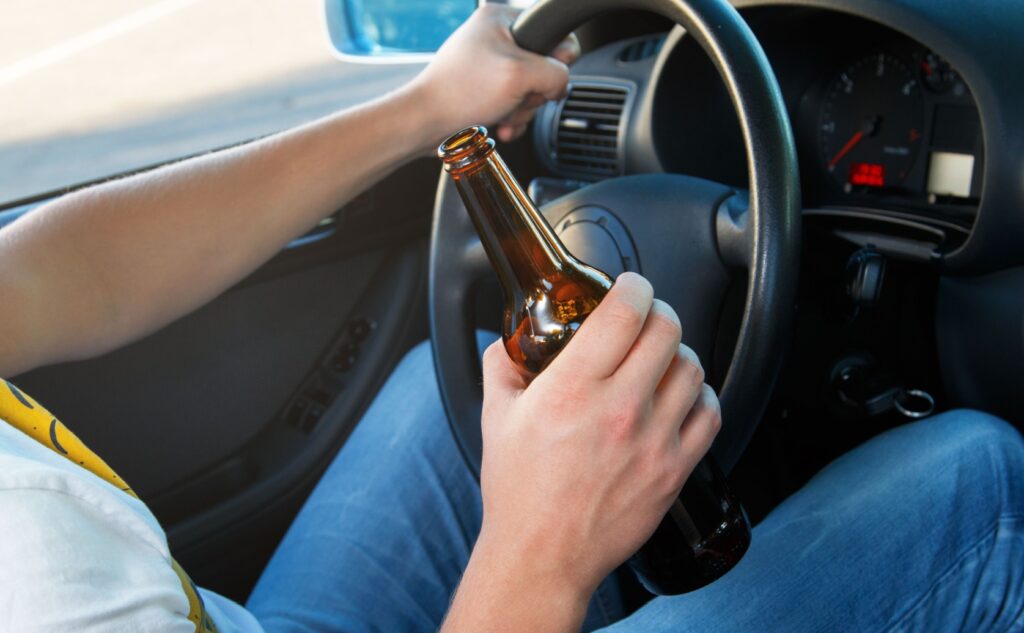
The Legal Alcohol Limit Under Section 65 of the National Road Traffic Act
Section 65 of the National Road Traffic Act 93 of 1996 prohibits driving, or sitting in the driver’s seat of, a vehicle while the concentration of alcohol in the blood or breath exceeds the prescribed level. The Act draws a clear line between ordinary drivers and those who drive professionally.
For an ordinary driver, the offence is committed when the blood alcohol concentration exceeds 0.05 grams per 100 millilitres of blood, or where the breath-alcohol concentration exceeds 0.24 milligrams per 1,000 millilitres of breath. The two figures describe the same threshold, simply measured in different specimens.
For a professional driver, defined as someone who drives for reward such as a bus, taxi, or heavy goods vehicle operator, the limit is far stricter. A professional driver commits the offence when the blood alcohol concentration exceeds 0.02 grams per 100 millilitres, or where the breath-alcohol concentration exceeds 0.10 milligrams per 1,000 millilitres of breath.
- Ordinary drivers: blood alcohol above 0.05 g/100 ml, or breath alcohol above 0.24 mg/1,000 ml.
- Professional drivers: blood alcohol above 0.02 g/100 ml, or breath alcohol above 0.10 mg/1,000 ml.
- Learner’s and licence holders under the Act: the stricter professional-driver limit applies where a professional driving permit is required.
What Counts Towards the Limit
The limit is a clinical measurement, not an estimate of how a driver feels. The law looks only at the concentration of alcohol detected in a sample of blood or deep-lung breath. Whether a person feels sober is irrelevant; what matters is whether the specimen exceeds the statutory number.
Several variables push a driver over the threshold. Body weight, metabolism, age, sex, food intake, the strength of the drink, and the time elapsed since the last drink all affect how quickly the body clears alcohol. Two people can drink the same quantity and record very different readings.
Because the body metabolises alcohol at roughly one standard drink per hour, “waiting an hour” before driving is not a reliable rule after several drinks. The only way to be certain of being under the limit is not to drink before driving. For professional drivers, even a single drink can breach the 0.02 g/100 ml threshold.
How the Limit Is Tested and Enforced
The South African Police Service enforces the limit through roadside breath testing and, where necessary, blood tests. A breathalyser provides an immediate indication, and an evidentiary breath-alcohol test may be used to support a prosecution. Where a breath sample is not available, or the reading is disputed, a registered medical practitioner may take a blood sample.
Refusing to cooperate has consequences of its own. Under the Act, a driver who unreasonably refuses to submit to a breath or blood test, or who fails to give an adequate specimen, may be charged with an offence carrying penalties comparable to driving under the influence. The refusal itself can also be used as evidence.
Procedural correctness matters. The prosecution must prove that the equipment was properly calibrated, that the officer was competent to operate it, and that any blood sample was taken, stored, and analysed in line with the regulations. Defects in the chain of evidence can be decisive in court.
Penalties for Exceeding the Legal Alcohol Limit
Driving under the influence is a criminal offence, not a traffic infringement. A conviction becomes part of the driver’s criminal record and is recorded on the National Criminal Register. A court sentencing an offender for the offence under section 65 may impose a range of penalties depending on the circumstances.
- A fine, which may run into tens of thousands of rand for higher readings.
- Imprisonment, either wholly or partly suspended, with direct imprisonment reserved for serious or repeat cases.
- Suspension or cancellation of the driver’s licence by the licensing authority.
- A permanent criminal record, which can affect employment, travel, and professional registrations.
- Forfeiture or impoundment of the vehicle in aggravated matters, where the court so orders.
Aggravating factors push the sentence upward. These include a reading far above the limit, driving with minors in the vehicle, an accident causing injury or death, prior convictions for the same offence, or attempting to evade the police. Where drunk driving causes death, the charges escalate to culpable homicide or, in serious cases, murder.
Steps to Take if You Are Charged
If you are arrested for driving under the influence, what you do in the first few hours matters. The right steps protect your rights and preserve the evidence that may later be needed in court.
- Remain polite and cooperate with lawful instructions, but do not make statements about how much you drank.
- Note the time of the test, the officer’s name and rank, and the serial number of the breathalyser used.
- Request a blood sample if the reading is disputed, and ask to be taken to a registered medical practitioner.
- Contact a criminal defence attorney as soon as possible, and before making any further statement.
- Keep all paperwork, including the written notice of the charge, bail receipt, and any test results.
Early legal advice can identify procedural defects, secure bail on fair terms, and ensure that the State is held to the full evidentiary standard. In many matters the strength of the State’s case turns on whether the testing and arrest were conducted strictly according to the regulations.
Frequently Asked Questions
What is the legal alcohol limit for driving in South Africa?
Under section 65 of the National Road Traffic Act 93 of 1996, an ordinary driver may not exceed 0.05 grams of alcohol per 100 millilitres of blood, or 0.24 milligrams per 1,000 millilitres of breath. Professional drivers are held to a stricter limit of 0.02 grams per 100 millilitres of blood, or 0.10 milligrams per 1,000 millilitres of breath.
Is the alcohol limit different for professional drivers?
Yes. A professional driver, meaning someone who drives for reward such as a bus, taxi, or heavy goods vehicle operator, is subject to a stricter blood alcohol limit of 0.02 grams per 100 millilitres, with a corresponding breath limit of 0.10 milligrams per 1,000 millilitres. For these drivers even a single drink can breach the limit.
Can I refuse a breathalyzer or blood test in South Africa?
You can refuse, but under the National Road Traffic Act an unreasonable refusal, or a failure to give an adequate specimen, is itself an offence carrying penalties comparable to driving under the influence. The refusal can also be used as evidence against the driver in court.
What are the penalties for exceeding the legal alcohol limit?
Driving under the influence is a criminal offence. A court may impose a fine, imprisonment, suspension or cancellation of the driver’s licence, a permanent criminal record, and in aggravated cases forfeiture of the vehicle. Where drunk driving causes death, charges may escalate to culpable homicide or murder.
How long does alcohol stay in the system before it is safe to drive?
The body metabolises alcohol at roughly one standard drink per hour, but this varies with body weight, sex, age, metabolism, food intake, and the strength of the drink. Because the legal limit is a clinical measurement and not a feeling of sobriety, the only reliable way to be under the limit is not to drink before driving.
Get help with a criminal law matter. If you have been charged with driving under the influence, Otrebski Attorneys’ Criminal Law department in Sandton can assess the State’s case, advise on the procedure, and represent you in court. Director Nastasja Otrebski leads a 100% women-led practice with a 5-star Google rating and Level 4 B-BBEE status.
Disclaimer. This article is general information about South African road traffic law, not legal advice for a specific case. Drunk-driving matters turn on their own facts, on the readings recorded, and on current police and prosecution practice. For advice on a particular charge, consult a qualified attorney.