
Being arrested for drunk driving for the first time is unsettling for any motorist in South Africa. The flashing blue lights, a breathalyser held out at the roadside, and a trip to the police station can turn an ordinary evening into a criminal case within hours, and most first offenders have no idea what comes next or how serious the consequences could be.
The offence itself is governed by section 65 of the National Road Traffic Act 93 of 1996, and it is prosecuted as a crime in the magistrate’s court under the Criminal Procedure Act 51 of 1977. A first conviction carries a statutory maximum of a fine, imprisonment for up to six months, or both, and it will almost always leave the offender with a criminal record. The court does. Have a real discretion on sentence, and a first offender with strong mitigating factors is often treated more leniently than a repeat offender.
This article sets out, in plain terms, what a first-time drunk driving offender in South Africa can expect at each stage: arrest and charge, court procedure, the penalties a magistrate can impose, the consequences for a driving licence, the criminal record, and the plea options that may be available.
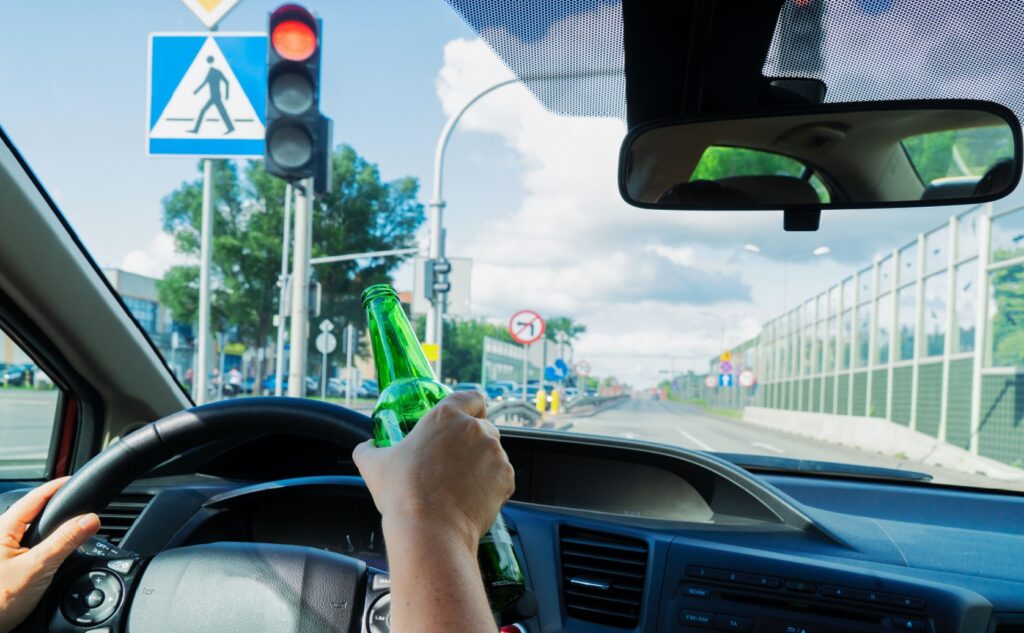
Arrest, Charge, and the First Night in Custody
Roadside drunk driving enforcement in South Africa usually begins with a roadblock or a stop by a traffic officer. If the officer forms a reasonable suspicion that you are driving under the influence of alcohol, you will be asked to blow into a breathalyser. If the reading is over the prescribed limit, or if the officer is otherwise satisfied that you are impaired, you may be arrested on the spot and taken to the nearest police station.
At the station the procedure is fairly standard. A breathalyser reading may be repeated, or a blood sample may be drawn by a registered medical practitioner. You are then booked into custody, your particulars are recorded, and a charge is opened under section 65 of the National Road Traffic Act. In most first-offence matters the investigating officer will allow police bail, also called “J50” bail, on the same night or the following morning, on condition that you attend court on the date reflected on the written notice.
- Prescribed alcohol limits. For an ordinary driver the legal blood-alcohol limit is 0.05 grams per 100 millilitres; for a professional driver it is 0.02 grams per 100 millilitres.
- Evidentiary breath or blood. The State usually leads the breathalyser printout or the blood-alcohol analysis report signed by the chemical analyst.
- Police bail. Bail in a first-offence matter is common, but it is not automatic, and the amount is set at the discretion of the police or, after hours, a magistrate.
The First Court Appearance and the Charge Sheet
The first court appearance, often called the first appearance on the roll, usually happens within 48 hours of arrest. The charge sheet is read, the accused is asked to plead, and the matter is either postponed for legal representation and disclosure of the docket, or set down for trial. For a first-time offender this hearing can feel intimidating, but it is largely administrative.
It is almost always wise to postpone the matter at the first appearance rather than plead straight away. Asking for a postponement gives an attorney time to obtain the police docket, examine the State’s evidence, identify any procedural defects in the arrest or the testing procedure, and advise properly on plea options before anything is placed on record.
Statutory Penalties for a First-Offence Conviction
Section 65 of the National Road Traffic Act sets graduated penalties for drunk driving, and the first-offence bracket is the least severe. On a first conviction the court may impose a fine, or imprisonment for a period not exceeding six months, or both. The same section provides for steeper sentences on a second or subsequent conviction, rising to periods of imprisonment that run into years, which is one reason it matters so much to keep a first offence off the record.
- Fine. A monetary fine is the most common sentence for a first offender, the amount of which depends on the magistrate’s assessment of the case.
- Imprisonment. A sentence of imprisonment up to six months is possible, and is usually reserved for aggravated matters such as an accident, injury, or a very high reading.
- Suspended sentence. The court may suspend a portion or the whole of a sentence of imprisonment on conditions, such as not being convicted of a similar offence within a stated period.
- Correctional supervision. In appropriate cases the court may consider non-custodial options under the Criminal Procedure Act.
These are maxima, not automatic outcomes. A first offender with no aggravating features and credible mitigating material is more likely to receive a fine than a custodial sentence, but every case turns on its own facts.
The Court’s Discretion and Mitigating Factors
Sentencing in South Africa is a discretionary exercise, and the magistrate is required to consider the triad of factors set out in the leading case of S v Zinn: the crime, the offender, and the interests of society. For a first-time drunk driving offender the “offender” leg is usually where the strongest argument lies.
- A clean previous conviction certificate, confirming that this is genuinely a first offence.
- A sworn personal affidavit setting out what happened, the circumstances, and genuine remorse.
- Character references from an employer, a religious or community leader, or a long-standing colleague.
- Proof of employment, studies, or family responsibilities that would be disrupted by imprisonment.
- Evidence of rehabilitative steps taken since the incident, such as an alcohol evaluation or a defensive driving course.
Mitigating material does not guarantee a lighter sentence, but its absence almost always works against an accused. Gathering it early, in writing, gives an attorney something concrete to place before the magistrate.
Licence Consequences and Endorsements
A drunk driving conviction also has administrative consequences for a driving licence. Section 35 of the National Road Traffic Act allows the court to endorse the licence with the conviction, and in appropriate cases to suspend or cancel the licence. A suspension prevents the holder from driving for the period stated in the order, and a cancellation requires the holder to reapply for a learner’s and driving licence from the beginning.
In practice, suspension or cancellation is more common in aggravated matters or where the reading is well above the prescribed limit, but the discretion exists even on a first offence. Where a suspension has been ordered, an attorney can in certain circumstances bring an application to have the licence reinstated early.
The Criminal Record and What It Means
A conviction under section 65 of the National Road Traffic Act results in a criminal record on the South African Police Service database. The record is permanent unless it is later expunged in terms of the Criminal Procedure Act, which is only possible after a period of ten years free of any further conviction. An admission of guilt fine paid to avoid a trial also produces a record, which is why it should never be accepted without first taking advice.
- Employment. Many employers run criminal-record checks, and a conviction can affect current employment and future job applications.
- Travel and visas. A criminal record may have to be disclosed on visa applications for countries such as the United States, the United Kingdom, and Australia.
- Professional licences. Some regulatory bodies treat a drunk driving conviction as a notifiable event.
- Expungement. After ten years free of conviction, an application may be brought through the Department of Justice to have the record expunged.
Plea Options for a First-Time Offender
The Criminal Procedure Act gives an accused person a real choice of how to plead, and that choice drives almost everything that follows. A first-offence drunk driving matter is not a single track that ends in conviction or acquittal; there are several legitimate routes.
- Plead not guilty. The State must then prove the case beyond reasonable doubt, and the defence may challenge the calibration of the breathalyser, the chain of custody of the blood sample, or the arresting officer’s observations.
- Plead guilty with mitigation under section 112. Where the State’s evidence is strong, a guilty plea under section 112 of the Criminal Procedure Act allows mitigating factors to be placed before the magistrate before sentence.
- Section 105A plea and sentence agreement. The defence and the prosecutor may agree on a plea and an appropriate sentence, which the magistrate must confirm. This often resolves a matter without a full trial.
- Admission of guilt fine. For some less serious matters the prosecutor may offer an admission of guilt fine. It avoids a trial but leaves a criminal record, so it should never be accepted without advice.
For motorists who are still working out what the charge actually means, our broader guide to DUI charges, laws, and explains the underlying offence in more detail.
Frequently Asked Questions
Will a first-time drunk driving conviction give you a criminal record in South Africa?
Yes. A conviction under section 65 of the National Road Traffic Act 93 of 1996 results in a criminal record on the South African Police Service database. The record is permanent unless it is expunged after ten years free of any further conviction. Even an admission of guilt fine paid to avoid a trial leaves a record, which is why it should not be accepted without legal advice.
What is the maximum sentence for a first-time drunk driving offender in South Africa?
On a first conviction under section 65 of the National Road Traffic Act, the court may impose a fine, or imprisonment for a period not exceeding six months, or both. The court also has a discretion to suspend a portion of any sentence of imprisonment, and to endorse, suspend, or cancel the driving licence. Stiffer penalties apply on a second or subsequent conviction.
Can a first-time drunk driving offender avoid jail time in South Africa?
Yes, in many cases. A first offender with no aggravating features, a clean previous conviction certificate, and credible mitigating material such as character references and proof of employment is often sentenced to a fine or a suspended sentence rather than direct imprisonment. Aggravating factors such as an accident, injury, or a very high reading increase the likelihood of a custodial sentence.
Will your driving licence be suspended for a first drunk driving offence?
Not automatically, but the court has the discretion under section 35 of the National Road Traffic Act to endorse, suspend, or cancel a driving licence on conviction. Suspension or cancellation is more common in aggravated matters or where the reading is well above the prescribed limit. In certain circumstances an attorney can bring an application to have a suspended licence reinstated early.
What plea options does a first-time drunk driving offender have?
Under the Criminal Procedure Act an accused may plead not guilty and force the State to prove the case beyond reasonable doubt, plead guilty with mitigation under section 112, enter into a section 105A plea and sentence agreement with the prosecutor, or accept an admission of guilt fine. Each route has different consequences for the criminal record and driving licence and should be weighed with a lawyer before any plea is tendered.
Get help with a DUI charge. Facing a first drunk driving charge is easier with the right lawyer beside you. The Criminal Law department at Otrebski Attorneys reviews the docket, advises on the plea options under the Criminal Procedure Act, gathers the mitigating material a magistrate will want to see, and stands with you in the magistrate’s court. We are a 100% women-led firm with a Level 4 B-BBEE rating, rated 5 stars across 12 reviews, working from our single Sandton office, and our Director Nastasja Otrebski leads the team that represents accused motorists across Gauteng and South Africa.
Call 060 500 3098 or book an appointment with our Criminal Law team.
Disclaimer. This article is general information about South African criminal and road traffic procedure, not legal advice for a specific matter. Sentencing outcomes, licence consequences, and plea options depend on the facts of each case and on current practice in the relevant magistrate’s court. For advice about a particular charge, consult a qualified attorney or Legal Aid South Africa.