
Being arrested for drunken driving is disorienting, and most people have no clear picture of what happens between the roadside and the courtroom. In South Africa, drunk driving under the influence of alcohol is prosecuted under section 65 of the National Road Traffic Act 93 of 1996, and the case moves through a sequence of clearly defined criminal justice steps rather than a single hearing.
This walkthrough sets out that sequence, from the moment of arrest through testing, charging, release, the police docket, the first appearance, plea, trial, verdict and sentence. It is written for anyone who has been arrested, summonsed, or who simply wants to understand how a drunken driving case unfolds in a South African magistrates’ court.
Knowing the stages helps you protect your rights, avoid avoidable mistakes, and give your attorney the information they need to act early.
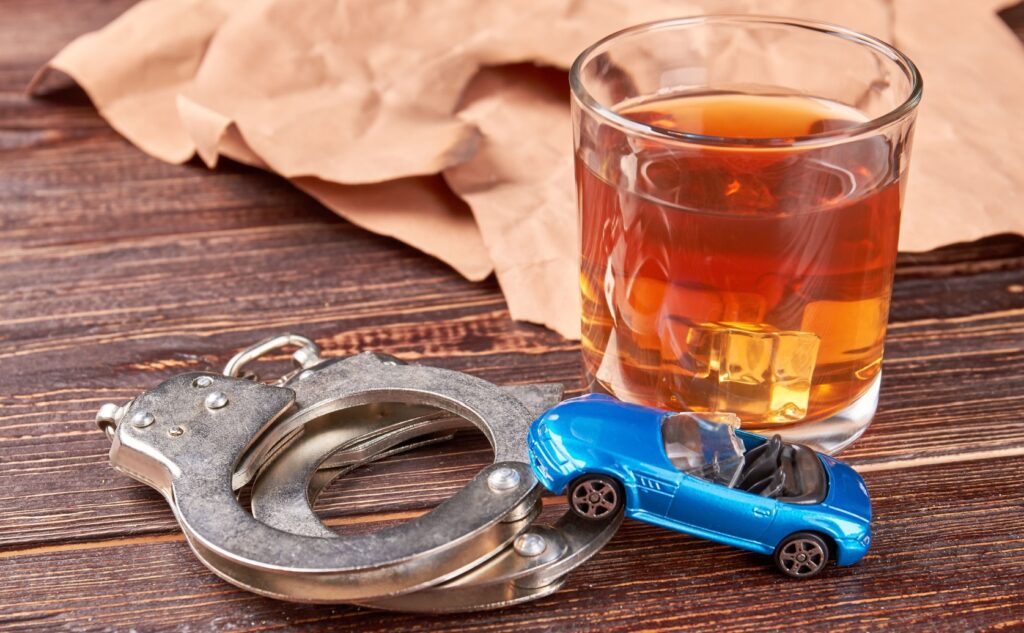
The Arrest: Section 40 of the Criminal Procedure Act
A drunken driving arrest is normally made at a roadblock, after a collision, or where an officer observes driving that suggests impairment. The power to arrest without a warrant comes from section 40 of the Criminal Procedure Act 51 of 1977, which allows a peace officer to arrest where there are reasonable grounds to believe an offence has been committed.
The arresting officer must have more than a hunch. There must be a reasonable suspicion, supported by something tangible: the smell of alcohol on the breath, slurred speech, unsteady movement, an admission by the driver, or a positive breath test. Without that grounding, the lawfulness of the arrest itself can later be challenged.
Testing for Alcohol: Breath and Blood
At the scene or at the police station, the officer will normally request a breathalyser test. Under section 65 of the National Road Traffic Act 93 of 1996, the prescribed limit is a blood alcohol concentration of 0,05 grams per 100 millilitres for ordinary drivers, and 0,02 grams per 100 millilitres for professional and novice drivers. The breath equivalent is set out in the same section.
Where the reading is over the limit, or where the officer has reason to believe the driver is over the limit, an evidential breath test or a blood sample usually follows. A blood sample must be drawn by a registered medical practitioner or a registered nurse, and the chain of custody for that sample becomes a central issue at trial.
- Breathalyser at the roadside or station: a preliminary indication of breath alcohol concentration.
- Evidential breath test: taken at the station and capable of being used in evidence.
- Blood sample: drawn by a medical professional, sealed, and sent to the SAPS forensic laboratory for analysis.
The Charge and Your Rights in Custody
Once arrested, the accused must be informed of the reason for the arrest and of the right to remain silent, the right to be brought before a court within 48 hours, and the right to consult a legal practitioner. These protections flow from the Constitution and from the Criminal Procedure Act.
- The right to remain silent and to be informed of the consequences of not remaining silent.
- The right to consult an attorney before making any statement or participating in an identification parade.
- The right not to be compelled to make a confession or admission that could be used against you.
- The right to be brought before a court within 48 hours of arrest, or by the first court day after the weekend.
Release on Bail or a Written Warning
For many first-time drunken driving matters without aggravating features, the accused is not kept in custody. The police commonly release the accused on a written warning to appear in court (the SAPS J534 notice), or on police bail fixed by the station commander. The National Prosecuting Authority and the South African Police Service oversee these release mechanisms.
- Written warning to appear (SAPS J534): the accused is given a date to attend the relevant magistrates’ court.
- Police bail: set by the station commander, generally where the matter is not serious enough for a formal bail application.
- Formal bail application in court: required where there are aggravating features such as a collision, injury, a very high reading, or prior convictions.
Where a formal bail application is needed, the court considers whether the interests of justice permit release, looking at factors such as the likelihood of standing trial, interference with witnesses, and the safety of the public. Bail conditions, if any, must be strictly observed until the case is finalised.
The Docket Goes to the National Prosecuting Authority
After the arrest, the police complete the investigation and compile the docket, which is then sent to the National Prosecuting Authority. The prosecutor applies the test in the NPA Prosecution Policy: whether there is a prima facie case and whether prosecution is in the public interest.
- If there is no prima facie case, or prosecution is not in the public interest, the prosecutor declines to prosecute and the matter ends.
- If the prosecutor decides to proceed, the accused is summonsed or the warning date is confirmed.
- Forensic blood-alcohol analysis from the SAPS laboratory often takes several weeks to a number of months and can delay this decision.
The First Court Appearance
The first appearance is short and is not the trial. The charge is read to the accused, the court asks whether the accused has legal representation, and the matter is usually postponed for further investigation or for disclosure of the docket to the defence. A plea is rarely taken on the first appearance.
Subsequent appearances deal with the readiness of the docket, the disclosure of evidence such as the breath or blood results, the calibration certificates for the breathalyser, and the setting down of a trial date. Where the accused intends to plead guilty, sentencing can follow relatively quickly once a statement of facts is agreed.
Plea and Trial
Where the accused pleads not guilty, the matter proceeds to trial. The State must prove its case beyond reasonable doubt. The prosecutor leads evidence from the arresting officer, the officer who administered the breath or blood test, the forensic analyst, and any civilian witnesses.
The defence may challenge the lawfulness of the arrest, the reliability of the breathalyser, the chain of custody of the blood sample, the calibration and operator certificates, and whether the State has proved impairment or the prescribed concentration beyond reasonable doubt. A reported judgment on section 65 of the Act, available through SAFLII, can affect how the magistrate manages these issues.
Verdict and Sentence
At the close of evidence, the magistrate delivers a verdict. If the accused is acquitted, the matter ends. If the accused is convicted, whether after trial or on a guilty plea, the court proceeds to sentence.
Sentencing is discretionary and balanced. For first offences the court often imposes a fine, with or without a period of imprisonment that is suspended on conditions. For serious matters, particularly where there was injury, a collision, a very high reading, or previous convictions, the legal consequences of offenses may include direct imprisonment and a lengthy driver’s licence suspension. The court considers the personal circumstances of the accused, the gravity of the offence, and the interests of society.
How Otrebski Attorneys Can Help
Otrebski Attorneys is a 100% women-led practice with a single office in Sandton and a dedicated Criminal Law department. We are a Level 4 B-BBEE contributor and carry a five-star rating across twelve reviews. Our Director, Nastasja Otrebski, personally oversees the criminal defence caseload.
For a drunken driving matter, we typically provide driving defense support by attending the first appearance with you, securing full disclosure of the docket, advising on plea and prospects, and identifying any procedural defect that may affect the State’s case. We deal with criminal law matters daily and can give you an honest, evidence-based view of where your matter stands at each stage. We deal with criminal law matters daily and can give you an honest, evidence-based view of where your matter stands at each stage.
Frequently Asked Questions
What legal limit applies to drunken driving in South Africa?
Under section 65 of the National Road Traffic Act 93 of 1996, the prescribed blood alcohol limit is 0,05 grams per 100 millilitres for ordinary drivers and 0,02 grams per 100 millilitres for professional and novice drivers. Equivalent breath alcohol limits are set out in the same section.
How soon after a drunken driving arrest will I go to court?
Where the accused is released on a written warning (SAPS J534) or police bail, the first court date is usually set within a few days to about two weeks of the arrest. Where a summons is issued, it typically follows within a few weeks to a few months, depending on the court roll and the time taken for the police docket to be enrolled.
Will I be kept in custody after a drunken driving arrest?
In most first-time drunken driving matters without aggravating features, the accused is released on a written warning to appear in court or on police bail set by the station commander. A formal bail application is usually only required where there are aggravating circumstances such as injury, a collision, or a very high reading.
Can I refuse a breathalyser or blood test?
A driver may decline to cooperate, but refusal carries consequences under section 65 of the National Road Traffic Act and can be used against the accused in court. Refusal does not prevent the State from prosecuting on other evidence of impairment, including officer observations and civilian testimony, and can support an inference adverse to the accused.
What sentence can a drunken driving conviction carry?
Sentencing is at the discretion of the court. For a first offence without aggravating features the court often imposes a fine, with or without a suspended term of imprisonment. Where there are aggravating features such as injury, a collision, a very high reading, or prior convictions, direct imprisonment and a lengthy driver’s licence suspension are possible.
Get help with a criminal law matter. If you have been arrested for, or summonsed to court on, a drunken driving charge, the Criminal Law team at Otrebski Attorneys can advise you on plea, prospects, and procedure. Our women-led practice, under Director Nastasja Otrebski, deals with criminal defence matters daily and will give you an honest, evidence-based view of your case.
Disclaimer. This article is general information about the criminal justice process for drunken driving in South Africa, not legal advice for a specific matter. Procedures, limits, and sentencing practice change over time and depend on the facts of each case. For advice on your own arrest or summons, consult a qualified attorney.
Get Legal Help Today
Speak to an Otrebski Attorneys lawyer about your matter, or request an appointment and we will call you back.
☎ Call 060 500 3098WhatsApp Us