
Trusted Attorneys For Sexual Assault Victims In South Africa
Victim-Side Representation, Protection Orders and Civil Claims
This page sets out, calmly and at your pace, what South African law offers after a sexual assault: how reporting works, what the J88 examination records, how protection orders are obtained, and the rights that protect you in court, so that you can weigh your legal support options and choose a next step whenever you are ready.
Otrebski Attorneys is a 100% women-led firm acting for survivors and complainants across South Africa’s nine provinces from our Sandton office: reporting support, protection orders, trial preparation and civil claims against perpetrators.




Book a Consultation
A member of the Otrebski team will respond soon

How the Law Actually Protects Sexual Assault Complainants
The Criminal Law (Sexual Offences and Related Matters) Amendment Act 32 of 2007 rewrote South Africa’s sexual offences law: it codified rape and sexual assault, built a framework of services for victims, and directed courts on how complainant evidence is to be treated. The protections are real. Most are applied only on request.
A complainant’s path moves through these stations:
- report at any police station
- J88 medico-legal examination
- case docket opened and investigation
- interim protection order where eligible
- bail hearing with your views recorded
- trial with courtroom safeguards
- sentence and victim impact statement
The Act defines rape in section 3 and sexual assault in section 5, and it directs that a complainant’s evidence may not be treated with caution merely because of the nature of the offence, and that delay in reporting does not, by itself, diminish the complaint. The J88 form records the medico-legal examination and serves as prima facie evidence at trial, which is why the examination matters even while you are still deciding about a charge.
Two features catch unrepresented complainants. First, forensic evidence and preventive treatment, including for HIV, are time-sensitive: the examination is best done within 72 hours, while a report can be opened later. Second, the Act itself does not issue protection orders; those come from the Domestic Violence Act 116 of 1998 where a domestic relationship exists, or the Protection from Harassment Act 17 of 2011 where it does not, and the wrong Act means a restart.
What a Victim-Side Attorney Does
In the criminal case: advising before statements to the police, monitoring the docket, placing your views on the accused’s release before the prosecutor at the bail hearing, preparing you for testimony alongside the court preparation services, and applying for an intermediary or closed-circuit television where eligible. The prosecutor prosecutes; your attorney makes sure your rights are asserted at every stage.
Outside the criminal case: interim and final protection orders under the correct Act, and civil claims against the perpetrator, and where the law allows, an employer whose negligence left you exposed, assessed against the three-year prescription period. Each advised on before the deadline, not after.
The State prosecutes the crime. Your protection, your voice in the process and your claim are separate, and each needs its own instruction.
Reporting Now or Reporting Later: Both Are Valid Paths
Reporting Now
A case opened at once at any police station, with the J88 examination done early, while forensic evidence is at its strongest. Preventive treatment, including for HIV, is best started within 72 hours, and advice before your first statement keeps it complete and consistent from the outset.
Where the perpetrator is a partner, ex-partner or family member, an interim protection order under the Domestic Violence Act can be granted the same day. The Sexual Offences Act also protects your evidence from being treated with caution merely because of the nature of the offence.
Reporting Later
A case may be opened at any police station at any time, and the Act directs that delay in reporting does not, by itself, diminish your complaint. Late reporting is common, and a protection order stands on its own whether or not a charge is ever laid.
What time makes harder is forensic evidence, which becomes more difficult to gather as days pass. The civil claim keeps its own window, generally three years from the assault, so each route can be assessed in its own time and neither is the wrong choice.
| Consideration | Reporting Now | Reporting Later |
|---|---|---|
| When the case opens | At once, at any police station | At any later time, at any police station |
| Forensic evidence | Strongest when the J88 is done early, best within 72 hours | Harder to gather as time passes, though never dismissed |
| The law’s view | Your evidence is not treated with caution | Delay alone does not diminish the complaint |
| Health care | Preventive treatment, including for HIV, best within 72 hours | Treatment is still worth seeking at a health facility |
| Civil claim | Generally three years from the assault | The same period runs from the assault, not the report |
What Happens When You Reach Out
What follows, stage by stage, at your pace. Nothing here is a demand made of you.
Your health and safety first
Preventive treatment, including for HIV, is time-sensitive and best started within 72 hours. The J88 examination at a health facility records the forensic evidence; you can consent to treatment while still deciding about a charge.
Reporting, whenever you are ready
A case may be opened at any police station, and the docket is moved to the correct station for the area. Advice before your first statement keeps it complete and consistent from the outset.
Protection where you need it
Where the perpetrator is a partner, ex-partner or family member, an interim protection order under the Domestic Violence Act can be granted the same day. Otherwise the Protection from Harassment Act route applies.
Investigation and bail
The docket passes to the investigating officer. Your views on the accused’s release must be placed before the court through the prosecutor at the bail hearing, which is where a watching advocate of your own matters.
Trial preparation and your rights in court
Children and vulnerable witnesses may testify through an intermediary or closed-circuit television under the Criminal Procedure Act, proceedings can be closed to the public, and the law prohibits publishing your identity. Preparation turns testimony from an ambush into an account.
Sentence, your voice, and the claim
A victim impact statement is presented at sentencing. Separately, the civil claim against the perpetrator, and any responsible third party, is assessed and launched inside the three-year prescription period.
Which Courts Hear Sexual Offence Matters
Sexual offence and related civil matters run through the national court structure:
- Regional and District Magistrates’ Courts – the relevant magisterial district tries most sexual offences, including designated sexual offences courts with support services.
- High Court of South Africa, Gauteng Division, Johannesburg – the primary seat for the firm’s national practice: serious trials, civil claims and appeals from across the country.
- Supreme Court of Appeal and Constitutional Court – further appeals and constitutional questions, in Bloemfontein and Johannesburg respectively.
Otrebski Attorneys serves survivors across South Africa’s nine provinces from its Sandton office, following matters in the relevant division wherever the trial is set down.
How to Choose an Attorney as a Survivor
Trust and pace decide these matters. Choose accordingly.
- Unambiguously victim-side.Confirm the firm acts for complainants in these matters. Some criminal practices appear on both sides; your attorney must be yours without qualification.
- A women-led team, if that matters to you.Many survivors prefer to instruct women after a sexual assault. That is a legitimate selection criterion, and a 100% women-led firm offers it as standard, not as a marketing gesture.
- Trauma-informed pace.The first consultation should be about what happened and what you need, not paperwork pushed across the desk. Ask how the firm takes instructions from traumatised clients.
- Fluency in all three Acts.The Sexual Offences Act, the Domestic Violence Act and the Protection from Harassment Act interlock. An attorney who knows all three routes your protection correctly the first time.
- Written scope and fees.Each phase, from reporting support through the protection order to the civil claim, scoped and quoted in writing.
What It Costs and What We Do First
As a market guide, a protection order application commonly runs R5,000–R15,000 through the interim and return stages; attending the criminal trial as the complainant’s attorney from around R15,000 depending on length; and a civil claim assessment and issue from R20,000–R50,000, on hourly rates of R1,500–R4,400. The prosecution itself carries no tariff for the complainant; the State bears that cost.
We start with a first conversation about what happened and what you need; nothing is decided or charged that day. Each phase, from reporting support to the protection order or the civil claim, is then scoped and quoted in writing before it begins. No hidden costs.
What Helps, and What Does Not
Some things genuinely help. None of what follows is required of you today.
The First 72 Hours
Immediate Steps, at Your Pace
In the first days your health comes first. Preventive treatment, including for HIV, is time-sensitive and best started within 72 hours, and the J88 examination at a health facility records the forensic findings with your consent. You can accept treatment while still deciding about a charge; the examination matters even at that undecided stage.
Reporting can happen at any police station, now or later, and the law does not treat delay in reporting as diminishing your complaint. If you have already washed or changed, that is understandable: say so at the examination, because evidence may survive, and a case can be opened while you decide. None of it needs to be faced alone or at speed.
Questions Survivors Ask
Will I have to see or face the accused in court?
Not without safeguards. Children and vulnerable witnesses may testify through an intermediary or closed-circuit television under the Criminal Procedure Act, screens can be ordered, and sexual offence proceedings can be closed to the public. Your attorney applies for these before the trial, not during it.
Is it too late to report if days or weeks have passed?
No. A case may be opened at any police station at any time, and the Criminal Law (Sexual Offences and Related Matters) Amendment Act 32 of 2007 directs that delay in reporting does not, by itself, diminish your complaint. Late reporting is common; it only makes forensic evidence harder to gather.
Will my identity be published?
No. Section 154(3) of the Criminal Procedure Act prohibits publishing, in any form, information that reveals the identity of a complainant in a sexual offence case, and breach is a criminal offence. Closed proceedings add a further layer of privacy.
Do I have to lay a charge to get a protection order?
No. A protection order under the Domestic Violence Act 116 of 1998 or the Protection from Harassment Act 17 of 2011 is civil and stands on its own. You may seek protection while deciding on, or entirely without, a criminal case.
Can I claim compensation from the perpetrator?
Yes. A civil claim proceeds in your own name on the balance of probabilities, whether or not the State prosecutes or obtains a conviction, and must generally be launched within three years. Where an employer’s negligence contributed to the harm, the claim may extend to it.
What happens at the J88 examination?
A medical practitioner examines you with your consent and records injuries and forensic findings on the prescribed J88 form, which becomes prima facie evidence in any trial. It is done alongside treatment, not instead of it, and is best done within 72 hours of the assault.
Will I be believed?
The law no longer stacks the old assumptions against you. The Sexual Offences Act directs courts not to treat your evidence with caution merely because of the nature of the offence, and not to hold delay in reporting against you. Credibility is tested as in any case, but on your account, not on stereotype.
Does it cost me anything to have the matter prosecuted?
No. The State bears the cost of the investigation and prosecution. The prosecutor is not your lawyer, though: they act for the State, which is why complainants instruct victim-side attorneys to protect their own interests alongside the case.
The system will not explain your rights. We will.
Otrebski Attorneys practises from Office 9th Floor, The Spaces, 5th Street, Sandhurst, Sandton, serving survivors across South Africa, with transparent billing and no hidden costs.
Call 060 500 3098
Office hours: Monday to Friday, 08h00 – 17h00 · send a message
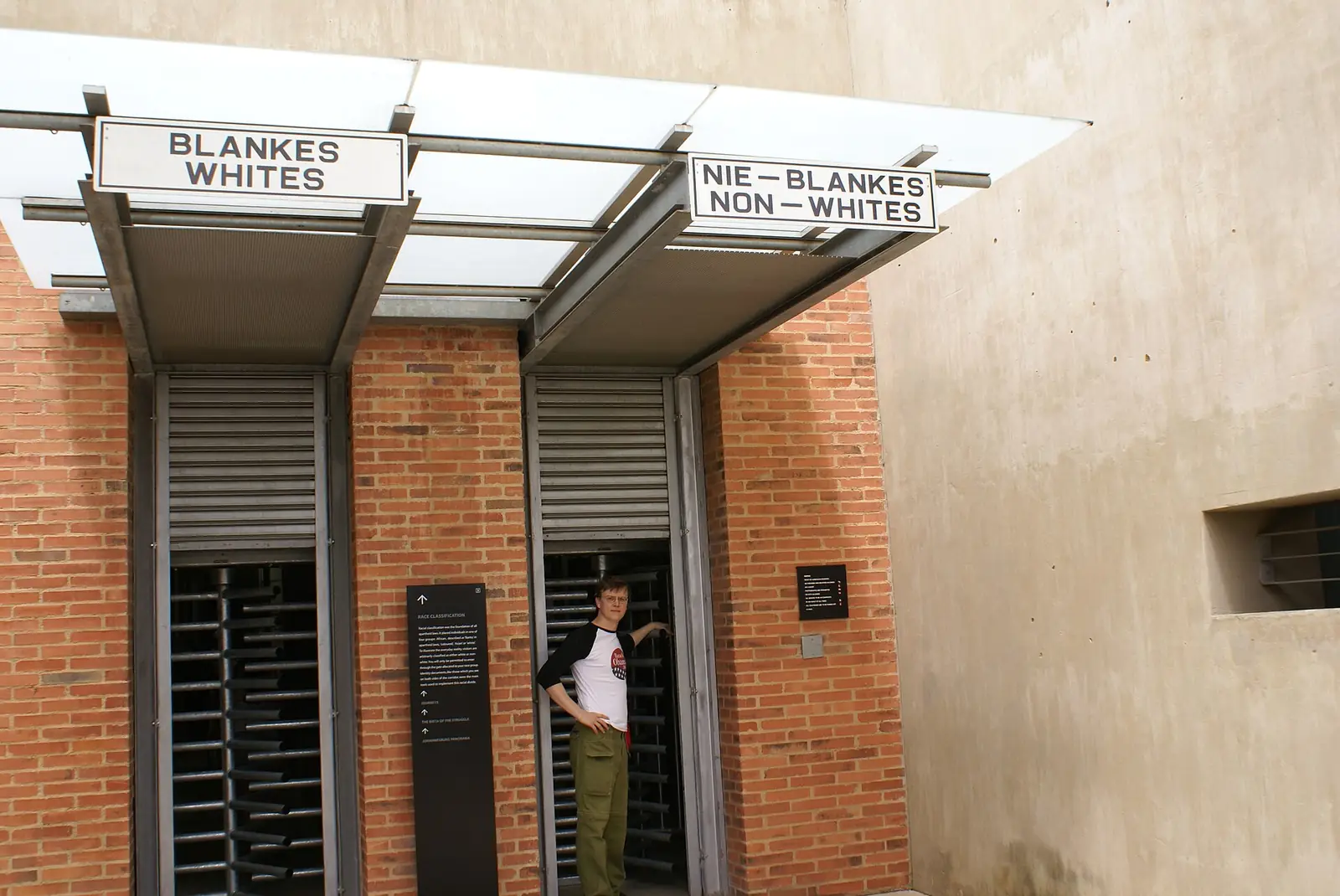
Image credits: Eternal Flame, Constitution Hill – Mihi tr via Wikimedia Commons, CC BY 4.0; Johannesburg skyline – Khaanya96 via Wikimedia Commons, CC BY-SA 4.0; Apartheid Museum – Justin Hall via Wikimedia Commons, CC BY 2.0.