
Sale Agreement & Commercial Contract Law Firm In Johannesburg
Sale of Business Agreements, Warranties and Commercial Drafting
A buyer who signs a sale of business on a voetstoots basis without warranty cover inherits every latent defect, undisclosed liability and SARS exposure the seller leaves behind, whether the business is a Maboneng restaurant, a Braamfontein practice or a City Deep distribution operation, while a seller who signs an ambiguous suspensive condition can watch the deal collapse months later and still forfeit the deposit.
Otrebski Attorneys serves Johannesburg clients from its Sandton office, drafting and negotiating sale of business agreements, asset and share sales and the commercial contracts around them for the city’s trading businesses, professional practices and SME groups.



Book a Consultation
A member of the Otrebski team will respond soon
Why Sale Agreements Are Decided Before Signature
A business is sold once. Every liability not allocated in writing is allocated to whoever can least afford it.
Every Johannesburg sale of business file runs through the same clauses:
- voetstoots and latent defects
- warranties and indemnities
- suspensive conditions
- employees and section 197 transfer
- VAT and going concern
- restraints of trade
South African common law lets a seller sell voetstoots, as is, with defects the seller did not deliberately conceal, and that clause is enforceable on commercial sales. The answer is contractual: warranties that the book of business, assets, tax affairs and litigation position are as represented, backed by an indemnity and, where possible, purchase-price holdbacks or escrow. Where the buyer is a consumer dealing with a supplier in the ordinary course, the Consumer Protection Act 68 of 2008 cuts down voetstoots and implied-quality rights apply.
Two statutory fixtures decide deals that were never considered at drafting: employees transfer automatically to the buyer under section 197 of the Labour Relations Act 66 of 1995 on a sale as a going concern, and the VAT treatment, zero-rated going concern or standard-rated, must be fixed in the clause, not discovered at transfer. Both have sunk signed deals.
What a Commercial Contracts Attorney Does
Deal structure first: asset or share sale, priced against tax, liability and transfer-duty consequences. Then the agreement: purchase price and adjustment mechanics, warranties scoped to the actual business, indemnities, suspensive conditions drafted to survive contact with lenders, and restraints that will hold.
Around the deal, the commercial paper that carries it: supply and distribution agreements, cessions of leases and contracts, and the disclosure letter that answers the warranties line by line before signature.
A warranty clause costs a paragraph. Its absence costs the purchase price.
The Deal Pathway, Step by Step
From mandate to a signed agreement that closes.
Scoping and structure
Asset or share, going concern or not, and the tax and liability consequences of each are settled before drafting starts.
Heads of agreement
Price, structure, suspensive conditions and exclusivity are captured in non-binding heads, fixing the commercial ground.
Due diligence
The buyer’s team tests contracts, leases, employees, litigation, tax and assets against what is represented, and the findings shape the warranties.
Drafting
The sale agreement is drafted: price and adjustment mechanics, warranties, indemnities, voetstoots treatment, restraint and the section 197 and VAT clauses.
Negotiation and disclosure
Warranties are negotiated down or answered in a disclosure letter, suspensive conditions are tightened, and deposit and escrow mechanics are settled.
Signature, conditions and closing
The agreement is signed, finance and regulatory conditions are fulfilled inside their dates, and transfer, cessions and handover complete at closing.
Which Courts Serve Johannesburg Clients
Johannesburg commercial matters run through the city’s machinery:
- High Court, Gauteng Division – commercial litigation, contract disputes and insolvency matters.
- Arbitration Foundation of South Africa (AFSA) – commercial contract and sale disputes routed by arbitration clauses common in Johannesburg deals.
- Magistrates’ and Regional Courts – smaller commercial claims within jurisdiction.
Otrebski Attorneys serves Johannesburg clients from its Sandton office, minutes from the city’s courts.
How to Choose a Commercial Contracts Firm in Johannesburg
Your agreement is the asset. Choose on drafting evidence.
- Deal-side breadth.Ask for both buy-side and sell-side mandates: a lawyer who has only ever defended warranties drafts different paper from one who has attacked them.
- Structure-first method.The first conversation should be asset or share and why, not a request to sign the template.
- Warranty craft.Ask how they scope warranties to the actual business and how they run disclosure letters. That is where deals are protected.
- Tax and LRA fluency.Section 197 employee transfer and VAT going-concern treatment decide real money and must be drafted, not discovered.
- Verifiable standing.Confirm the firm and its attorneys through the Legal Practice Council register.
What Sale Agreements and Commercial Contracts Cost
As a market guide, drafting a sale of business agreement commonly runs R15,000–R45,000 depending on complexity; standard commercial contracts such as supply and distribution agreements R6,000–R20,000; negotiation is typically hourly at R1,800–R4,500, and contested deals rise materially.
Quotes exclude transfer duty, SARS filings, auditor and tax adviser fees, and counsel. Otrebski Attorneys scopes each mandate in writing before work begins. No hidden costs.
Asset Sale vs Share Sale
Sale of the Business Assets
The buyer acquires the assets, stock, goodwill, contracts and employees as a going concern; the seller’s company keeps its history, and its liabilities, behind.
Cleanest liability cut for the buyer, but every contract, lease and registration must be transferred, and employees move by operation of section 197 of the LRA.
Sale of the Shares
The buyer acquires the company itself, with everything inside it: assets, contracts, history and contingent liabilities.
Simplest transfer, but the buyer needs warranties and indemnities wide enough to stand in for due diligence, because undisclosed liabilities come with the company.
| Dimension | Asset Sale | Share Sale |
|---|---|---|
| What the buyer gets | Selected assets and goodwill | The company and everything in it |
| Liability exposure | Historic liabilities stay with seller | Historic liabilities travel with the company |
| Tax shape | Transfer duty or VAT per asset mix | Securities transfer or dividends tax angles |
| Consents needed | Third-party consents per contract and lease | Share transfer, usually fewer |
| Warranty weight | Focused on assets and title | Critical: they carry the diligence gap |
Common Mistakes to Avoid
The expensive deal mistakes are avoidable.
Frequently Asked Questions
Our deal collapsed when the suspensive condition failed. What happens to the deposit?
The answer sits in the agreement’s own consequences clause, which is why it must be drafted with dates, definitions and a stated destination for the deposit before signature. Where the condition was never validly fulfilled, the agreement usually lapses and the deposit follows that clause; where fulfilment is disputed, the deposit can sit frozen while the parties fight. Take the agreement to a commercial lawyer before signing anything about the deposit.
What does voetstoots actually mean when buying a business?
It means sold as is, with all defects, visible and hidden, provided the seller did not deliberately conceal a known defect. On commercial sales between businesses the clause is generally enforceable, which is why a buyer needs warranties and an indemnity rather than reliance on goodwill.
Does the Consumer Protection Act apply to my business sale?
Only where a consumer buys from a supplier in the ordinary course of business, typically smaller transactions. On a sale between two companies or a commercial acquisition, the CPA’s implied-quality protections generally do not apply and the common law, plus your warranty clauses, governs.
Should I buy the assets or the shares?
It depends on liability and tax. An asset sale leaves the seller’s historic liabilities behind and suits cautious buyers; a share sale transfers the company whole and is simpler but carries every contingent liability with it. Structure is decided before drafting, with tax advice.
What happens to the employees when I sell my business?
If the sale is as a going concern, the employees transfer to the buyer automatically under section 197 of the Labour Relations Act, on the same terms, with service years intact. The sale agreement should say so expressly and allocate the liability for retrenchment if any.
What is a disclosure letter?
The seller’s written answers to the buyer’s warranties, line by line. Anything fairly disclosed is carved out of the warranty, which is why buyers scrutinise the letter and sellers draft it carefully, before signature.
Where are Johannesburg contract disputes heard?
Mostly the High Court, Gauteng Division in the city, or the Magistrates’ and Regional Courts for smaller claims, unless the agreement routes disputes to arbitration, which commercial contracts in the Johannesburg market commonly do through AFSA clauses.
Do I need a lawyer for a small business sale in Johannesburg?
The size of the deal changes the fee, not the exposure. An inner-city restaurant or professional practice sale carries the same voetstoots, employee and VAT issues as a larger transaction, just on a smaller balance sheet.

Speak to a specialist.
Otrebski Attorneys practises from Office 9th Floor, The Spaces, 5th Street, Sandhurst, Sandton – with transparent billing and no hidden costs.
Call 060 500 3098
Office hours: Monday to Friday, 08h00 – 17h00 · send a message
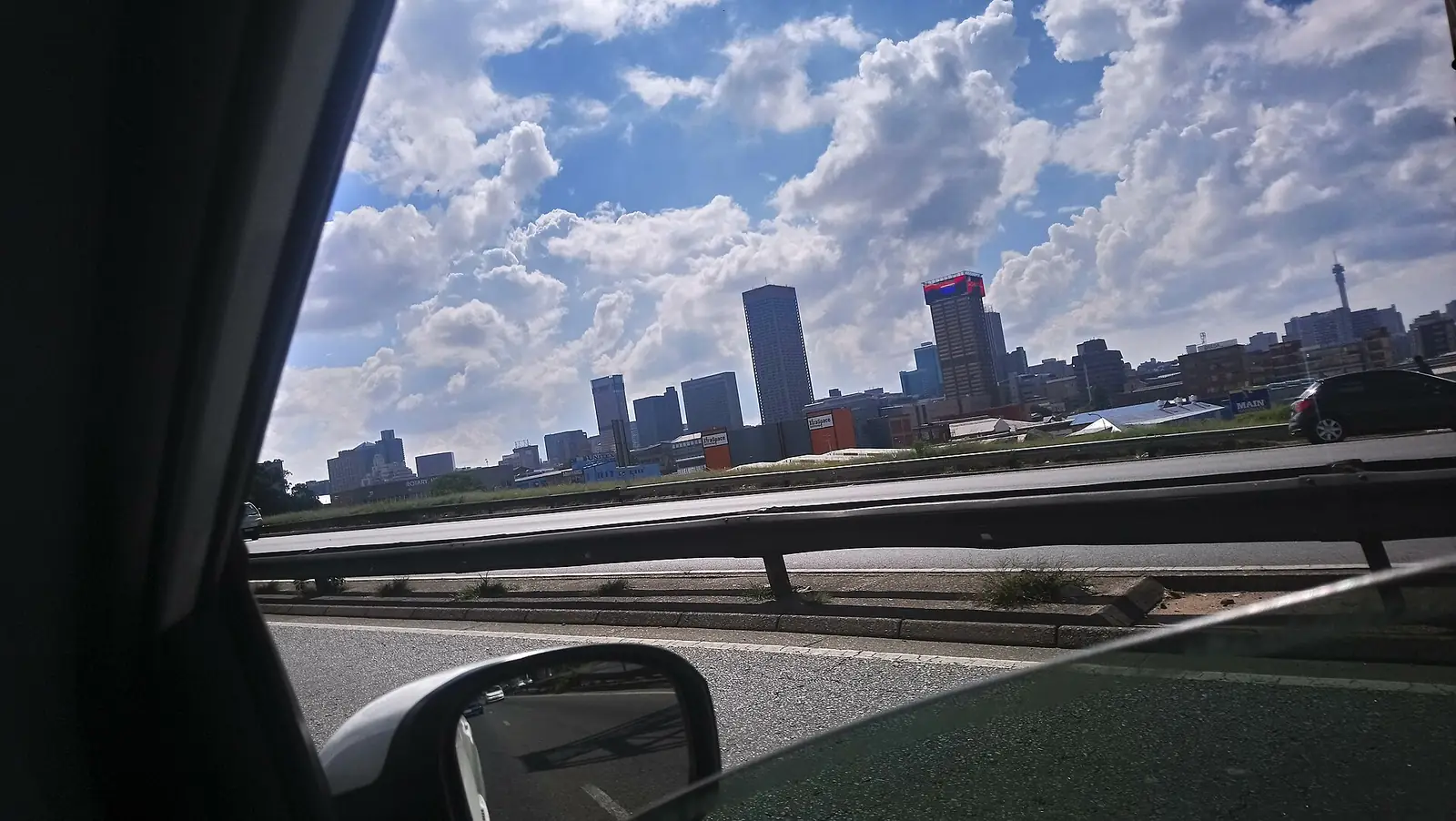
Image credits: Eternal Flame, Constitution Hill – Mihi tr via Wikimedia Commons, CC BY 4.0; Johannesburg skyline – Khaanya96 via Wikimedia Commons, CC BY-SA 4.0; Mandela Bridge, Braamfontein – South African Tourism via Wikimedia Commons, CC BY 2.0.