
Property Law Attorneys Johannesburg
Transfers, Bonds, Title and Property Disputes
A Johannesburg sale can collapse at the last desk: the transfer duty receipt withheld, the bond condition lapsed, the deed rejected at the Pretoria registry. Months after acceptance, the buyer’s deposit sits hostage to paperwork nobody checked, while boundary overhangs and unlawful occupiers turn a signed deal into a dispute.
We attend to property transfers, bond registrations, title conditions and eviction matters for buyers, sellers and landlords across the Johannesburg metro, lodging every transfer where it registers, the Deeds Registry in Pretoria, from our Sandton office.




Book a Consultation
A member of the Otrebski team will respond soon
How a Johannesburg Property Transfer Actually Registers
Johannesburg property changes hands on paper and registers in Pretoria. The distance between the two is where delays live. The economic capital of the country still registers its title in the registry that serves all of Gauteng.
Every Johannesburg transfer runs through the same machinery:
- the offer to purchase, signed and conditional
- bond approval or cancellation
- the conveyancer’s transfer documents
- transfer duty receipt or VAT exemption
- lodgement at the Deeds Registry, Pretoria
- registration and payment out
The Deeds Registries Act 47 of 1937 governs the registration of South African land. Only a qualified conveyancer, an attorney who has passed the specialised conveyancing examination, may attend to transfers and bond registrations. In Gauteng the deeds registry sits in Pretoria: every Johannesburg property, however central, registers there.
Two forks matter at the outset. Where the seller is not a VAT vendor, the buyer pays transfer duty, scaled progressively above the nil band. Where the seller is a VAT vendor selling in the course of the enterprise, VAT replaces duty. Getting the fork wrong delays the duty receipt, and the receipt delays everything.
What a Property Law Attorney Does
Transfer: title conditions and figures checked against the offer, rates clearance and transfer duty obtained, the transfer deed prepared and signed, lodgement and registration followed through the Pretoria registry until payment is made to the seller.
Beyond transfer: servitudes and title conditions interpreted before purchase, bond cancellations coordinated for simultaneous registration, and evictions of unlawful occupiers brought under the Prevention of Illegal Eviction from and Unlawful Occupation of Land Act 19 of 1998, which requires a court order no matter what the lease says.
Possession is not ownership. Ownership moves at the deeds registry, not at signature.
The Process, Step by Step
From offer to registered, on real timelines.
Offer to purchase
Price, suspensive conditions such as bond approval or the sale of the buyer’s own home, and the duty-versus-VAT question are settled here. Conditions carry dates; diarising starts on signature.
Bond approval
The buyer’s bond application is approved, ordinarily within two to four weeks. Bond originators speed submission, not the bank’s credit decision.
Conveyancer instructed
The seller nominates the transferring attorney. Figures are requested: rates clearance from the City of Johannesburg, levies clearance, and bond cancellation figures.
Documents and duty
Transfer documents are signed; SARS issues the transfer duty receipt, commonly two to six weeks after a complete filing; the bond attorney prepares the bond documents.
Lodgement in Pretoria
Transfer, bond and cancellation are lodged together at the Deeds Registry in Pretoria; scrutiny and preparation to registration typically take some days to two weeks in the ordinary course.
Registration and payment
On simultaneous registration the sale completes: the seller is paid, the bond starts, and the new title reflects in the deeds office’s records. The whole transfer commonly runs eight to twelve weeks.
Which Offices and Courts Serve Johannesburg Property Matters
Johannesburg property work runs through these offices and forums:
- Johannesburg Magistrate’s Court, 26 Fox Street – eviction applications under the PIE Act and lower-court civil claims for the Johannesburg magisterial district.
- High Court of South Africa, Gauteng Division, Johannesburg – title disputes, trust and estate property litigation, sitting on Pritchard Street in the CBD.
- Deeds Registry, Pretoria – every Johannesburg transfer, bond and cancellation is lodged and registered here.
Otrebski Attorneys serves clients across the Johannesburg metro from its 5th Street, Sandhurst office.
How to Choose a Property Law Attorney in Johannesburg
Your transfer runs on deadlines set by others. Choose on evidence.
- Qualified conveyancer, verifiable.Conveyancing rights follow a passed examination; ask who in the practice holds them and confirm standing with the Legal Practice Council.
- Pretoria registry familiarity.Registration runs through the Pretoria deeds office; daily lodgement practice means fewer rejections.
- Communication discipline.Ask how often you will be updated between signature and registration. Silence for weeks is the norm you are paying to avoid.
- Duty-versus-VAT fluency.The first substantive question of any transfer; hesitation costs the receipt, and the receipt costs the date.
- Clear fee structure.Transfer fees, bond fees, duty, rates and levies clearance should each appear in the written quote, separately.
What Property Law Work Costs
As a market guide, transferring attorney fees commonly run R25,000–R60,000 on a median Johannesburg residential transfer, on the profession’s sliding guidelines; bond registration fees R10,000–R25,000; eviction applications from R15,000–R40,000 depending on opposition, with transfer duty, clearances and deeds office charges on top.
Transfer duty or VAT, clearance certificates and deeds office fees are disbursements, quoted separately from professional fees. Otrebski Attorneys scopes each phase in writing before it begins.
Transfer Duty Purchase vs VAT Purchase
Transfer Duty Sale
The ordinary private sale: the seller is not a VAT vendor.
The buyer pays transfer duty to SARS on a progressive scale above the nil band of R1,210,000 from 1 April 2025, and the duty receipt is a precondition of registration. The receipt’s timing is the transfer’s timing.
VAT Sale
The seller is a VAT vendor, typically a developer or a trading company, and the property is sold in the course of that enterprise.
No transfer duty; VAT is payable by the seller at the standard rate, usually built into the price. The conveyancer confirms the vendor status early, because it changes the cost of the deal and the paperwork SARS expects.
| Issue | Transfer Duty Sale | VAT Sale |
|---|---|---|
| Seller’s status | Not a VAT vendor | VAT vendor; sale in the enterprise |
| Who pays SARS | Buyer, by progressive scale | Seller, at the standard VAT rate |
| Nil band | R1,210,000 from 1 April 2025 | No duty; VAT in the price |
| Registration precondition | Transfer duty receipt | VAT vendor confirmation |
| Common trap | Late receipt delays lodgement | Wrong status assumed at offer |
Common Property Law Instructions
Typical Instructions Across the Metro
- Residential and commercial transfers
- Bond registrations and cancellations
- Servitude and title condition checks
- Rates and levies clearance certificates
- Transfer duty and VAT confirmations
- PIE Act eviction applications
- Simultaneous registration coordination
Common Mistakes to Avoid
The costly mistakes are avoidable.
Frequently Asked Questions
How long does a property transfer take in Johannesburg?
Ordinarily eight to twelve weeks from a signed offer to registration, assuming bond approval proceeds normally and clearances arrive on time. Complexity, such as disputes, deceased sellers or cancellations, extends it.
Where does a Johannesburg property transfer register?
At the Deeds Registry in Pretoria, which serves Gauteng. Every Johannesburg transfer, bond and bond cancellation lodges and registers there, under the Deeds Registries Act 47 of 1937.
Do I pay transfer duty or VAT?
It depends on the seller. A private seller who is not a VAT vendor means the buyer pays transfer duty, progressive above the nil band of R1,210,000 from 1 April 2025. A sale by a VAT vendor in the course of business attracts VAT instead of duty, usually within the price.
Who appoints the transferring attorney?
The seller, by convention and under most offers to purchase. The buyer pays the transfer costs and is entitled to regular progress reports from lodgement to registration.
Can I remove a non-paying tenant or unlawful occupier myself?
No. Under the Prevention of Illegal Eviction from and Unlawful Occupation of Land Act 19 of 1998, eviction requires a court order, and the court must consider whether it is just and equitable. Lockouts and self-help removals expose the landlord to serious legal consequences; the lawful route runs through the courts.
What are servitudes and must I accept them?
Servitudes are registered rights over the property, such as a neighbour’s right of way or a municipal services corridor, and they bind every future owner. You are not obliged to buy, but you are obliged to know: they must be checked in the deed before the offer becomes unconditional.
When do I actually own the property?
On registration at the Deeds Registry, not on signature of the offer or the transfer deed. Until the deed registers, the seller remains the registered owner.
What if the transfer duty receipt is delayed?
SARS issues the receipt after a complete filing, commonly two to six weeks. Without it the deed cannot register; transfers that gather everything else first and file duty last stall at the one step that cannot be skipped.

Possession is not ownership. Register it properly.
Otrebski Attorneys practises from Office 9th Floor, The Spaces, 5th Street, Sandhurst, Sandton, and serves clients across the Johannesburg metro, with transparent billing and no hidden costs.
Call 060 500 3098
Office hours: Monday to Friday, 08h00 – 17h00 · send a message
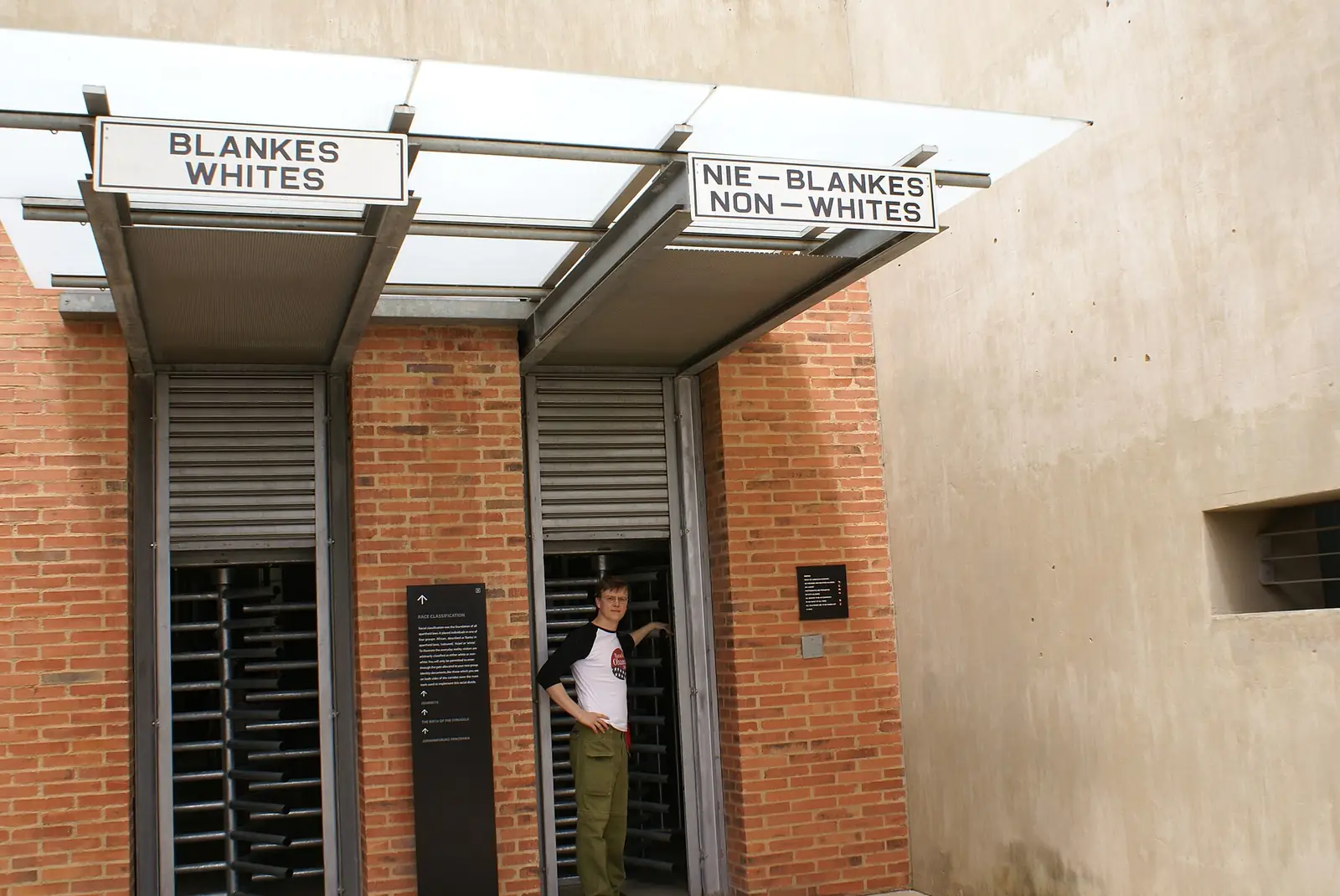
Image credits: Johannesburg skyline – Khaanya96 via Wikimedia Commons, CC BY-SA 4.0; Apartheid Museum – Justin Hall via Wikimedia Commons, CC BY 2.0; View from the Carlton Centre – JTeessen via Wikimedia Commons, CC BY-SA 4.0.