
Litigation Lawyers in Johannesburg
Claims, Defences, Trials and Appeals
A summons on your desk gives you days to defend it; a debt owed to you gives the Prescription Act 68 of 1969 three years to sue before the claim dies. Johannesburg civil litigation is won by whoever works the procedure: the letter of demand, the plea, the trial record, the costs order. Miss a rule, and the strongest merits collapse on a technicality.
Our litigation department drafts, defends and tries civil actions for individuals and businesses across the wider Johannesburg metro, from the Fox Street court complex to the Gauteng Division on Pritchard Street, from our Sandton office.




Book a Consultation
A member of the Otrebski team will respond soon
How a Civil Action Actually Runs
Civil litigation in South Africa is a machinery of rules, not a conversation. Lower-court claims move under the Magistrates’ Courts Act 32 of 1944 and its rules; High Court matters move under the Uniform Rules of Court. Both are built around pleadings that lock the issues, evidence that proves them, and costs that punish the loser.
Every Johannesburg civil claim moves through the same stations:
- letter of demand
- summons and sheriff’s service
- notice of intention to defend
- plea and further pleadings
- discovery and trial preparation
- trial, judgment and costs order
- warrant of execution
A combined summons is issued and served by the sheriff; the defendant then has days, not weeks, to give notice of intention to defend before default judgment is taken. Pleadings follow: a plea setting out the defences, a replication if needed, and in the High Court the uniform timelines apply. Close of pleadings triggers discovery of documents, then the trial itself: evidence under oath, cross-examination, argument, judgment.
Two features catch unrepresented parties. First, the pleadings bind: an admission in a plea is nearly impossible to escape later, which is why the drafting stage decides cases years before the hearing. Second, costs follow the event: the losing party ordinarily pays a taxed portion of the winner’s legal bill, calculated on the court tariff and rarely the whole of it.
What a Litigation Attorney Does
Plaintiff-side: testing the merits and the prescription date before a cent is spent, framing the cause of action, drafting the demand and the summons so the pleadings lock the case, compiling the discovery record, and presenting the trial.
Defendant-side: entering appearance to defend inside the deadline, raising the real defences and any counterclaim, answering discovery properly, and making calibrated settlement offers that protect the client’s costs position if the matter settles before trial.
Costs follow the event: the losing party ordinarily pays a taxed portion of the winner’s legal bill.
Magistrates’ Court vs High Court
Magistrates’ Court
The Fox Street complex hears the Johannesburg magisterial district’s lower-court claims: district matters up to R200,000 and regional matters up to R400,000, under the Magistrates’ Courts Act 32 of 1944.
Cheaper, faster and usually attorney-run without counsel. For most claims within the limits it is the sensible forum, with appeals lying to the High Court.
High Court, Gauteng Division
The Pritchard Street court hears claims of any value beyond the magistrates’ limits, together with urgent applications, reviews and matters of complexity or precedent.
Fuller procedure under the Uniform Rules, counsel usually briefed, substantially higher cost exposure, and appeals to a full bench or the Supreme Court of Appeal.
| Issue | Magistrates’ Court | High Court |
|---|---|---|
| Monetary jurisdiction | District up to R200,000; regional up to R400,000 | Unlimited |
| Presiding officer | Magistrate | Judge of the High Court |
| Governing procedure | Magistrates’ Courts Act 32 of 1944 and its rules | Uniform Rules of Court |
| Cost exposure | Lower tariffs; attorney-run | Substantially higher; counsel usually briefed |
| Appeal route | To the High Court | Full bench or Supreme Court of Appeal |
The Litigation Process, Step by Step
The pathway, stage by stage.
Merits and prescription assessment
The cause of action, the evidence and the prescription date under the Prescription Act 68 of 1969 are tested before anything is spent: a claim three years and one day old is dead on arrival.
Letter of demand
A demand setting out the claim, the amount and a deadline is delivered. It is practically essential, often contractually required, and refusal to comply strengthens the eventual costs claim.
Summons and pleadings
Summons is issued and served by the sheriff; the defendant has days to give notice of intention to defend, then delivers a plea. The pleadings define what the trial will decide.
Discovery and preparation
Close of pleadings opens discovery of documents, witness statements and pre-trial conferences. Cases are won on the record built here, long before the courtroom.
Trial
Evidence under oath, cross-examination and argument before the magistrate or judge. The court decides on the record and the evidence led, not on either party’s sense of grievance.
Judgment, costs and enforcement
Judgment is granted with costs on tariff. Enforcement follows: a warrant of execution, attachment of earnings or a sale in execution. Appeal windows are short and strictly enforced.
Which Courts Hear Johannesburg Civil Matters
Johannesburg civil litigation runs through the CBD’s court machinery:
- Johannesburg Magistrate’s Court, 26 Fox Street – district and regional civil claims, evictions and lower-court rolls for the Johannesburg magisterial district.
- High Court of South Africa, Gauteng Division, Johannesburg (Pritchard Street) – claims above the magistrates’ limits, urgent applications, reviews and appeals.
- Johannesburg Small Claims Court – minor claims below the statutory threshold, where attorneys may not conduct the hearing.
Otrebski Attorneys serves clients across the wider Johannesburg metro from its Sandhurst office in Sandton.
How to Choose a Litigation Lawyer in Johannesburg
Litigation is procedure plus nerve. Choose on both.
- Practises in both fora.The Fox Street rolls and the Pritchard Street court run on different rules and different temperaments; fluency in both is not optional.
- Honest merits advice.The right lawyer tells you the claim is weak before you spend, not after. Ask what the weaknesses are in the first meeting.
- Costs-order realism.A proper quote names the adverse costs risk openly: losing a defended action means paying a taxed share of the other side’s bill too.
- Settlement discipline.Most civil matters settle. A lawyer who never discusses calibrated offers is billing you toward a cliff.
- Written scope and fees.Each phase of the action, from demand to pleadings to trial, scoped and quoted in writing before work begins.
What Civil Litigation Costs
As a market guide, a letter of demand and pre-litigation assessment commonly runs R3,500–R10,000; defended magistrates’ court action R40,000–R150,000 through trial; High Court litigation from R80,000 once defended and frequently well beyond R250,000 with counsel, on hourly rates of R1,500–R4,400. Sheriff, counsel and court tariffs are additional, and defeat carries the adverse costs order.
Otrebski Attorneys scopes each phase in writing before it begins: the demand, the pleadings, the trial. No hidden costs.
Common Mistakes to Avoid
The expensive mistakes are avoidable.
Four Questions Before You Litigate
Before Papers Are Issued
- Has the claim prescribed? – Most contractual and delictual claims prescribe after three years under the Prescription Act 68 of 1969; test the date before a cent is spent.
- Which forum does the value dictate? – District courts hear claims up to R200,000, regional courts up to R400,000, and larger or complex claims belong to the High Court, Gauteng Division. The monetary split, not preference, dictates the forum.
- What is the costs exposure? – Costs follow the event: losing a defended action means paying a taxed portion of the winner’s bill as well as your own, so weigh what the claim recovers against what the action costs.
- Can it settle before trial? – Most civil matters settle. Without prejudice offers protect the costs position while negotiations run, and a concluded settlement can be made an order of court where enforcement muscle is needed.
Frequently Asked Questions
How long do I have to sue on a civil claim?
Most contractual and delictual claims prescribe after three years under the Prescription Act 68 of 1969, counted from when the debt became due and you knew of it. Judgment debts endure far longer, but the ordinary three-year rule catches most unpaid debts and damages claims.
Which court hears my Johannesburg civil claim?
The value decides: district magistrates’ courts hear claims up to R200,000, regional courts up to R400,000, and larger or complex claims belong to the High Court, Gauteng Division on Pritchard Street. The limits are set by ministerial determination and adjusted periodically.
What happens if I ignore a summons?
Default judgment. The plaintiff proves the claim unopposed, obtains a costs order and moves to execution against your property or earnings. The window to give notice of intention to defend is short, so the summons goes to a lawyer the day it arrives.
Will I have to pay the other side’s costs if I lose?
Ordinarily, yes. Costs follow the event, so the losing party pays a taxed portion of the winner’s legal bill, calculated on the court tariff rather than the winner’s actual fees. This is the single biggest reason weak claims should be settled or dropped early.
How long does a defended civil case take?
It depends on the forum and the complexity, but defended magistrates’ court matters commonly run well over a year to trial, and fully contested High Court litigation runs longer. Urgent or unopposed proceedings conclude far faster, which is one reason forum and strategy matter at the start.
Is a letter of demand really necessary?
In practice, yes, and many contracts require it before litigation. It states the claim, the amount and a deadline, opens the settlement channel, and a refusal to comply strengthens your costs position even if the matter proceeds to trial.
Can we settle instead of going to trial?
Yes, at any stage, and most civil matters do settle. Without prejudice offers protect the costs position while negotiations run, and a concluded settlement can be made an order of court where enforcement muscle is needed.
Can I use the small claims court?
If your claim falls below the statutory threshold and you are an individual, yes. It is quick and inexpensive, but attorneys may not conduct the hearing; a lawyer’s role is limited to preparing the claim, the evidence and the paperwork beforehand.

Deadlines decide litigation. Get advice before the next one passes.
Otrebski Attorneys practises from Office 9th Floor, The Spaces, 5th Street, Sandhurst, Sandton, and serves clients across Johannesburg, with transparent billing and no hidden costs.
Call 060 500 3098
Office hours: Monday to Friday, 08h00 – 17h00 · send a message
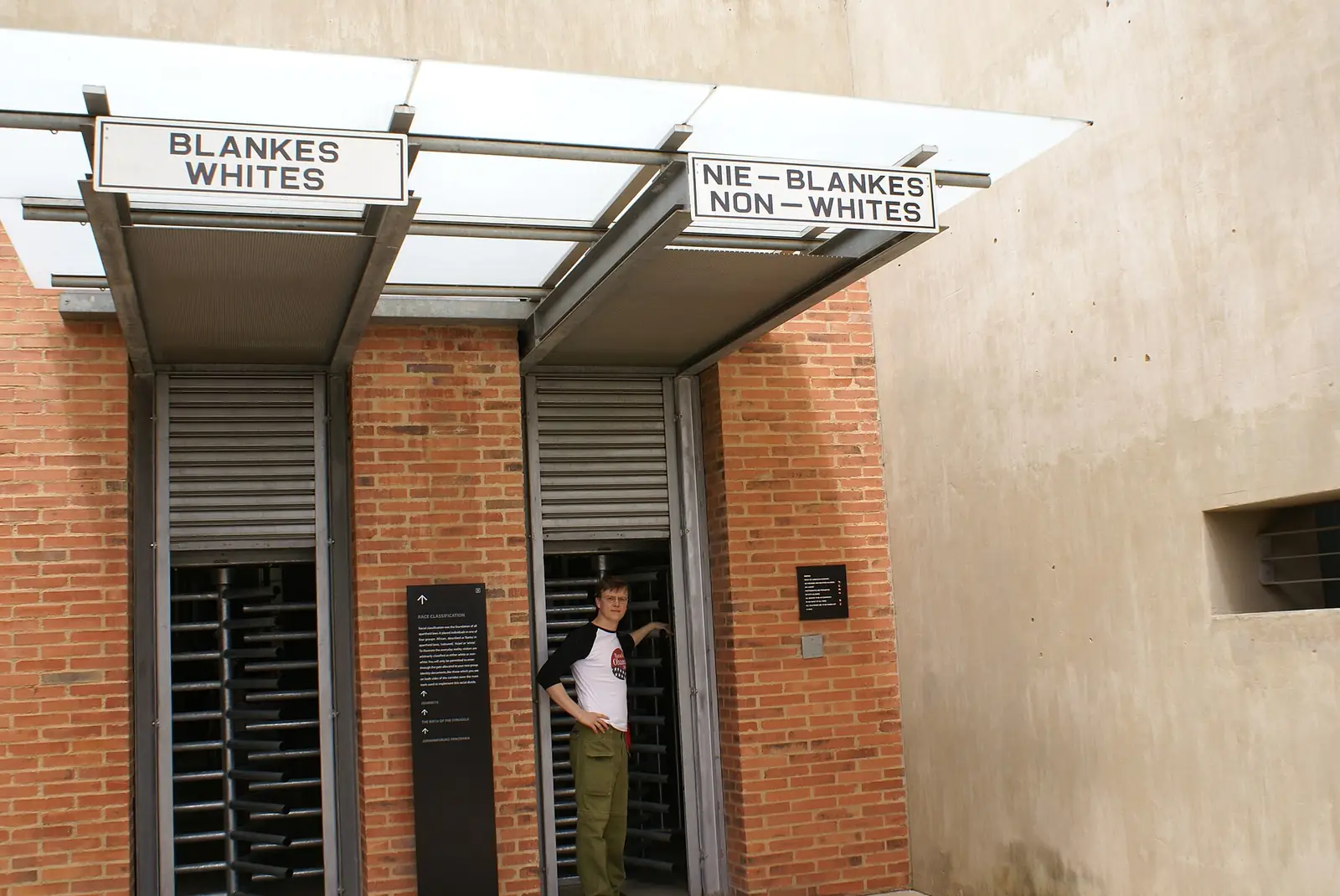
Image credits: Johannesburg skyline – Khaanya96 via Wikimedia Commons, CC BY-SA 4.0; Apartheid Museum – Justin Hall via Wikimedia Commons, CC BY 2.0; View from the Carlton Centre – JTeessen via Wikimedia Commons, CC BY-SA 4.0.