
Labour Lawyers South Africa
LRA Disputes, BCEA Rights and the Correct Forum, Nationwide
A disciplinary notice on your desk, a dismissal letter, a retrenchment consultation invitation, or an employer demand to sign by Friday: labour law gives each of these a specific statute, a specific forum and a specific deadline, and they apply identically in every province. Act in the wrong forum, or after the deadline, and the merits never get heard.
We advise and represent employers and employees across South Africa’s nine provinces under the Labour Relations Act 66 of 1995 and the Basic Conditions of Employment Act 75 of 1997, from CCMA referrals to Labour Court litigation, from our Sandton office.



Book a Consultation
A member of the Otrebski team will respond soon
How SA Labour Law Is Structured
Two statutes do most of the work, and both bind every employer in the country. The Labour Relations Act 66 of 1995 governs fairness: dismissals, unfair labour practices, organisational rights and collective bargaining. The Basic Conditions of Employment Act 75 of 1997 sets the floor: hours, leave, pay, written particulars and their enforcement. The Constitution’s section 23 labour rights stand above both, across all nine provinces.
A workplace dispute is routed by what it is about:
- dismissal and unfair labour practice (LRA)
- wages, hours and leave (BCEA)
- CCMA conciliation and arbitration
- bargaining council disputes
- Labour Court reviews and urgent relief
- contracts and policies upfront
Dismissal and unfair labour practice disputes go to the CCMA or the relevant bargaining council within 30 days. BCEA enforcement, covering underpayment, unlawful deductions and refused leave, runs through the Labour Court or, where the dispute is an unfair dismissal about a BCEA right, through the CCMA. The Labour Court sits above the dispute-resolution machinery: it reviews CCMA awards, hears urgent interdicts, and determines matters the LRA excludes from arbitration. Choosing the wrong forum is not a technicality; it ends the claim on a point the merits never reach.
For employers, the same structure runs in reverse. Disciplinary codes, contracts, retrenchment consultations and policies are the machinery that makes outcomes defensible later; the employer who discovers the Schedule 8 code at arbitration has discovered it too late.
What a Labour Lawyer Does
For employees: identifying what the dispute actually is, protecting the 30-day referral deadline, preparing disciplinary hearings, referring unfair dismissals and unfair labour practices, and enforcing BCEA entitlements.
For employers: drafting contracts, disciplinary codes and workplace policies, chairing and defending disciplinary hearings, running lawful retrenchment consultations, and defending referrals in the CCMA, bargaining councils and the Labour Court.
In labour law, the forum and the deadline are the case. Get them wrong and the facts never speak.
CCMA vs Bargaining Council vs Labour Court
CCMA
The statutory default: conciliation and arbitration of dismissal, unfair labour practice and BCEA-related disputes for workplaces not covered by a bargaining council, through offices across the country.
Fast, no filing tariff for employees, and awards that are final and binding subject to Labour Court review within six weeks.
Bargaining Council vs Labour Court
A bargaining council with jurisdiction over your sector, from metals and chemicals to retail and hospitality, displaces the CCMA for disputes in its scope, on its own timelines and at its own venues.
The Labour Court hears reviews of CCMA and council awards, urgent applications such as interim reinstatement, and matters the LRA reserves to it: automatically unfair dismissals on strike grounds and review of retrenchment decisions under section 189A.
| Dimension | CCMA | Labour Court |
|---|---|---|
| What it decides | Unfair dismissal and ULP disputes | Reviews, urgent relief, reserved matters |
| Who decides | Commissioners, in conciliation then arbitration | Judges, on application or trial |
| Costs | Each party bears its own as a rule | Costs follow the result |
| Speed | Weeks to months | Months to years |
| Best used for | Individual dismissals, ULPs, BCEA disputes | Attacking awards, interdicts, s189A reviews |
The Process, Step by Step
How a labour matter typically runs, wherever the workplace is.
Diagnose the dispute and the deadline
What happened, under which statute, and which of the 30-day, 90-day or six-week windows applies. This single step decides the forum and the remedy.
Act before the crisis where possible
Contracts checked, policies applied, disciplinary notices scrutinised, settlement discussed while the relationship can still be managed.
Refer to the correct forum
CCMA or bargaining council referral within 30 days for dismissals and unfair labour practices, lodged with the office that covers the workplace; Labour Court process where the matter is reserved to it.
Conciliation
A confidential, without-prejudice attempt at settlement before a commissioner. Most disputes that end well end here.
Arbitration or court hearing
Evidence under oath, cross-examination, argument. The record built in the first step is the record decided on here.
Award, compliance or review
The award is enforced as a court order, or challenged by review within six weeks. Settlement agreements can be made orders where the LRA allows.
Which Forums Hear South African Labour Matters
Workplace disputes across the country move through the same machinery:
- CCMA, offices nationwide – conciliation and arbitration in all nine provinces, with a 30-day referral deadline.
- Labour Court, Johannesburg – reviews of CCMA awards, urgent applications and s189A retrenchment matters.
- Constitutional Court, Johannesburg – final word on constitutional labour rights under section 23 of the Constitution.
Otrebski Attorneys serves employers and employees across South Africa from its Sandton office, with CCMA and Labour Court work nationwide.
How to Choose a Labour Lawyer in South Africa
Labour law is a specialist system. Choose inside it.
- Genuine labour practice.Ask which forums they practise in weekly. The CCMA, bargaining councils and the Labour Court are a working circuit, not an occasional outing.
- Both-side experience.A lawyer who advises employers and represents employees knows where each side’s cases fail.
- Deadline discipline.The first advice should include which windows apply and when they close. Vague answers are a warning sign.
- Honest prospects talk.No ethical lawyer guarantees an outcome. They can tell you what the LRA tests are and how your facts sit against them.
- Written scope and fees.Advice, referral, conciliation and arbitration quoted separately and in writing.
What Labour Matters Cost
As a market guide, advice and contract review commonly run R3,500–R10,000; a CCMA dismissal matter through conciliation from R10,000–R25,000; contested arbitration and Labour Court work from R25,000 upwards, on hourly rates of R1,500–R4,400.
Otrebski Attorneys scopes each phase in writing before it begins. Ask for the quote in writing – and treat any firm that will not give one with caution. No hidden costs.
Common Mistakes to Avoid
The expensive mistakes are avoidable.
National Labour Deadlines That Decide Cases
Windows That Close, in Every Province
| Window | What It Governs |
|---|---|
| 30 days | Referral of dismissal and unfair labour practice disputes to the CCMA office covering the workplace, or to the sector’s bargaining council. The deadline is identical in all nine provinces; after it, condonation must be sought on good cause shown. |
| 90 days | A longer window the opening diagnosis must identify for certain disputes, alongside the 30-day and six-week periods, before any form is signed. |
| Six weeks | The period to review a CCMA award in the Labour Court; awards are enforced as court orders and challenged only inside it. |
| Before the crisis | Contracts, disciplinary codes and workplace policies drafted upfront are what make dismissals and retrenchments defensible when challenged; discovering the Schedule 8 code at arbitration is too late. |
Frequently Asked Questions
What does a labour lawyer in South Africa actually handle?
Dismissals and disciplinary hearings, unfair labour practices, retrenchment consultations, employment contracts, BCEA disputes over pay and leave, workplace policies, and representation in the CCMA, bargaining councils and the Labour Court, for employers and employees.
Which forum hears my labour dispute?
Dismissal and unfair labour practice disputes go to the CCMA office covering your workplace, or to your sector’s bargaining council where one covers it. The Labour Court hears reviews of awards, urgent applications and retrenchment reviews under section 189A.
What is the difference between the LRA and the BCEA?
The Labour Relations Act 66 of 1995 governs fairness: dismissals, unfair labour practices, unions and collective bargaining. The Basic Conditions of Employment Act 75 of 1997 sets the minimum floor: working hours, leave, pay, payslips and written particulars. Most disputes engage one or the other, and some engage both.
Do I have to refer a dismissal within 30 days?
Yes. Under section 191 of the LRA, the referral must reach the employer and the CCMA or bargaining council within 30 days of dismissal. After that, you need condonation on good cause shown, which is never guaranteed.
Can an employer change my contract unilaterally?
No. Material changes to terms such as pay, hours and role require agreement or a fair consultation process. Forced changes can found an unfair labour practice dispute or, if you resign in response, a constructive dismissal claim.
I work outside Gauteng. Can you still assist me?
Yes. Labour legislation is national, and the CCMA operates in every province, so referrals, conciliation and arbitration run the same way wherever the workplace is. We represent clients across all nine provinces from our Sandton office.
I have been invited to a disciplinary hearing on Monday. Is it too late to get help?
No, and it is the right moment. Preparation before the hearing, on the charges, the evidence and your rights in the process, is far more valuable than regret at the CCMA afterwards.
Can employers benefit from labour law advice before disputes arise?
Yes, and it is cheaper. Contracts, disciplinary codes and policies drafted correctly upfront are what make dismissals and retrenchments defensible when they are challenged.

The deadline runs in every province. Move first.
Otrebski Attorneys practises from Office 9th Floor, The Spaces, 5th Street, Sandhurst, Sandton, representing clients across South Africa’s nine provinces, with transparent billing and no hidden costs.
Call 060 500 3098
Office hours: Monday to Friday, 08h00 – 17h00 · send a message
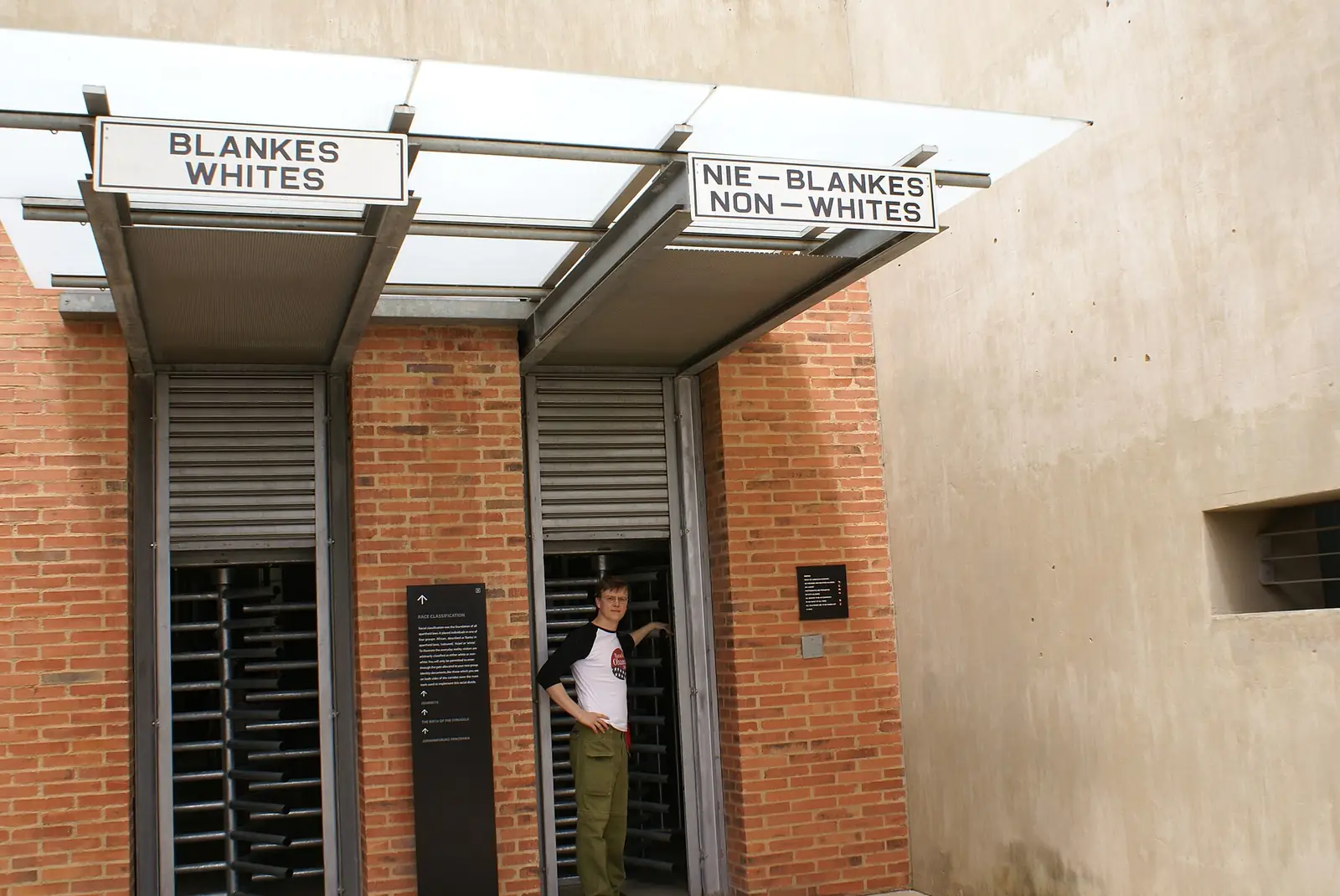
Image credits: Eternal Flame, Constitution Hill – Mihi tr via Wikimedia Commons, CC BY 4.0; Johannesburg skyline – Khaanya96 via Wikimedia Commons, CC BY-SA 4.0; Apartheid Museum – Justin Hall via Wikimedia Commons, CC BY 2.0.