
Drug possession is one of the most common criminal charges in South Africa, and it carries penalties that can follow a person for the rest of their life. The main statute is the Drugs and Drug Trafficking Act 140 of 1992, which criminalises both simple possession and the more serious offence of dealing in dependence-producing substances.
The distinction between personal use and dealing is central to how these cases unfold. A small quantity found on a person may attract a fine or a suspended sentence, while a larger quantity can trigger a statutory presumption of dealing and a sentence of many years in prison. Search and seizure, the right to silence, and the right to a lawyer all shape what happens after an arrest.
This article explains the offences, the penalties, the constitutional rights of an accused person, and the practical difference between possession and dealing under South African law.
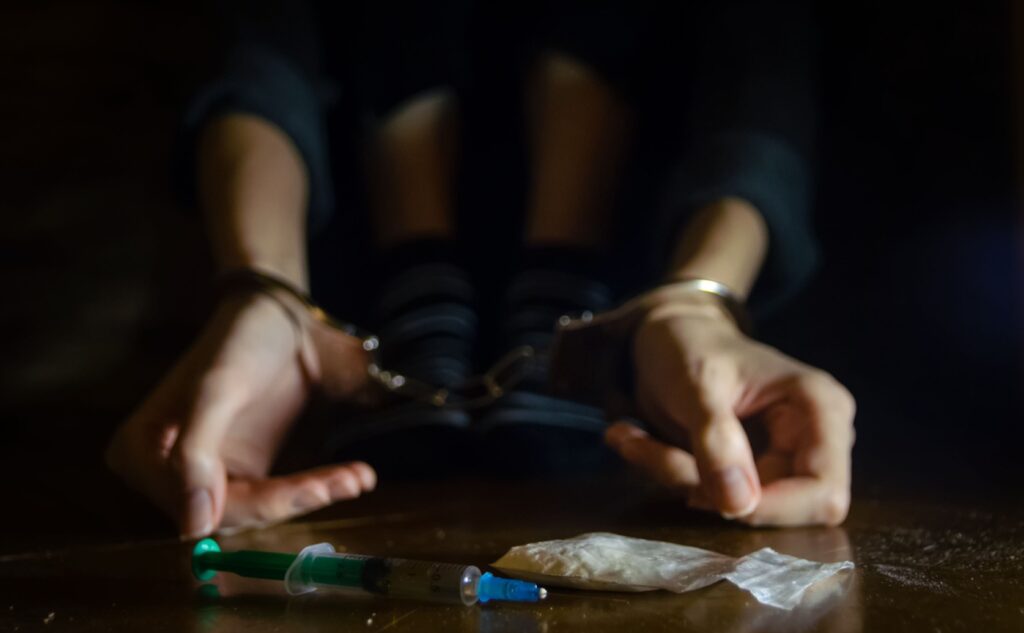
The Drugs and Drug Trafficking Act 140 of 1992
The Drugs and Drug Trafficking Act 140 of 1992 is the principal statute governing controlled substances in South Africa. It lists banned drugs in schedules and creates the two main offences that most possession cases turn on: possession, and dealing.
Section 4(b) makes it an offence to possess, or to smoke, use, or consume, any undesirable dependence-producing substance listed in Part III of Schedule 2. Section 5(b) separately criminalises dealing in such substances, which includes manufacturing, supplying, selling, transacting in, conveying, administering, or distributing them.
These two sections matter because they carry very different consequences. Simple possession is aimed at personal use, while dealing is treated as commercial conduct that fuels the drug trade and attracts far heavier sentences.
What Counts as Possession
The legal concept of possession in South African law is not limited to something found in your pocket. The courts have held that possession includes both physical control (the drug is on your person or in your hand) and constructive control, where the substance is in a place you have dominion over, such as your home, your car, your bag, or a workplace.
The prosecution must prove two elements beyond reasonable doubt: that the accused had physical or constructive control over the substance, and that the accused knew, or ought reasonably to have known, what it was. Knowledge does not require knowing the exact chemical name of the drug; awareness that the substance is unlawful is usually enough.
- Drugs found on your body, in your clothing, or in a bag you are carrying
- Drugs found in your vehicle while you are driving or in sole control of it
- Drugs found in your home or a room you occupy and control
- Drugs found in a shared space where the state can prove exclusive control by you
Shared occupation, such as a flat with several occupants, often becomes the battleground in these cases. Without evidence pointing to one specific person, the state may struggle to prove possession beyond reasonable doubt.
Possession Versus Dealing
The line between possession and dealing is the single biggest factor in sentencing. Section 13 of the Act sets out the penalties, and they escalate sharply once a court is satisfied that an accused was dealing.
Section 14 creates a statutory presumption that helps the state cross this line. Where an accused is found in possession of more than a defined quantity of a listed drug, the court may presume, in the absence of evidence to the contrary, that the accused was dealing. These threshold quantities are listed in Part III of Schedule 2 and differ by substance.
- Possession: smaller quantities consistent with personal use, no sign of trade
- Dealing: large quantities, packaged for sale, cash, scales, customer lists, or communications showing supply
- Statutory presumption: triggered when the quantity found exceeds the Schedule 2 threshold for that drug
An accused can rebut the presumption by leading evidence, for example that the entire quantity was for personal use over a period of time. Whether that evidence is accepted is a decision for the court on the facts.
Penalties Under Section 13
Section 13 of the Act sets the sentencing framework. For simple possession of a listed substance, the offence is treated seriously but the court has discretion. A first offender caught with a small quantity for personal use may receive a fine, a suspended sentence, correctional supervision, or a period of imprisonment.
For dealing, the penalties are far harsher. A court may impose imprisonment of up to 25 years, or in some instances life imprisonment, depending on the drug and the quantity. The Criminal Law Amendment Act 105 of 1997, which sets minimum sentences for serious offences, also applies to large commercial drug matters and presses sentences upward unless substantial and compelling circumstances justify a departure.
- Fines, with or without the option of imprisonment
- Suspended sentences and correctional supervision
- Direct imprisonment, especially for repeat offenders or commercial quantities
- A permanent criminal record that affects employment, professional registration, and travel
A conviction also has collateral consequences. Many countries refuse visas or entry to people with drug convictions, and certain professions, including financial services and healthcare, may refuse registration on the basis of a drug-related criminal record.
Your Rights Under Section 35 of the Constitution
Section 35 of the Constitution of the Republic of South Africa, 1996 protects every arrested, detained, and accused person. These rights apply from the moment of arrest and continue through every stage of the criminal process.
- The right to remain silent and to be informed of that right
- The right not to be compelled to make a confession or admission that could be used against you
- The right to be brought before a court within 48 hours of arrest, or by the next court day if the 48 hours expire over a weekend
- The right to consult a legal practitioner of your choice, and to be assigned a legal practitioner by the state at state expense if substantial injustice would otherwise result
- The right to be informed of these rights in a language you understand
Exercising the right to silence is one of the most important protections in a drug case. Statements made at the scene, in the back of a police vehicle, or during an informal interview can all become evidence. An accused person is entitled to wait until they have spoken to a lawyer before answering substantive questions.
Search and Seizure
The Criminal Procedure Act 51 of 1977 governs search and seizure. Section 21 allows a police official to search any person, container, premises, or vehicle, and to seize anything reasonably connected to an offence, either with a warrant issued under section 20 or without a warrant in defined circumstances.
A warrantless search is permitted where the police official has reasonable grounds to believe that a warrant would be issued if applied for, and that the delay caused by obtaining one would defeat the purpose of the search. Reasonable suspicion must be based on more than a hunch; it requires objective facts.
Where a search was unlawful, the Constitutional Court has confirmed in cases such as S v Mthembu and related line of authority that evidence may still be admitted under section 35(5) of the Constitution if it is fair to do so. A skilled criminal defence lawyer will. Challenge the legality of the search at every stage, because exclusion of the drugs themselves usually ends the state’s case.
Cannabis and the Prince Ruling
Cannabis occupies a slightly different position. In Minister of Justice and Constitutional Development v Prince, decided by the Constitutional Court in 2018, the court held that adults may cultivate, possess, and use cannabis in private for personal consumption. That protection does not extend to use in public, supply to others, or possession by minors.
The precise quantity that counts as personal use has been the subject of further litigation, and the Cannabis for Private Purposes Act 7 of 2024 now provides a statutory framework setting thresholds for personal use, possession, and cultivation. Possession above those thresholds, or possession in public, remains a criminal offence.
Frequently Asked Questions
Is drug possession a criminal offence in South Africa?
Yes. Under section 4(b) of the Drugs and Drug Trafficking Act 140 of 1992, it is a criminal offence to possess, smoke, use, or consume any undesirable dependence-producing substance listed in Part III of Schedule 2. Adult private use of small quantities of cannabis is treated separately under the Cannabis for Private Purposes Act 7 of 2024.
What is the difference between possession and dealing?
Possession under section 4(b) covers personal use quantities, while dealing under section 5(b) covers manufacturing, supplying, selling, conveying, or distributing listed substances. Under section 14, possession of more than the threshold quantity listed in Schedule 2 gives rise to a statutory presumption that the accused was dealing, which carries far heavier penalties.
What penalties apply to drug possession in South Africa?
Section 13 of the Act sets the penalties. Simple possession can attract a fine, a suspended sentence, correctional supervision, or imprisonment. Dealing offences attract far heavier sentences, up to 25 years or life imprisonment for the most serious matters, and the minimum sentencing regime under the Criminal Law Amendment Act 105 of 1997 applies to commercial quantities.
Can the police search me without a warrant?
Yes, but only on reasonable grounds. Section 21 of the Criminal Procedure Act 51 of 1977 allows a police official to conduct a warrantless search where there are reasonable grounds to believe a warrant would be issued and that delay would defeat the purpose. Evidence from an unlawful search may be challenged under section 35(5) of the Constitution.
What rights does an arrested person have under section 35 of the Constitution?
Section 35 gives an arrested person the right to remain silent, the right not to be compelled to make self-incriminating statements, the right to be brought before a court within 48 hours, the right to consult a legal practitioner of their choice, the right to a state-funded lawyer where substantial injustice would otherwise result, and the right to be informed of these rights in a language they understand.
Will a drug conviction stay on my criminal record?
Yes. A conviction for possession or dealing becomes part of your permanent criminal record and can affect employment, professional registration, visa applications, and international travel. Expungement of a criminal record is possible only in limited circumstances, generally after ten years for certain minor offences.
Get help with a criminal law matter. Otrebski Attorneys is a 100% women-led, Level 4 B-BBEE Sandton firm with a dedicated Criminal Law department. Director Nastasja Otrebski and our criminal defence team advise clients on possession and dealing charges, search-and-seizure challenges, bail, and sentencing across Gauteng and South Africa.
Disclaimer. This article is general legal information about drug possession charges in South Africa, not legal advice for a specific case. Drug matters turn on their own facts, the quantities involved, and current prosecutorial practice. For advice on a particular charge, consult a qualified criminal defence attorney.
Get Legal Help Today
Speak to an Otrebski Attorneys lawyer about your matter, or request an appointment and we will call you back.
☎ Call 060 500 3098WhatsApp Us