
Criminal Record Expungement Lawyers In Pretoria
Clearing Qualifying Convictions under CPA Sections 271B–271D
That decade-old conviction still answers for you: on every police clearance for a Tshwane government post, a security-vetted contract or a visa application, and in every employer database that runs your name. Section 271B of the Criminal Procedure Act 51 of 1977 lets qualifying convictions be expunged on application to the Department of Justice and Constitutional Development, so the record stops speaking for you.
We assess expungement eligibility, prepare the DOJ&CD application and track it through to the certificate of expungement for clients in Pretoria, Lynnwood, Centurion and the wider Tshwane area, from our Sandton office.




Book a Consultation
A member of the Otrebski team will respond soon
The Statutory Gates to Expungement
Expungement is not an appeal and not an act of sympathy. It is an administrative process created by statute: the Criminal Procedure Act 51 of 1977 sets fixed requirements, and the Department of Justice and Constitutional Development applies them to your record. Either the conviction qualifies or it does not, and no covering letter fills a gap the Act leaves open.
Every expungement assessment passes through these gates:
- ten years since the conviction date
- no new convictions in that period
- fine only, or imprisonment wholly suspended
- correctional supervision under the old Act
- schedule of excluded offences
- certificate of expungement from the DG, DOJ&CD
Section 271B, inserted by the Judicial Matters Amendment Act, empowers the Director-General of the Department of Justice and Constitutional Development to expunge a conviction once ten years have run from the conviction date, no further conviction was recorded inside that window, and the sentence was a fine, wholly suspended imprisonment, or correctional supervision under the previous Correctional Services Act. Offences against children and mentally impaired persons are excluded from the scheme, whatever the sentence.
An expunged conviction is deemed never to have existed for criminal record purposes, and the SAPS Criminal Record Centre is directed to remove it. But a sentence of direct imprisonment actually served does not qualify under s271B; the remedy that remains is a presidential pardon under the Constitution, which is discretionary. Knowing which of the two tracks your conviction sits on is the first piece of advice worth paying for.
What We Do on an Expungement Matter
Verification first, submission second: we pull the conviction particulars from the SAPS Criminal Record Centre and the sentencing court, measure the sentence type against the Act, and screen for excluded offence categories before a single form is lodged.
The application, with its supporting documents, goes to the DOJ&CD’s expungement unit; on approval the certificate of expungement issues and the record centre acts on it. Where s271B genuinely cannot apply, we say so and assess the pardon route instead of lodging an application that was doomed on arrival.
Ten years clean, a fine or a wholly suspended sentence. Every gate must open; one failure closes the statutory door.
Courts and Bodies Handling Pretoria Criminal Matters
Expungement is decided by a department rather than a judge, but the underlying convictions come out of the Tshwane court machinery:
- Tshwane Central Magistrate’s Court, 316 Francis Baard Street – the district seat for Pretoria Central rolls, and the sentencing court whose records feed many Tshwane convictions.
- High Court of South Africa, Gauteng Division, Pretoria – the division sitting in the capital, for the gravest prosecutions and appeals.
- SAPS Criminal Record Centre and the DOJ&CD – the national bodies that verify the record, expunge the conviction and clear the entry once the certificate issues.
Otrebski Attorneys serves clients in Pretoria, Lynnwood, Centurion and across the Tshwane Magisterial District from its Sandton office.
How to Choose an Expungement Lawyer in Pretoria
This is statutory document work with fixed gates. Choose on precision.
- The three gates, stated plainly.Ask what qualifies under s271B before you pay anything; the answer should come back immediate and complete.
- Verification before lodgement.The application should be built on the SAPS record and court confirmations, not on what you recall of sentencing day.
- No guaranteed removals.Only the DOJ&CD can issue a certificate of expungement; anyone promising to wipe a record for cash is selling exactly nothing.
- Straight talk on the pardon route.Where your sentence disqualifies you, an honest lawyer redirects you to a pardon assessment instead of a doomed filing.
- Fixed fee in writing.A defined statutory process suits a flat professional fee; insist the scope be put in writing before it begins.
What Expungement Costs
As a market guide, a straightforward s271B expungement application generally attracts professional fees of R5,000–R15,000, plus disbursements for the police clearance and court record confirmations; matters that require reconstructing lost court records fall above that band.
Otrebski Attorneys scopes each phase in writing before it begins. Treat any instant-record-removal pricing as a warning sign rather than a bargain. No hidden costs.
Expungement vs Presidential Pardon
Statutory Expungement
An administrative process under the CPA in which the Director-General of the DOJ&CD expunges a conviction that meets the ten-year, sentence-type and clean-record requirements.
There is no sympathy element. Meet the requirements in section 271B and the conviction is expunged; miss one and no motivation repairs it.
Presidential Pardon
The President’s power under the Constitution, used for convictions the statute leaves out, such as imprisonment that was actually served or an excluded offence.
Discretionary, document-heavy and unhurried; it exists because the statutory door has to close somewhere.
| Issue | Expungement | Pardon |
|---|---|---|
| Authority | Criminal Procedure Act, s271B | Constitution; presidential discretion |
| Decision-maker | Director-General, DOJ&CD | The President |
| What qualifies | Fine or wholly suspended sentence, ten years clean | Any conviction, in principle |
| Basis of decision | Statutory compliance, nothing else | Motivated merit and circumstances |
| Timeframe | Departmental processing over months | Long and inherently unpredictable |
The Expungement Application, Stage by Stage
What happens, and in what order.
Eligibility confirmed against the record
The conviction, sentence and dates are taken from the SAPS record, not memory, and measured against s271B: ten years elapsed, no later convictions, qualifying sentence type.
Clearance and confirmations gathered
A police clearance certificate from the Criminal Record Centre, proof of the sentence, and any confirmation the sentencing court, in Tshwane or elsewhere, must supply.
Application lodged with the DOJ&CD
The prescribed expungement application with its annexures is submitted to the Director-General’s expungement unit in the Department of Justice and Constitutional Development.
Departmental verification
The DOJ&CD checks the record with the criminal record centre and, where needed, the court that passed sentence, before deciding.
Certificate of expungement issued
Approval produces the certificate, which goes to the SAPS Criminal Record Centre so the conviction stops reflecting on clearances.
Fresh clearance and clean-up
A new police clearance confirms the record is gone, and any body still holding the old entry is pointed to the certificate.
Expungement Eligibility at a Glance
Qualifying Under Section 271B
| Requirement | What the Act requires |
|---|---|
| Eligible sentences | A fine, imprisonment that was wholly suspended, or correctional supervision under the previous Correctional Services Act |
| Not eligible | Imprisonment actually served, and offences against children or mentally impaired persons, whatever the sentence |
| Waiting period | Ten years from the conviction date, with no further conviction recorded inside that window |
| What approval produces | A certificate of expungement from the Director-General of the DOJ&CD, actioned by the SAPS Criminal Record Centre |
Common Mistakes to Avoid
The errors that stall or sink applications.
Frequently Asked Questions
Which convictions can be expunged in South Africa?
Section 271B of the Criminal Procedure Act 51 of 1977 covers convictions at least ten years old where no further conviction followed and the sentence was a fine, wholly suspended imprisonment or old-order correctional supervision. Sexual offences against children and mentally impaired persons are excluded.
Can a Pretoria court conviction be expunged?
Yes. Expungement is national and does not depend on which court sentenced you; a conviction from the Tshwane Central Magistrate’s Court or any other seat is expunged through the same DOJ&CD process.
How long does expungement take?
The DOJ&CD and the SAPS Criminal Record Centre control the timeline, and realistic runs are measured in months. We quote conservatively and follow up in writing.
Will the expunged conviction still appear on a police clearance?
No. Once the certificate of expungement has been processed, the conviction is treated as never having existed for criminal record checks, and a fresh clearance confirms the record no longer reflects.
What if I actually went to prison?
That conviction cannot be expunged under s271B. What remains is an application for presidential pardon: discretionary, motivation-based and slower, but the only route the law leaves open.
Does a drunk driving conviction qualify?
Yes, provided the sentence was a fine or wholly suspended imprisonment, ten years have passed since conviction, and your record stayed clean throughout. Imprisonment actually served does not qualify.
Will anyone be told that my record was expunged?
No. The process runs between you, the DOJ&CD and the criminal record centre. Whether to tell an employer or anyone else stays your decision.
Can an expunged record ever resurface?
The criminal record centre entry is removed once the certificate is actioned, and the conviction is deemed never to have existed. Difficulty comes only from private databases that cached the old record, which is why we point data holders to the certificate.

Ten years clean. Make the record match.
Otrebski Attorneys practises from Office 9th Floor, The Spaces, 5th Street, Sandhurst, Sandton, serving Pretoria and the wider Tshwane area with transparent billing and no hidden costs.
Call 060 500 3098
Office hours: Monday to Friday, 08h00 – 17h00 · send a message
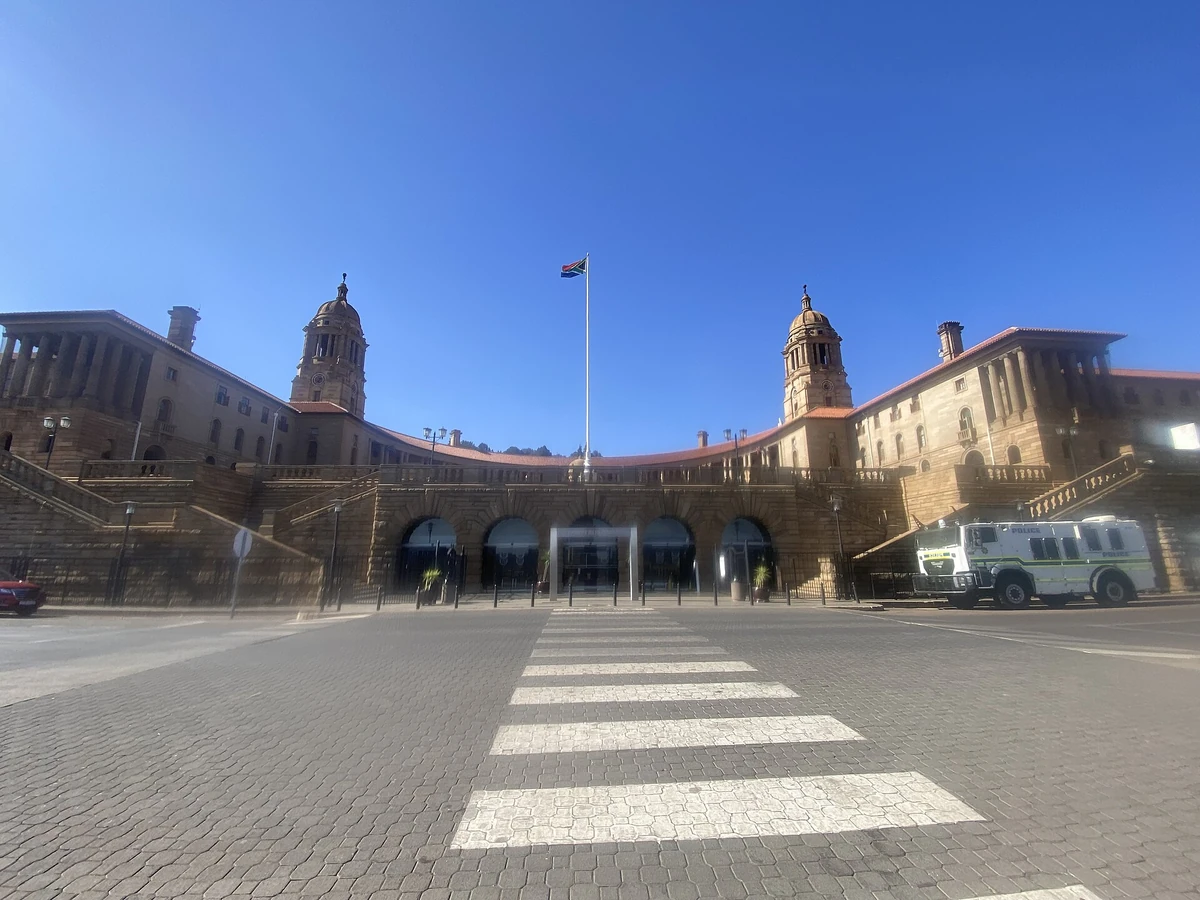
Image credits: Union Buildings, Pretoria – Ruby D-Brown via Wikimedia Commons, CC BY 4.0; Voortrekker Monument, Pretoria – Deneezi via Wikimedia Commons, CC BY-SA 3.0; Union Buildings gardens, Pretoria – Ruby D-Brown via Wikimedia Commons, CC BY 4.0.