
Criminal Lawyers in Pretoria
24/7 Bail and Criminal Defence in the Tshwane Courts
Arrested in Pretoria, and the next 48 hours decide most of what follows: the Criminal Procedure Act 51 of 1977 requires that an arrested person be brought before a court within 48 hours, and what is said, signed and filed in that window shapes bail, the docket and any trial. A police cell and a frightened family are the worst possible place to make your first legal decisions.
We defend clients arrested or charged across Pretoria and the wider Tshwane district, from police-station bail to trials in the Tshwane Central and Gauteng Division courts, from our Sandton office.



Book a Consultation
A member of the Otrebski team will respond soon
Why Criminal Defence Turns on the First 48 Hours
The State must prove guilt beyond reasonable doubt. The defence’s task is to hold the State to that burden from the first hour after arrest, because the rights that matter most are the ones asserted earliest.
Every Pretoria criminal matter moves through the same stations:
- arrest and the right to silence
- bail within 48 hours
- first appearance and charge
- docket disclosure
- pre-trial conferences
- trial in the Tshwane courts
- sentence or appeal
The Criminal Procedure Act 51 of 1977 and the Constitution set the rules: silence from the moment of arrest, a lawyer before any statement, a first appearance within 48 hours, disclosure of the docket, and a fair trial before an independent court. None of these rights enforces itself. Each must be claimed by defence counsel early enough to change the outcome.
Cases are usually decided by weaknesses found early: an unlawful search at a roadblock, a statement taken without proper warning, a gap in the chain of custody. A defence discovered on the morning of trial is a gamble; a defence built from the docket is a strategy.
What a Criminal Defence Attorney Does
From arrest: attendance at the police station, advice before any statement, and bail preparation aimed at release at the first opportunity. Through trial: docket analysis, cross-examination on the gaps in the State’s evidence, and expert evidence where its forensics need answering.
At sentence: mitigation built on context, character and prospects, the phase where years are won or lost after a conviction. On error: an application for leave to appeal within the court’s strict time limits.
Anything you say becomes the State’s evidence. Its docket, properly obtained, becomes yours.
The Process, Step by Step
The pathway from arrest to outcome.
Arrest and first advice
The attorney attends the station, advises on the right to silence and statement rights, and opens the defence file before anything is signed.
Bail within the 48-hour framework
Police, prosecutor or court bail: Schedule 1 matters are often released at the station, while opposed applications are prepared for the first appearance before the Tshwane Central court.
First appearance and the docket
The charge is put; the defence requests disclosure and identifies the first gaps in the State’s case.
Pre-trial conferences
Issues are narrowed, witness lists exchanged and expert evidence disclosed. Weaknesses in the State’s case usually surface here first.
Trial
The State must prove every element beyond reasonable doubt; the defence tests each link of that evidence through cross-examination.
Sentence and appeal
On conviction: mitigation built on context and prospects. On error: an application for leave to appeal within the strict time limits.
Magistrates’ Court vs High Court Defence
Tshwane Magistrates’ and Regional Courts
The overwhelming majority of Pretoria matters, from roadblock DUIs and assault to fraud and housebreaking, are tried in the district and regional courts at the Tshwane Central complex on Francis Baard Street.
Rolls move fast and preparation must move faster. Early docket disclosure resolves most matters well before trial.
High Court, Gauteng Division, Pretoria
The gravest charges, scheduled trials and appeals from the lower courts are heard at the Gauteng Division in Pretoria.
These trials are campaigns: indictments, expert reports and sentencing that engages minimum sentences of up to life imprisonment.
| Issue | Magistrates’ / Regional | High Court |
|---|---|---|
| Offence level | Less serious to serious | Most serious; appeals |
| Pace | Fast rolls, frequent dates | Indictments and scheduled trial days |
| Sentencing range | Fines to substantial imprisonment | Up to life; minimum sentences apply |
| Defence focus | Docket gaps and early resolution | Full trial and expert defence |
| Appeal route | To the High Court, Pretoria | To the Supreme Court of Appeal |
Which Courts Serve Pretoria Criminal Matters
Pretoria criminal matters run through the Tshwane machinery:
- Tshwane Central Magistrate’s Court, 316 Francis Baard Street – the district and regional seat for Pretoria Central: bail, first appearances and most trials in greater Tshwane.
- Mamelodi Magistrate’s Court – district criminal matters for the eastern Tshwane suburbs.
- High Court of South Africa, Gauteng Division, Pretoria – the gravest indictments and appeals from the lower courts.
Otrebski Attorneys serves clients across Pretoria and the wider Tshwane district from its Sandton office, with an after-hours line for arrests and bail.
How to Choose a Criminal Lawyer in Pretoria
Your liberty is the retainer. Choose on evidence.
- Answers after hours.Arrests in Pretoria keep no office hours. A defence line that answers at 2am is the first credential.
- Docket-driven practice.Ask when disclosure will be requested, and what the first review of the docket found. The answer tells you how the firm works.
- Trial experience at your charge level.A Schedule 5 trial and a roadblock DUI are different crafts. Match the experience to the charge.
- Honest prospects talk.No ethical attorney promises an acquittal. They can tell you where the State’s case is thin and where it is not.
- Written scope and fees.Each phase, arrest to appeal, scoped and quoted in writing before it begins.
What Criminal Defence Costs
As a market guide, a bail application commonly runs R5,000–R15,000; a district-court trial from R15,000–R40,000; regional and High Court matters higher once counsel is briefed, on hourly rates of R1,500–R4,400. Police-station advice in the first hours is typically the least expensive and most valuable phase of all.
Otrebski Attorneys scopes each phase in writing before it begins. Ask for the quote in writing and treat any firm that will not give one with caution. No hidden costs.
If the Police Come: Your First Moves
Immediate Steps at the Station
- Identify yourself, then stop talking – The right to silence applies from the moment of arrest, and anything said or signed becomes the State’s evidence.
- Get a lawyer before any statement – Advice at the charge office, before anything is put in writing, is the least expensive and most valuable phase of the defence.
- Count the 48 hours – The Criminal Procedure Act requires an arrested person to be brought before a court within 48 hours, and that window shapes the bail outcome.
- Ask about station bail – Schedule 1 matters are often released on police or prosecutor bail within hours, without waiting for a court date.
- Call the after-hours line – Arrests in Pretoria and the wider Tshwane district are handled on 072 779 0866, nights, weekends and public holidays.
Common Mistakes to Avoid
The expensive mistakes are avoidable.
Frequently Asked Questions
Do you answer after hours in Pretoria?
Yes. Arrests and bail emergencies anywhere in Pretoria and the wider Tshwane district are handled on 072 779 0866, nights, weekends and public holidays. Say nothing beyond identification until counsel attends.
How quickly can bail be arranged in Pretoria?
Schedule 1 offences are often released on police or prosecutor bail at the station within hours. Opposed matters are decided at or shortly after the first appearance, inside the 48-hour framework, in the Tshwane Central Magistrate’s Court.
The police want a statement. Should I give one?
No, not before legal advice. You must identify yourself, but beyond that you have the right to silence, and anything you say or sign becomes the State’s evidence. A lawyer can attend and advise before any statement is taken.
Which courts hear Pretoria criminal matters?
Most matters are tried in the district and regional courts at the Tshwane Central Magistrate’s Court on Francis Baard Street, with district matters for the eastern suburbs at Mamelodi. The gravest indictments and appeals go to the High Court’s Gauteng Division in Pretoria.
What does criminal defence cost?
As a market guide, bail applications commonly run R5,000–R15,000 and district-court trials R15,000–R40,000, with serious matters higher once counsel is briefed. Each phase should be scoped and quoted in writing before it begins.
Will a conviction mean a criminal record forever?
A conviction generally results in a criminal record, which affects employment, travel and licensing for decades. Certain minor offences can be expunged after ten years on application, and a properly run trial or appeal is often the difference between a record and none at all.
Can you take over my existing case?
Yes. A fresh review of the docket frequently finds disclosure gaps, forensic weaknesses or procedural errors that earlier representatives did not act on.
My family member has just been arrested. What do we do now?
Tell them to say nothing beyond identification, note the station and the charge if known, and call the after-hours line immediately. Early attendance by counsel improves both the bail outcome and the defence that follows.
The first 48 hours cannot be redone. Make them count.
Otrebski Attorneys serves clients in Pretoria and the wider Tshwane district from Office 9th Floor, The Spaces, 5th Street, Sandhurst, Sandton, with transparent billing and no hidden costs.
Call 060 500 3098 · after hours 072 779 0866 (bail applications)
Office hours: Monday to Friday, 08h00 – 17h00 · send a message
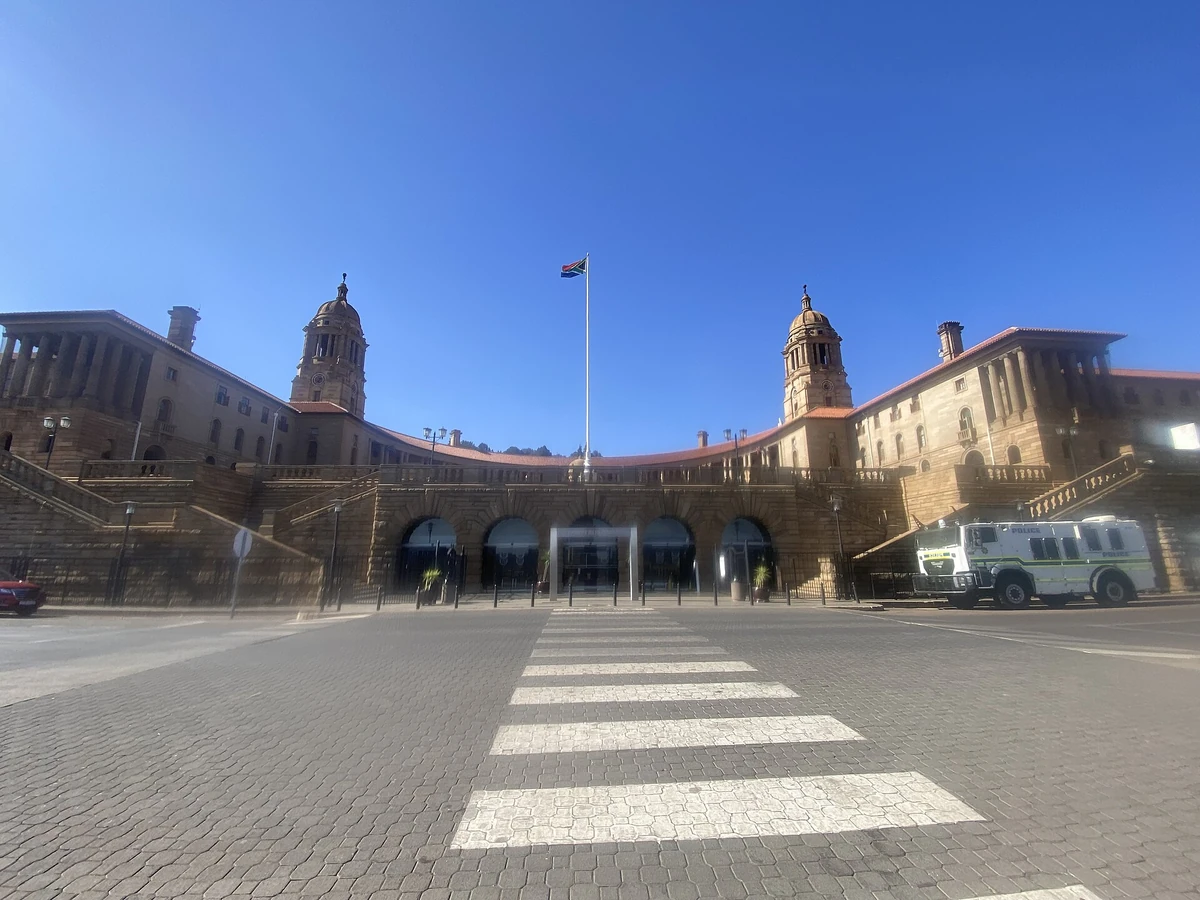
Image credits: Union Buildings, Pretoria – Ruby D-Brown via Wikimedia Commons, CC BY 4.0; Voortrekker Monument, Pretoria – Deneezi via Wikimedia Commons, CC BY-SA 3.0; Union Buildings gardens, Pretoria – Ruby D-Brown via Wikimedia Commons, CC BY 4.0.