
Criminal Defence Attorneys in Johannesburg CBD
Award-Winning 24/7 Criminal Defence for Johannesburg
An arrest in the Johannesburg CBD starts a clock. Under section 50 of the Criminal Procedure Act 51 of 1977 as amended, a detained person must be brought before a lower court within 48 hours, and what happens inside that window often decides whether bail is granted, what is investigated, and how the State builds its case.
Otrebski Attorneys provides 24/7 urgent criminal defence and police station attendance across the Johannesburg CBD from its Sandton office, with an after-hours bail line on 072 779 0866 that answers when arrests happen at night, on weekends and on public holidays.




Speak to a Criminal Defence Attorney
Arrested or facing a charge in the CBD? Send the brief and the team responds fast. After-hours arrests: call 072 779 0866 now.
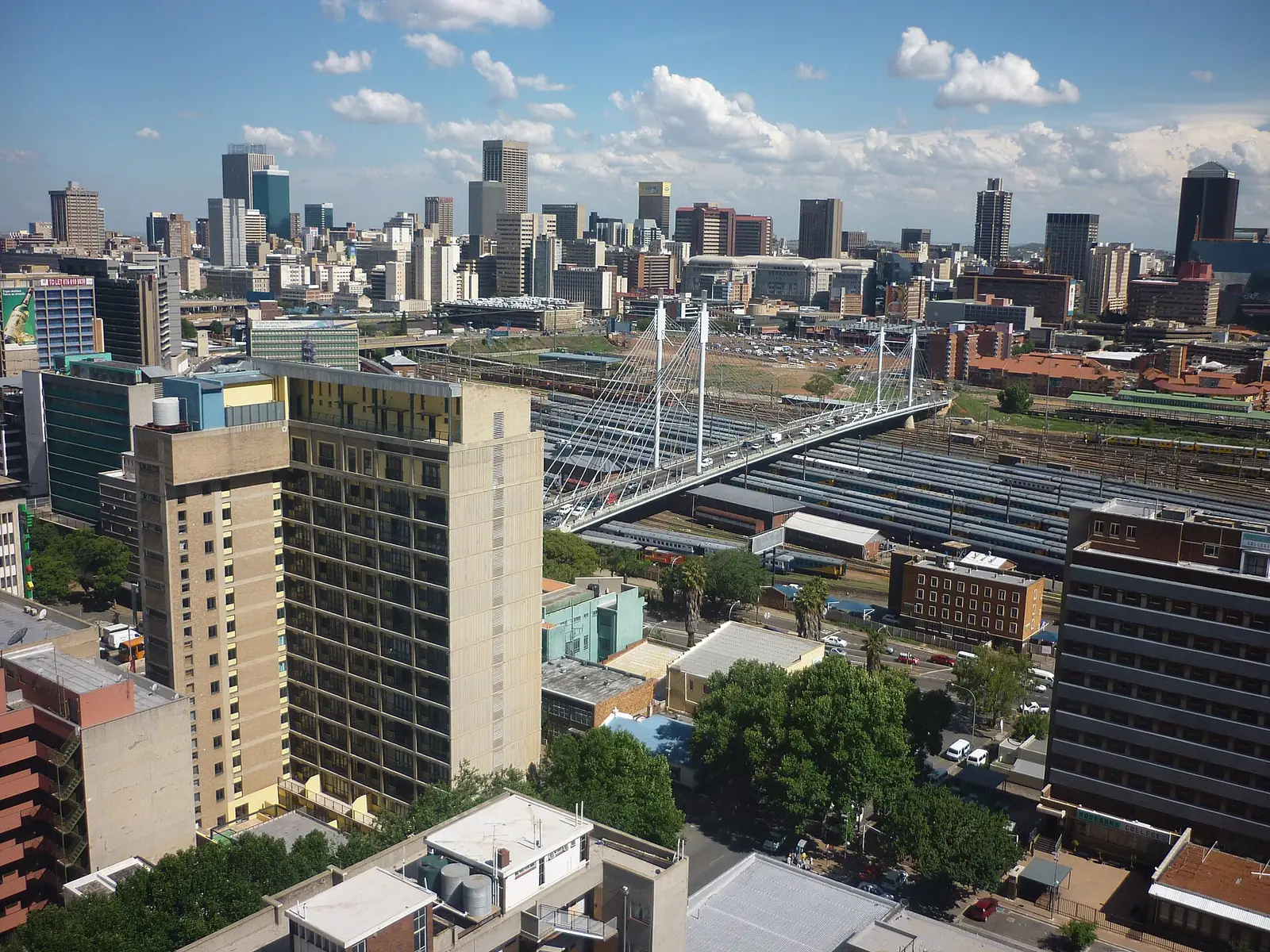
Why Criminal Matters in the Johannesburg CBD Move Fast
The Johannesburg CBD concentrates more criminal rolls, police cells and prosecutorial capacity than anywhere else in Gauteng. This page sets out what actually happens after an arrest in the city centre: the 48-hour rule, how bail really works, which court your matter lands in, and how to find a criminal defence attorney near you who can move at the speed the CBD demands.
Otrebski Attorneys’ criminal department defends the full spread of charges that arise in and around the city centre, including:
- assault and violent offences
- fraud and white-collar crime
- drug-related charges
- theft and robbery
- bail applications
- protection-order violations
The CBD’s character shapes its criminal caseload. The JSE and the banking district generate fraud and commercial-crime dockets; the dense inner-city blocks around the Carlton Centre and the Newtown cultural precinct produce high volumes of street-level charges; and matters from the wider Johannesburg Magisterial District all funnel into the same Fox Street court complex. An arrest here is processed quickly, and the State’s paperwork starts moving on day one. Your defence has to match that pace.
Every criminal matter in South Africa runs on the Criminal Procedure Act 51 of 1977 as amended, from arrest and detention through bail, disclosure and trial. Layered over it is section 35 of the Constitution of the Republic of South Africa, 1996, which guarantees arrested persons the right to remain silent, to be informed of that right, and to choose and consult an attorney. Those rights are strongest in the first hours, before statements exist that later become the State’s evidence.
What a Criminal Defence Attorney in Johannesburg Does
A criminal defence attorney steps in between the accused and the State from the moment of arrest: attending at the police station to check that detention complies with the Criminal Procedure Act, advising before any statement is made, preparing and arguing bail, reviewing the docket once the State discloses it, and representing the accused through plea, trial and sentencing where the matter goes that far.
Defence work also includes written representations to the National Prosecuting Authority (NPA) to have charges withdrawn or reduced, negotiating plea agreements where a trial serves no one, and watching briefs over investigations. The goal at every stage is the same: test the State’s case before it hardens.
In criminal matters, early advice is not a luxury. The decisions made in the first 48 hours are usually the hardest to undo.
The First 48 Hours and Beyond, Step by Step
Criminal procedure after an arrest is governed by the Criminal Procedure Act 51 of 1977 as amended. This is the sequence in practice:
The arrest and the 48-hour rule
Section 50 requires an arrested person to be brought before a lower court as soon as reasonably possible, and in any event within 48 hours of arrest. Weekends and public holidays count, which is why arrests cluster on Friday nights.
Contact an attorney before anything else
The arrested person has the right to remain silent and the right to choose and consult an attorney under section 35 of the Constitution. Exercise both. The 24/7 line exists precisely for this call.
Police station attendance
An attorney attending at the station confirms where the person is being held, checks that detention complies with the Criminal Procedure Act, and advises before any statement, warning statement or pointing-out takes place.
First appearance and bail
At the first appearance the court deals with bail: release on warning, police or prosecutor bail confirmed, or a formal bail application under section 60, sometimes with the matter postponed for a bail hearing within days.
Disclosure and docket review
Once the State’s docket is disclosed, the defence reads the statements, medical reports and evidence the prosecution intends to use, and identifies procedural errors, weak identifications and unlawfully obtained evidence.
Representations to the NPA
Before trial, written representations to the National Prosecuting Authority can persuade it to withdraw or reduce charges, or to divert a first-time accused away from a criminal record entirely.
Plea, trial and sentence
Where the matter proceeds, the defence pleads, cross-examines the State’s witnesses, closes gaps in the State’s case and, on conviction, leads evidence in mitigation of sentence. Every stage is prepared, not improvised.
Police Bail vs. Bail Application in Court
Release at the Station: Police and Prosecutor Bail
For less serious offences, release can happen before court. A police officer may grant police bail under section 59 of the Criminal Procedure Act 51 of 1977 as amended for certain scheduled offences, and for a wider list the prosecutor may authorise release under section 59A, usually with a set amount and an undertaking to appear.
It is fast when it applies, but it is not guaranteed and it is not advice. Anything the arrested person says while negotiating it can still be used. An attorney attending at the station protects that line.
Formal Bail Application in Court
Where the offence is serious, where police bail is refused, or where the State intends to oppose release, bail is decided by a court under section 60 of the Criminal Procedure Act. The inquiry weighs the interests of justice: whether the accused is a flight risk, whether witnesses could be interfered with, and the strength of the State’s case.
A prepared bail application makes the difference. The attorney places before the court a proper affidavit covering fixed address, employment and ties, and answers the State’s grounds of opposition head-on. This is where the first 48 hours of preparation pay for themselves.
| Issue | Police / prosecutor bail | Bail application in court |
|---|---|---|
| Who decides | Police official (s 59) or public prosecutor (s 59A) | A judicial officer at the first appearance (s 60) |
| Which offences | Less serious scheduled offences only | Any offence, including serious and opposed matters |
| When it happens | At the police station, before the first court appearance | At the first appearance within 48 hours of arrest |
| What the attorney does | Attends at the station and protects the accused’s rights | Prepares affidavits and argues the interests of justice |
| Main risk | Saying something at the station that later becomes evidence | Being unprepared, which invites refusal or heavy conditions |
Criminal Charges in the Johannesburg CBD: Where Your Matter Will Be Heard
Criminal matters arising in the city centre fall within the Johannesburg Magisterial District. Most charges are prosecuted in the lower courts, with the most serious matters enrolled in the High Court:
- Johannesburg Magistrate’s Court, 26 Fox Street – the district and regional seats that hear the overwhelming majority of CBD criminal matters, from common assault and theft through to robbery and serious violence.
- High Court of South Africa, Gauteng Division, Johannesburg – at Pritchard Street, where the most serious prosecutions, including murder and complex commercial crime trials, are enrolled.
- Constitutional Court, Constitution Hill – the country’s highest court, sitting in the Constitution Hill precinct on the CBD’s western edge, hears constitutional challenges that sometimes decide criminal cases long after conviction.
The geography matters in practice. An arrest in the blocks around the JSE, the Carlton Centre or the Newtown precinct feeds into the same Fox Street complex, and appearances are set on rolls that move fast and reschedule without ceremony. A defence attorney who knows that court’s rhythms, and who can be at the police station and the first appearance inside the same morning, is not a convenience. It is the difference between arguing bail prepared and arguing it blind.
A lower court may try an offence where:
- the offence was allegedly committed within the Johannesburg Magisterial District; or
- the accused was arrested, ordinarily resident or found within the district’s area of jurisdiction.
- The most serious offences may be prosecuted in the Gauteng Division, Johannesburg regardless.
Otrebski Attorneys serves clients across the Johannesburg CBD from its Sandton office, minutes from the city centre, and appears in the Johannesburg Magistrate’s Court and the Gauteng Division, Johannesburg. Court contact details are available through the Office of the Chief Justice.
How to Choose a Criminal Defence Attorney in Johannesburg
When the search is for the best criminal lawyer in Johannesburg, the shortlist should survive these questions:
- Criminal focus.Ask what share of the attorney’s practice is criminal defence, and whether they have handled this exact charge before, not just whether the firm lists criminal law among many services.
- Genuine 24/7 availability.Arrests do not keep office hours. Confirm there is a real after-hours number with a real attorney behind it, and test it before you need it at 02h00.
- Fox Street familiarity.An attorney who appears regularly in the Johannesburg Magistrate’s Court knows the rolls, the prosecutors and what a realistic bail outcome looks like.
- Transparent billing.Criminal fees escalate with appearances. Insist on a written fee scope for each stage: bail, representations, trial.
- Candid advice.A good defence attorney tells you the weak points in your case too, including when a plea offer serves you better than a trial.
- Verifiable standing.Confirm the attorney is practising and in good standing through the Legal Practice Council.
What a Criminal Lawyer in Johannesburg Should Cost
As a market guide, Johannesburg criminal attorneys commonly charge R1,500–R4,400 per hour for consultations and preparation, R8,000–R30,000 for a bail application depending on seriousness and opposition, and defended trials typically run from R50,000, rising with the length of the trial and the number of witnesses.
These are market guides, not a quote, and criminal costs move with court postponements the firm does not control. Compare what a fee covers: appearance at the police station, the bail application, docket disclosure and pre-trial work are quoted separately by some firms and bundled by others. Otrebski Attorneys quotes in writing before work begins, under its founding principle that clients come before billable hours. No hidden costs.
The Clock That Starts at Arrest
The First 48 Hours: What the Law Requires
| Stage | Time | What matters |
|---|---|---|
| Arrest | Hour 0 | Right to remain silent and to choose and consult an attorney applies immediately (s 35, Constitution) |
| Police station | Hours 0–48 | Attorney attendance; no warning statement before advice; police or prosecutor bail possible (ss 59, 59A) |
| First appearance | Within 48 hours of arrest | Bail dealt with in court under s 60; matter remanded or, in rare cases, withdrawn |
| Bail hearing if opposed | Days after first appearance | Prepared affidavits and answers to the State’s opposition decide release |
Common Mistakes to Avoid
The mistakes that recur in CBD criminal matters, and every one of them is avoidable:
Frequently Asked Questions
What should I do if a family member is arrested in the Johannesburg CBD?
Stay calm and act on the clock. Note the time of arrest, find out which police station holds them, say nothing beyond identifying yourselves, and call a criminal defence attorney immediately. The arrested person must be brought to court within 48 hours, and bail prepared inside that window is far stronger. Otrebski Attorneys answers after-hours arrests on 072 779 0866, 24/7.
How long can police hold someone after an arrest in Johannesburg?
Under section 50 of the Criminal Procedure Act 51 of 1977 as amended, an arrested person must be brought before a lower court as soon as reasonably possible and in any event within 48 hours of arrest. Weekends and public holidays are included in the count. At that first appearance the court deals with bail and sets the path of the case.
How do I find the best criminal lawyer in Johannesburg?
Judge candidates on evidence, not slogans. Ask what share of their practice is criminal defence, whether they have defended this exact charge, whether they appear regularly in the Johannesburg Magistrate’s Court on Fox Street, whether they are genuinely reachable after hours, and verify their standing on the Legal Practice Council. Then compare written fee scopes, not headline prices.
How much does a criminal lawyer in Johannesburg cost?
As a market guide, expect roughly R1,500–R4,400 per hour for consultations, R8,000–R30,000 for a bail application depending on seriousness and whether the State opposes it, and defended trials typically from R50,000. Criminal costs move with postponements. Otrebski Attorneys quotes each stage in writing before work begins, with no hidden costs.
Which court will hear a criminal case from the Johannesburg CBD?
Most CBD criminal matters are heard in the Johannesburg Magistrate’s Court at 26 Fox Street, in its district and regional seats. The most serious prosecutions, such as murder and complex commercial crime trials, are enrolled in the High Court of South Africa, Gauteng Division, Johannesburg, at Pritchard Street.
Can a criminal defence attorney get charges withdrawn in Johannesburg?
Yes, in suitable cases. Before trial, written representations to the National Prosecuting Authority can persuade prosecutors to withdraw or reduce charges, especially where the docket is weak or evidence was obtained unlawfully, and first-time offenders may be considered for diversion away from a criminal record. There is no guarantee, which is why representations are drafted by an attorney who has read the docket.
Do you assist with arrests at night and on weekends in Johannesburg?
Yes. Otrebski Attorneys provides 24/7 urgent criminal defence and police station attendance from its Sandton office. After hours, over weekends and on public holidays, the bail line on 072 779 0866 is answered, because arrests in the Johannesburg CBD do not keep office hours. Weekday enquiries go to 060 500 3098.

Arrested or facing a charge in the Johannesburg CBD? The first 48 hours decide more than any other stage.
Otrebski Attorneys serves clients across the Johannesburg CBD from its Sandton office, with 24/7 police station attendance, transparent billing and no hidden costs.
Call 060 500 3098 · after hours 072 779 0866 (bail applications)
Office hours: Monday to Friday, 08h00 – 17h00 · send a message
Image credits: Johannesburg skyline – Khaanya96 via Wikimedia Commons, CC BY-SA 4.0; Johannesburg CBD cityscape – Evan Bench via Wikimedia Commons, CC BY 2.0; Eternal Flame, Constitution Hill – Mihi tr via Wikimedia Commons, CC BY 4.0.