
Parole revocation in South Africa does not happen on suspicion alone. Before the Correctional Supervision and Parole Board can cancel a parolee’s release under the Correctional Services Act 111 of 1998, the Department of Correctional Services must place evidence before the Board showing that a condition of release has been broken. The parolee, in turn, is entitled to answer that evidence. The whole process is administrative, but it runs on proof.
The standard is not the criminal standard of proof beyond reasonable doubt. A revocation inquiry is not a criminal trial, and the Board is not sending the parolee to prison for a new offence. It is deciding whether the community placement should continue. That means the Board works on a balance of probabilities, weighing the Department’s breach material against the parolee’s explanation, and applying the fairness rules in section 33 of the Constitution and the Promotion of Administrative Justice Act 3 of 2000 (PAJA).
This guide explains the types of evidence the Board considers at a revocation inquiry, the standard of proof that applies, and the procedural fairness the parolee is entitled to before the Board can cancel parole.
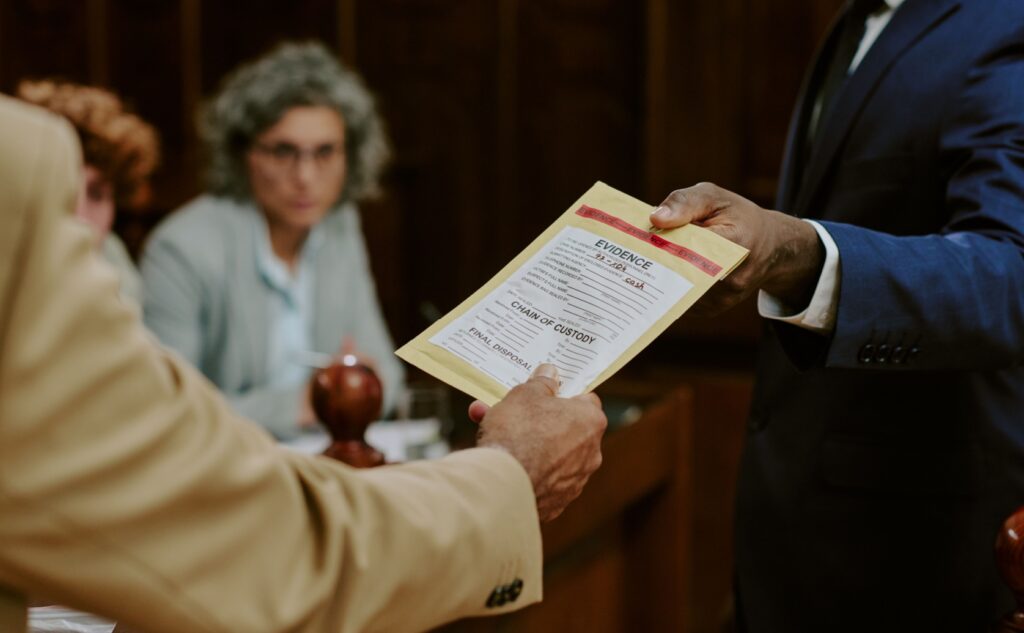
The Standard of Proof at a Revocation Inquiry
A revocation inquiry is an administrative process, not a prosecution. The Board does not have to be satisfied beyond reasonable doubt that the parolee committed a crime before it can cancel parole. The civil standard, a balance of probabilities, applies. That means the Board asks whether, on the material placed before it, it is more probable than not that the parolee breached a condition of release.
This is the same standard that runs through parole decisions generally. The Board considers whether the placement should continue, having regard to the safety of the community, the parolee’s conduct while under community corrections, and the risk of reoffending. Evidence of a breach does not have to be forensic. It has to be reliable enough, on the papers and on the parolee’s own version, to allow the Board to make a defensible decision.
What the Board cannot do is act on rumour, on a single uncorroborated allegation that the parolee has not had a chance to answer, or on material that is not disclosed to the parolee. Section 33 of the Constitution and PAJA require lawful, reasonable, and procedurally fair administrative action. In Vundisa v Kimberley Correctional Supervision and Parole Board [2024] ZANCHC 28, the Northern Cape High Court paid close attention to whether the parolee was properly informed of the case against him and given a real chance to answer it.
The Breach Report From the Supervising Correctional Official
The starting point of almost every revocation inquiry is the breach report prepared by the supervising correctional official. Under section 52 of the Correctional Services Act 111 of 1998, a parolee is placed under the supervision of a correctional official, and that official is responsible for monitoring compliance with the conditions of release. When a condition is broken, the supervisor records the breach.
The breach report is the Department’s primary evidence at the inquiry. It typically captures the following:
- the identity of the parolee and the conditions attached to the parole;
- the specific condition allegedly breached;
- the date, time, and place of the breach;
- a factual description of what the supervisor observed or what was reported;
- steps taken to verify the breach, such as a home visit, a call to the workplace, or an electronic monitoring alert;
- any admission or explanation given by the parolee at the time; and
- a recommendation on whether the matter should be referred to the Correctional Supervision and Parole Board.
Where the report is thin, vague, or unsigned, it weakens the Department’s case. A supervisor’s record that simply says “parolee failed to comply” without dates, conduct, or supporting detail will not carry much weight against a clear contrary explanation from the parolee.
The Parolee’s Version and Representations
The parolee’s own evidence is central to the inquiry. The audi alteram partem principle, the right to be heard, requires that the parolee is told what the alleged breach is and given a genuine opportunity to answer it before the Board decides. Section 75(2)(a) of the Act reinforces this by requiring the Board to consider a request to cancel parole within 14 days, during which the parolee is brought before the Board.
The parolee’s evidence can take several forms:
- an oral explanation placed on record at the Board sitting;
- written representations handed in before or at the hearing;
- documentary proof supporting the explanation, such as a clinic letter, a payslip, a travel document, or proof of a changed address that was reported;
- witness statements from family members, employers, or community members; and
- where relevant, the parolee’s account of a pending criminal charge and the status of that case.
If the parolee’s version is reasonably possible on the papers and the Department has not produced anything to displace it, the Board cannot revoke parole simply because it suspects the worst. Where the explanation raises a genuine dispute of fact that cannot be resolved on the documents, the Board must apply its mind to that difficulty rather than guess.
Documentary Evidence Before the Board
Documents carry significant weight at a revocation inquiry because they are usually contemporaneous and harder to challenge than memory alone. The kinds of documentary evidence that the Board routinely considers include:
- the parolee’s signed conditions of release, which define what counts as a breach;
- community corrections attendance registers showing whether the parolee reported as required;
- electronic monitoring records, including tamper alerts and zone breaches;
- home visit reports completed by the supervising official;
- warrants of arrest issued under section 70 where the parolee could not be located; and
- the recommendation of the Supervision Committee and the Head of Community Corrections.
For the parolee, important paperwork matters. A clinic card confirming a hospital admission on the day the parolee allegedly failed to report, a letter from an employer confirming attendance at work, or a SAPS reference number showing that a lost document was reported, can all displace an allegation of breach. The Board weighs the documents on both sides on a balance of probabilities.
Criminal Charges and Convictions as Evidence
A common trigger for revocation is a new criminal charge. Being arrested while on parole is treated as a serious indicator of risk, and section 70 of the Act allows the Commissioner to issue a warrant for arrest and detention where a parolee is charged with an offence that suggests the community is at risk. But a charge on its own is evidence of an allegation, not evidence of a breach.
The Board distinguishes between different stages of the criminal process:
- An arrest or a charge. This is untested. The Board may rely on the SAPS charge sheet, the arresting officer’s statement, or a sworn docket summary, but it must give the parolee the chance to challenge the allegation. A bare charge, without more, will rarely be enough on its own.
- A pending trial. Where a charge is being contested, the Board often proceeds with the revocation inquiry on the basis of the available information, but the fact that guilt has not been determined is a factor the parolee is entitled to place on record.
- A conviction. A certified copy of a conviction and sentence, or a section 212 statement, is strong evidence of a breach. A conviction for an offence committed while on parole will usually be decisive, because the criminal court has already applied the higher standard of proof beyond reasonable doubt.
The parolee’s rights in the criminal case and in the revocation inquiry run on separate tracks. A revocation is not a punishment for the new offence. It is a decision about whether the community placement should continue while the criminal process, or any appeal, takes its course.
Procedural Fairness Under PAJA and the Constitution
Because a revocation decision is administrative action, it must comply with the Promotion of Administrative Justice Act 3 of 2000. PAJA gives practical shape to the audi alteram partem rule and sets the minimum content of a fair hearing. Applied to a parole revocation inquiry, fairness requires the following:
- adequate notice of the alleged breach, in a form the parolee can understand;
- disclosure of the evidence the Department relies on, including the breach report and any supporting documents;
- a reasonable opportunity to prepare a response, including time to gather documents and call witnesses;
- the right to address the Board and to question the case against the parolee; and
- written reasons for the decision, so that the parolee can consider a review if the outcome is unfair or unlawful.
Where any of these steps is skipped, the revocation is vulnerable to review in the High Court, even if there was a real breach. In Vundisa, the court scrutinised the paperwork, the timing of the hearing, and whether the parolee had been properly informed of the case against him. Procedural shortcuts, missing documents, or a decision based on facts the parolee never had a chance to answer are all grounds on which a revocation can be set aside.
Otrebski Attorneys’ criminal law department, led from the firm’s single Sandton office by Director Nastasja Otrebski, assists parolees and their families with revocation inquiries, prepares written representations for the Board, and, where a decision was taken unfairly, carries the matter on review to the High Court.
Frequently Asked Questions
What evidence is required for parole revocation in South Africa?
The Department of Correctional Services must place evidence before the Correctional Supervision and Parole Board showing, on a balance of probabilities, that the parolee breached a condition of release. The core evidence is the breach report from the supervising correctional official, supported by documents such as attendance registers, electronic monitoring records, home visit reports, and, where relevant, SAPS charge sheets or certified copies of a conviction. The parolee is then entitled to answer that evidence.
What is the standard of proof at a parole revocation inquiry?
The standard is a balance of probabilities, not proof beyond reasonable doubt. A revocation inquiry is an administrative process, not a criminal trial. The Correctional Supervision and Parole Board asks whether it is more probable than not that the parolee breached a condition of release, weighing the Department’s material against the parolee’s explanation.
Is a new criminal charge enough to revoke parole?
A charge on its own is evidence of an allegation, not proof of a breach. The Board may rely on the SAPS charge sheet and the arresting officer’s statement, but it must give the parolee the chance to challenge the allegation. A certified copy of a conviction is much stronger evidence, because the criminal court has already applied the higher standard of proof beyond reasonable doubt.
Does the parolee have the right to be heard before parole is revoked?
Yes. The audi alteram partem principle, read with section 33 of the Constitution and the Promotion of Administrative Justice Act 3 of 2000, requires that the parolee is told what the alleged breach is, is given the Department’s evidence, and has a real opportunity to answer it before the Board decides. Section 75(2)(a) of the Correctional Services Act also requires the Board to consider a request to cancel parole within 14 days.
What documents can a parolee use to defend a revocation inquiry?
Any document that supports the parolee’s explanation can be placed before the Board. Common examples are clinic cards confirming a hospital admission, letters from an employer confirming attendance at work, proof of a reported change of address, SAPS reference numbers for lost documents, and witness statements from family, employers, or community members.
Can a parole revocation decision be reviewed?
Yes. Because revocation is administrative action, it can be reviewed by the High Court under PAJA where the Board failed to follow fair procedure, did not disclose its evidence, ignored the 14-day rule, or took the decision on facts the parolee had no chance to answer. The 2024 High Court decision in Vundisa v Kimberley Correctional Supervision and Parole Board confirmed the importance of these procedural steps.
Get help with a criminal law matter.
Disclaimer. This article explains the general legal framework for parole revocation evidence under the Correctional Services Act 111 of 1998 and the role of the Correctional Supervision and Parole Board. It is general information, not legal advice for a specific parolee or matter. Each case turns on its own facts, the conditions of release, and the alleged breach. To confirm current requirements and procedures, consult a qualified attorney and the Department of Correctional Services, or verify the legislation on the official South African Government portal.