
“Rule 35” is one of the most misunderstood terms in South African criminal law. People often arrive at our Sandton office asking how to launch a “Rule 35 application” to reduce a family member’s prison sentence. The phrase sounds technical and important, and it is, but it does not do what most people think it does.
In South African law there is no “Rule 35 sentence reduction” mechanism. What people are usually reaching for is the 48-hour rule, which lives in section 50 of the Criminal Procedure Act 51 of 1977 and is reinforced by section 35(1)(d) of the Constitution. That right protects an arrested person in the first two days after arrest. It has nothing to do with reducing a sentence already imposed by a court.
This article corrects the confusion. It explains what the 48-hour rule actually is, where the “Rule 35” label probably comes from, and then sets out the real sentence reduction mechanisms that South African law provides for reducing or converting a sentence after conviction.
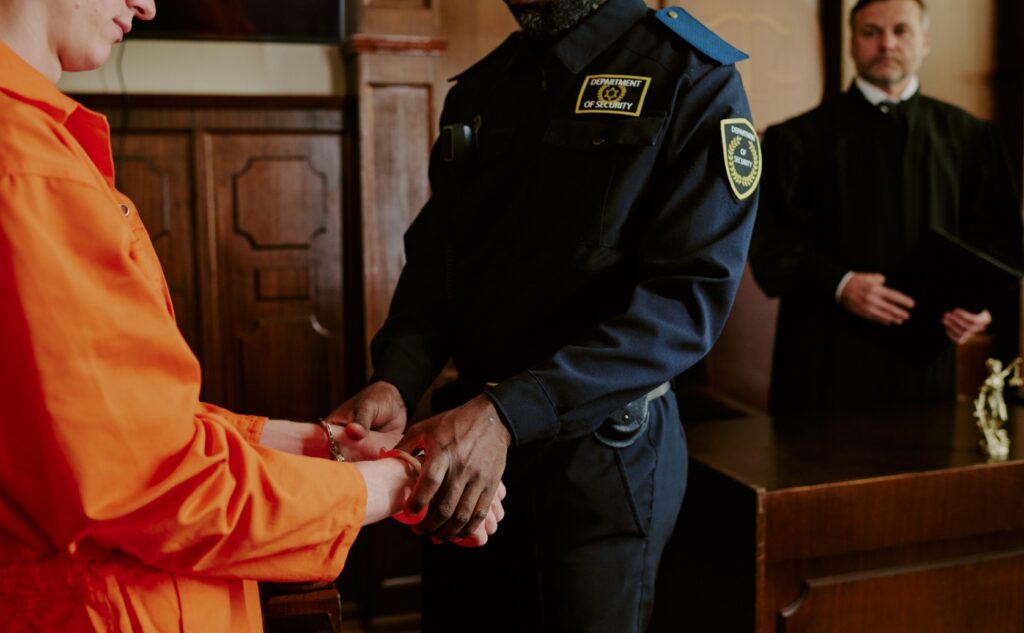
What “Rule 35” Actually Means: The 48-Hour Rule
The 48-hour rule is found in section 50 of the Criminal Procedure Act 51 of 1977. It says that a person who has been arrested must be brought before a lower court as soon as reasonably possible, and in any event within 48 hours after the arrest. If the 48-hour period ends on a Saturday, Sunday, or public holiday, the person must be brought to court on the next court day.
If the police do not bring the arrested person to court within that window, the person is entitled to be released unless they have been formally charged and detained on a warrant. Being held longer than 48 hours without being brought before a court is unlawful, and the detained person or their lawyer can apply to the High Court for their release.
The “Rule 35” label most likely comes from section 35 of the Constitution of the Republic of South Africa, 1996, which sets out the rights of arrested, detained, and accused persons. Section 35(1)(d) gives an arrested person the right to be brought before a court “as soon as reasonably possible, but not later than 48 hours after the arrest.” Read together, section 50 of the Act and section 35 of the Constitution create the right most people are thinking of when they say “Rule 35.”
None of this touches sentencing. The 48-hour rule is a pre-trial protection. It governs how long the State may hold someone before a court decides whether they should remain in custody, be released on warning, or be released on bail.
Why “Rule 35 Sentence Reduction” Is a Misconception
Sentences in South Africa are imposed by a court after conviction. Once a sentence is handed down, it can only be changed through specific legal channels, none of which is called “Rule 35.” There is no general “sentence reduction application” that a prisoner can file at any time on the basis of good behaviour or rehabilitation.
The confusion is understandable. Online searches mix up the constitutional right to be brought to court within 48 hours, the parole system, and American federal procedures (where Rule 35 of the US Federal Rules of Criminal Procedure genuinely does allow a court to reduce a sentence for substantial assistance). That American rule has no force in South Africa.
The Real Mechanisms for Reducing or Changing a Sentence
South African law does provide several ways a sentence can be reduced, converted, or brought to an end after it has been imposed. They operate in different courts and at different stages, and they have strict time limits.
Appeal against sentence
A convicted person may appeal to a higher court against both conviction and sentence. On a sentence appeal, the court reconsiders whether the sentence was appropriate. A sentence that is shockingly inappropriate or out of line with similar cases can be reduced. In the magistrate’s court, an appeal must usually be noted within 14 days of sentence, and in the High Court within the period set by the court. Miss the deadline and you normally need condonation, which is not granted lightly.
Special remission of sentence
The President, acting under section 84(2)(j) of the Constitution, may grant a special remission (a reduction) of sentence to categories of sentenced offenders. These remissions are usually announced on public occasions and applied by the Department of Correctional Services. They are not something an individual lawyer applies for; they are administrative and category-based. A remission shortens the effective date of release but does not overturn the conviction.
Conversion to correctional supervision
Under section 276(1)(i) of the Criminal Procedure Act, a court may sentence an offender to correctional supervision from the outset. Under section 276A, a court can also convert an existing period of imprisonment into correctional supervision. This is sometimes the practical route that achieves what families call a “sentence reduction,” because the offender serves the remainder of the sentence under strict community-based supervision rather than behind bars. Whether it is available depends on the offence, the portion of the sentence already served, and the report of a correctional official.
Parole
Parole is the supervised release of a sentenced offender before the full sentence has been served. It is governed by the Correctional Services Act 111 of 1998 and the Department’s parole boards. Parole is not a reduction of the sentence; the sentence stays in place, but the offender serves the balance in the community under conditions. Eligibility depends on the type of sentence, the minimum non-parole period set by the court, and the offender’s behaviour and rehabilitation programmes inside the correctional centre.
Presidential pardon
Under section 84(2)(j) of the Constitution, the President may pardon or reprieve offenders. This is exceptional and is handled through the Department of Justice, not through a standard court application. A pardon wipes out the conviction; a reprieve reduces or suspends the sentence.
How the 48-Hour Rule Is Enforced
When the police hold someone beyond 48 hours without bringing them to court, the family or the arrested person’s attorney can take direct action. The main tools are:
- Bail application in court. Once the person is brought before court, their lawyer can oppose further detention and apply for bail or release on warning.
- Urgent application for release. If the 48-hour limit has been exceeded and the person has still not been charged, the High Court can be approached on an urgent basis for an order releasing them.
- Complaint to IPID. Unlawful detention can be reported to the Independent Police Investigative Directorate for investigation.
Acting quickly matters. The longer the unlawful detention continues, the harder it becomes to undo, and evidence of the arrest conditions can disappear.
Common Mistakes to Avoid
- Confusing section 35 of the Constitution with a sentence-reduction rule. Section 35 protects arrested and detained people; it does not reduce imposed sentences.
- Missing the appeal deadline. Sentence appeals have short, strict time limits. Waiting weeks to “think about it” usually closes the door.
- Assuming good behaviour automatically shortens a sentence. Good behaviour affects parole consideration; it does not, on its own, reduce a sentence.
- Copying American “Rule 35” procedure. The US Federal Rules of Criminal Procedure have their own Rule 35 for sentence reduction. It does not apply in South African courts.
- Ignoring the correctional supervision route. Section 276A conversion is often the most realistic path to a sentence being served outside prison, but it must be pursued at the right time.
Frequently Asked Questions
Is there a Rule 35 sentence reduction in South Africa?
No. There is no “Rule 35 sentence reduction” mechanism in South African law. The phrase usually confuses section 35 of the Constitution, which protects arrested and detained persons, with the separate question of reducing an imposed sentence. Sentences are reduced through appeal, special remission, conversion to correctional supervision, or parole.
What is the 48-hour rule in South Africa?
Section 50 of the Criminal Procedure Act 51 of 1977, read with section 35(1)(d) of the Constitution, requires that an arrested person be brought before a court within 48 hours of arrest. If that period expires on a weekend or public holiday, the person must be brought to court on the next court day. If they are not, they are entitled to be released unless lawfully charged and detained.
How can a sentence be reduced in South Africa?
A sentence can be challenged on appeal if it is shockingly inappropriate, converted to correctional supervision under section 276A of the Criminal Procedure Act, shortened by a special remission granted by the President, or served in the community through parole under the Correctional Services Act 111 of 1998. Each route has its own requirements and time limits.
Does the US Rule 35 apply in South African courts?
No. Rule 35 of the United States Federal Rules of Criminal Procedure allows an American court to reduce a sentence for substantial assistance to authorities. It has no force in South Africa. Relying on it in a South African court will not succeed.
Can an arrested person be released if they are not brought to court within 48 hours?
Yes. If the 48-hour period expires and the person has not been brought before a court and lawfully charged, they are entitled to be released. Their attorney can bring an urgent application to the High Court for their release, and unlawful detention can be reported to the Independent Police Investigative Directorate.
Get help with a criminal law matter. If a family member has been arrested and held beyond 48 hours, or if you need advice on an appeal, correctional supervision, or parole question, Otrebski Attorneys’ Criminal Law team in Sandton can guide you. Our women-led, Level 4 B-BBEE practice focuses on clear, practical defence work across South Africa.
Disclaimer. This article is general legal information, not advice for a specific case. Arrest, detention, sentencing, and parole outcomes depend on the facts and on current departmental practice. For guidance on a particular matter, consult a qualified attorney or the Legal Aid South Africa office nearest you.