
The Nelson Mandela Rules are the United Nations Standard Minimum Rules for the Treatment of Prisoners, revised and unanimously adopted by the UN General Assembly on 22 May 2015 through Resolution 70/175. They set out the most widely recognised international benchmark for how incarcerated people must be treated, from admission through to release.
The Rules were renamed in honour of Nelson Mandela, who spent 27 years in prison before becoming South Africa’s first democratically elected President. The 2015 revision modernised the original 1955 Standard Minimum Rules to address contemporary concerns such as prolonged solitary confinement, the clinical independence of prison healthcare, and the absolute prohibition of torture.
Although the Rules are international standards rather than directly binding domestic law, they carry real weight in South African courts. They inform how the Correctional Services Act 111 of 1998 is interpreted and give practical content to the rights of detained persons under section 35 of the Constitution.
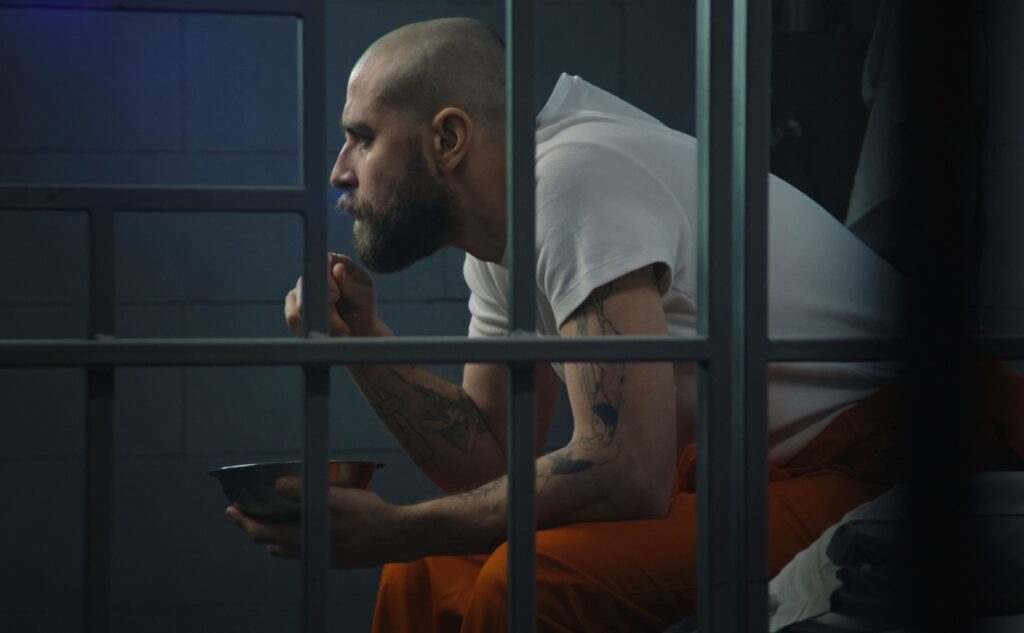
What the Nelson Mandela Rules Actually Cover
The 2015 text contains 122 rules organised into two parts. Part One deals with the general management of prisons and applies to all prisoners, whether sentenced or awaiting trial. Part Two contains rules targeted at specific categories, such as detained children, civil debtors, and persons detained without charge. Together they address admission, classification, accommodation, healthcare, discipline, contact with the outside world, and reintegration.
Rule 1 sets the foundational principle: every prisoner must be treated with respect for their inherent dignity and value as a human being. No prisoner may be subjected to torture or to cruel, inhuman or degrading treatment or punishment, and prison conditions must not aggravate the suffering inherent in the loss of liberty.
Dignity, Safety and Humane Living Conditions
The Rules require that prisoners are held in clean, adequately ventilated and lit accommodation, with sufficient space, sanitation, wholesome food and safe drinking water. Overcrowding, unsanitary cells and failing infrastructure are not merely uncomfortable, they fall short of an international standard that South Africa has endorsed.
- No torture or abuse. Rule 1 prohibits torture and cruel, inhuman or degrading treatment absolutely. Rule 64 requires prison staff to use no more force than is strictly necessary.
- Meaningful contact with family. Rules 58 to 63 protect prisoners’ right to communicate with family and friends through visits and correspondence, subject only to necessary security limits.
- Access to legal representation. Prisoners must be allowed confidential access to legal advisers and to the courts, which underpins every other right they may need to enforce.
Discipline is addressed in Rules 36 to 46. Punishments must be proportionate, recorded, and reviewable, and certain practices are prohibited outright because they amount to ill-treatment.
Solitary Confinement and the 15-Day Limit
The restrictions that matter most in practice are set out in Rules 43 and 44.
- Definition. Rule 44 defines solitary confinement as the confinement of a prisoner for 22 hours or more a day without meaningful human contact.
- Prolonged confinement is prohibited. Solitary confinement for more than 15 consecutive days is classified as prolonged and is prohibited.
- Indefinite confinement is prohibited. Open-ended isolation, placement in dark or constantly lit cells, corporal punishment, reducing food or water, and collective punishment are all expressly banned.
- Vulnerable prisoners. Solitary confinement must not be used on children, pregnant women, or prisoners with mental or physical disabilities where it would worsen their condition.
- Medical oversight. Under Rule 30, a physician must see any prisoner held in solitary confinement on a daily basis.
Where segregation is needed for safety or security, it must be a last resort, imposed for the shortest possible time, and subject to regular review. These limits are increasingly cited by South African courts when assessing whether segregation amounts to unlawful treatment.
Rehabilitation and Preparation for Release
The Rules treat the period of incarceration as preparation for release, not simply punishment. Rules 65 to 69 require that prison regimes offer work, education and vocational training, and that sentenced prisoners have individualised sentence plans aimed at their reintegration into society. This approach closely tracks the objects of our own Correctional Services Act, which places rehabilitation at the centre of the correctional system.
How the Rules Map Onto South African Law
The Nelson Mandela Rules are not a statute. They do not create rights that a prisoner can enforce directly in the same way as an Act of Parliament. Their legal effect in South Africa comes through three channels:
- The Constitution. Section 35(2)(e) guarantees every detained person, including every sentenced prisoner, the right to conditions of detention consistent with human dignity, including at state expense adequate accommodation, nutrition, reading material and medical treatment. Our courts use the Mandela Rules to give practical content to this guarantee.
- The Correctional Services Act 111 of 1998. The Act, together with the regulations made under it, governs accommodation, healthcare, discipline, segregation and the complaints system in South African correctional centres. Its provisions mirror many of the Mandela Rules and must, where ambiguous, be interpreted in their light.
- Customary international law. Section 39 of the Constitution requires courts to consider international law when interpreting the Bill of Rights. Where the Mandela Rules reflect customary international law or general principles, they carry additional interpretive weight.
The result is that a prisoner or family member who wants to challenge inhumane conditions, denial of healthcare, or unlawful segregation usually relies on section 35 of the Constitution read with the Correctional Services Act, supported by the standards set out in the Mandela Rules.
When to Get Legal Help
Common situations in which legal advice makes a real difference include serious concerns about healthcare being withheld, segregation that has continued beyond what is lawful, unsafe or overcrowded conditions, denial of family contact or access to a lawyer, and disciplinary hearings where the sanctions being imposed may breach the Act. Otrebski Attorneys’ Criminal Law department advises prisoners and families on these issues, including urgent applications to court where a rights violation is ongoing.
Otrebski Attorneys is a 100% women-led firm with a single office in Sandton, a Level 4 B-BBEE rating, and a five-star client rating across 12 reviews. The director, Nastasja Otrebski, leads our Criminal Law practice.
Frequently Asked Questions
What are the Nelson Mandela Rules in simple terms?
They are the United Nations Standard Minimum Rules for the Treatment of Prisoners, revised in 2015 and consisting of 122 rules. They set the international benchmark for humane prison conditions, dignity, healthcare, discipline and the treatment of detained persons, and are named after Nelson Mandela.
Are the Nelson Mandela Rules binding law in South Africa?
They are not directly binding domestic legislation. South African courts use them to interpret section 35(2)(e) of the Constitution and the Correctional Services Act 111 of 1998, and they carry weight as international standards that give practical content to prisoners’ constitutional rights.
What is the 15-day solitary confinement limit in the Mandela Rules?
Rule 44 defines solitary confinement as confinement for 22 hours or more a day without meaningful human contact. Solitary confinement lasting more than 15 consecutive days is classified as prolonged and is prohibited, as is indefinite solitary confinement. A physician must examine any prisoner in solitary confinement daily.
What healthcare are prisoners entitled to under the Mandela Rules?
Rule 24 sets out the principle of equivalence of care. Prisoners must enjoy the same standard of healthcare available in the community, free of charge and without discrimination. Prison healthcare services must be clinically independent, and medical staff must report any signs of torture or ill-treatment.
Can a prisoner take legal action over poor prison conditions in South Africa?
Yes. A prisoner can rely on section 35(2)(e) of the Constitution and the Correctional Services Act 111 of 1998, supported by the Nelson Mandela Rules, to challenge unsafe conditions, denial of healthcare, unlawful segregation or denial of family and legal contact. Urgent court relief is available where a violation is ongoing.
Get help with a criminal law matter.
Disclaimer. This article is general information for South African readers and is not legal advice. Correctional services law and the interpretation of international standards change over time, and outcomes depend on the specific facts of each matter. Please consult a qualified attorney at Otrebski Attorneys for advice tailored to your situation.
Get Legal Help Today
Speak to an Otrebski Attorneys lawyer about your matter, or request an appointment and we will call you back.
☎ Call 060 500 3098WhatsApp Us