
The treatment of prisoners in South Africa is governed by a layered framework that draws on the Constitution, the Correctional Services Act 111 of 1998, and international human rights standards. Together these sources set out the basic principles that correctional officials must follow whenever they detain, sentence, or manage any person in their custody.
Imprisonment takes away liberty, but it does not take away a person’s inherent dignity or their remaining constitutional rights. The basic principles exist to keep detention orderly and humane, to protect inmates from abuse, and to ensure that correctional centres contribute to rehabilitation rather than only punishment.
This article sets out the core principles that apply to sentenced prisoners and remand detainees in South Africa, explains where each principle comes from in law, and notes the international standards that guide correctional practice.
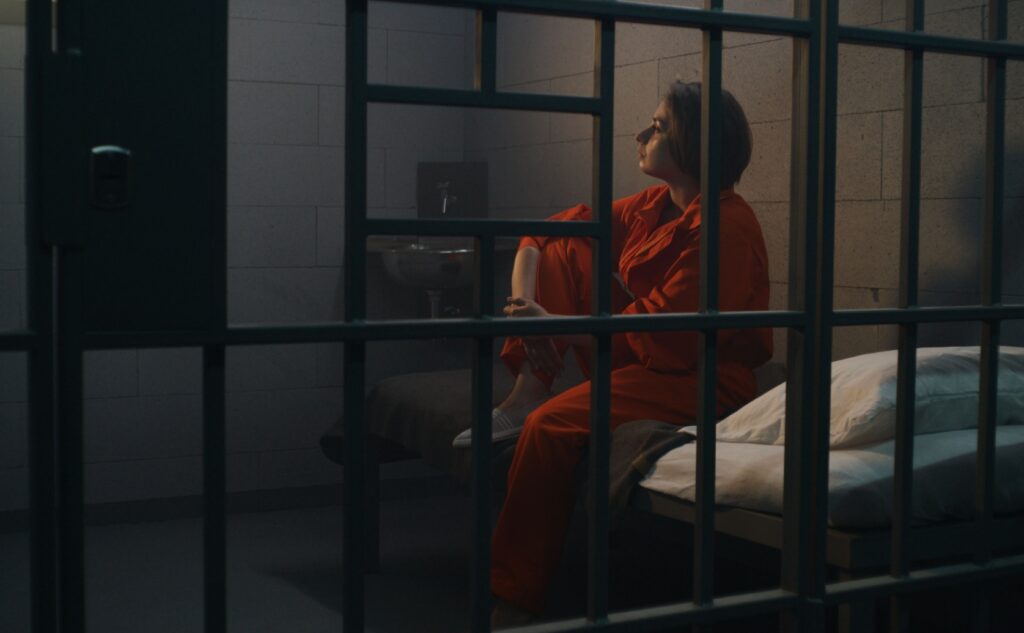
Inherent Dignity and Humane Treatment
The first principle is that every prisoner retains inherent dignity. Section 10 of the Constitution of the Republic of South Africa, 1996 provides that everyone has inherent dignity and the right to have that dignity respected and protected. Section 12 adds the right to freedom and security of the person, including the right not to be treated or punished in a cruel, inhuman, or degrading way.
For detained people these rights are reinforced by section 35(2)(e) of the Constitution, which gives everyone who is detained, including sentenced prisoners, the right to conditions of detention that are consistent with human dignity. This includes at minimum the provision of adequate accommodation, nutrition, reading material, and medical treatment at state expense.
In practice this principle means that correctional officials must treat prisoners with respect, may not use force beyond what is reasonably necessary to maintain order, and must protect inmates from assault by other inmates or by staff. Cruel, inhuman, or degrading treatment is prohibited absolutely and may also amount to a criminal offence.
The Objectives of the Correctional Services Act
The Correctional Services Act 111 of 1998 is the main statute governing prisons in South Africa. Its stated objectives carry the core principles into daily correctional practice. Section 2 of the Act lists the objectives of the correctional system, and they shape every rule that follows.
- Safe custody. Prisoners must be held in secure conditions that protect both inmates and the public, without exposing them to harm.
- Human dignity. The system must respect the dignity of every prisoner and avoid treatment that degrades or humiliates.
- Rehabilitation. Correctional centres must promote rehabilitation and the social reintegration of sentenced offenders, not merely confine them.
- Non-discrimination. Prisoners may not be unfairly discriminated against on grounds such as race, gender, religion, or disability.
These objectives are supported by the Regulations under the Act, which set detailed standards for accommodation, nutrition, hygiene, healthcare, discipline, and the use of segregation. Where a correctional centre departs from these standards without justification, it acts unlawfully.
The Prohibition of Torture and the Right to Bodily Integrity
South Africa is a party to the United Nations Convention against Torture. Torture and other cruel, inhuman, or degrading treatment or punishment are absolutely prohibited under both international law and section 12 of the Constitution. No exceptional circumstance, whether a state of war, political instability, or a public emergency, may be invoked as a justification.
The Prevention and Combating of Torture of Persons Act 13 of 2013 gives effect to that prohibition in domestic law. It creates the offence of torture and obliges officials to prevent and report acts of torture. Any confession or admission obtained under torture or undue pressure is inadmissible in evidence under section 35(5) of the Constitution.
Corporal punishment as a sentence or as a disciplinary measure was abolished by the Constitutional Court in S v Williams. Solitary confinement and the use of mechanical restraints are tightly regulated under the Correctional Services Act and may only be used in limited, defined circumstances.
Equivalence of Healthcare
A central principle in both South African law and international standards is equivalence of healthcare. The State has a positive duty to provide prisoners with medical care of a standard equivalent to that available in the community. Prisoners do not forfeit their right to health when they enter a correctional centre.
Section 35(2)(e) of the Constitution requires medical treatment at state expense. The Correctional Services Act and its Regulations add detail, requiring that each correctional centre have access to medical staff, that prisoners be examined on admission, that chronic and mental health conditions be managed, and that emergency care be available. Denying or delaying essential treatment can amount to a constitutional violation.
Mental health is part of this principle. The Correctional Services Act recognises the need to identify and treat prisoners with mental illness, and prison authorities must refer detainees who require involuntary care to a designated health facility under the Mental Health Care Act 17 of 2002.
Non-Discrimination and Equality
The principle of non-discrimination runs through section 9 of the Constitution, the Correctional Services Act, and the international instruments South Africa has ratified. Prisoners must be treated equally and may not be disadvantaged on the basis of race, gender, sex, pregnancy, marital status, ethnic or social origin, colour, sexual orientation, age, disability, religion, conscience, belief, culture, or language.
In practice the principle requires correctional officials to make reasonable accommodation for prisoners with disabilities, to respect religious observance and dietary requirements within practical limits, and to keep women, men, and children separate as the Act requires. Unfair differentiation between categories of prisoners can be challenged in court.
The UN Basic Principles and the Nelson Mandela Rules
The South African correctional law does not sit in isolation within a correctional system context. The UN Basic Principles for the Treatment of Prisoners, adopted by the General Assembly in 1990, set out a short list of minimum standards that express the same ideas found in the Constitution. They provide that all prisoners shall be treated with respect due to their inherent dignity, that there shall be no discrimination, that religious and cultural beliefs must be respected, and that the abolition of torture is a non-derogable principle.
The Basic Principles are read alongside the United Nations Standard Minimum Rules for the Treatment of Prisoners, revised in 2015 and known as the Nelson Mandela Rules. The Mandela Rules offer detailed guidance on accommodation, lighting, ventilation, food, exercise, healthcare, discipline, contact with the outside world, and the use of restraints. South African courts and oversight bodies refer to them as guiding standards even where they are not directly binding.
Together the Basic Principles and the Mandela Rules reinforce principles that already apply under domestic law. They are useful because they explain, in practical terms, what humane treatment requires in a cell, a clinic, a workshop, or a disciplinary hearing.
Rehabilitation, Reintegration, and Contact With Family
Rehabilitation is one of the stated objectives of the Correctional Services Act and a recurring theme in the Mandela Rules. The principle holds that imprisonment should, wherever possible, prepare the prisoner for release by addressing the causes of offending and building skills for life after detention.
- Access to education, skills training, and work programmes.
- Psychological and social work services where needed.
- Reasonable contact with family and legal representatives.
- Preparation for release, including parole and community corrections supervision.
Family contact is part of rehabilitation. The Act protects the right of prisoners to receive visits and to correspond, subject to conditions necessary for security and good order. Restricting contact as a form of punishment is not permitted.
Fair Discipline and Oversight
The final principle is accountability. Discipline inside a correctional centre must follow fair procedure. A prisoner charged with a disciplinary offence must be informed of the charge in a language they understand, given an opportunity to be heard, and sentenced only to penalties allowed by the Act and Regulations.
Independent oversight is central to enforcing every other principle. The Judicial Inspectorate for Correctional Services inspects centres, receives complaints through Independent Correctional Centre Visitors, and reports on conditions. The courts supervise correctional action through review and through constitutional challenges, and the South African Human Rights Commission can investigate systemic abuses. These mechanisms give prisoners a route beyond the institution when basic principles are not honoured.
Frequently Asked Questions
What are the basic principles for the treatment of prisoners in South Africa?
The basic principles are inherent dignity and humane treatment, safe custody, rehabilitation and social reintegration, non-discrimination, the prohibition of torture and cruel treatment, equivalence of healthcare, fair discipline, and independent oversight. They come from section 35(2)(e) of the Constitution, the Correctional Services Act 111 of 1998, and the UN Basic Principles and Nelson Mandela Rules.
What does section 35(2)(e) of the Constitution say about prisoners?
Section 35(2)(e) gives every detained person, including sentenced prisoners, the right to conditions of detention consistent with human dignity, including at minimum adequate accommodation, nutrition, reading material, and medical treatment at state expense.
Are the Nelson Mandela Rules binding law in South Africa?
The Nelson Mandela Rules are international soft-law standards rather than directly binding domestic law. South African courts and oversight bodies refer to them as guiding standards, and most of their requirements are also reflected in the Correctional Services Act and its Regulations, which are binding.
Is torture allowed in South African prisons?
No. Torture and cruel, inhuman, or degrading treatment are absolutely prohibited by section 12 of the Constitution and by the Prevention and Combating of Torture of Persons Act 13 of 2013. No exceptional circumstance can justify torture, and any confession obtained through torture is inadmissible in evidence.
Do prisoners in South Africa have a right to healthcare?
Yes. Under the principle of equivalence of care, correctional centres must provide medical treatment at state expense and to a standard equivalent to that available in the community. The Correctional Services Act and the Mental Health Care Act 17 of 2002 add the detail on how physical and mental healthcare must be delivered.
Get help with a criminal law matter. If you or a family member needs advice on prisoner rights, correctional discipline, parole, or a constitutional complaint, the Criminal Law department at Otrebski Attorneys can assist. Our women-led, Level 4 B-BBEE practice works from a single office in Sandton, and Director Nastasja Otrebski leads the team handling criminal defence and prisoners’ rights work for clients across South Africa.
Disclaimer. This article is general information about the principles governing the treatment of prisoners in South Africa, not legal advice for a specific matter. Correctional and parole decisions turn on the facts of each case and on current court practice. For advice about a particular detention, consult a qualified attorney or Legal Aid South Africa.